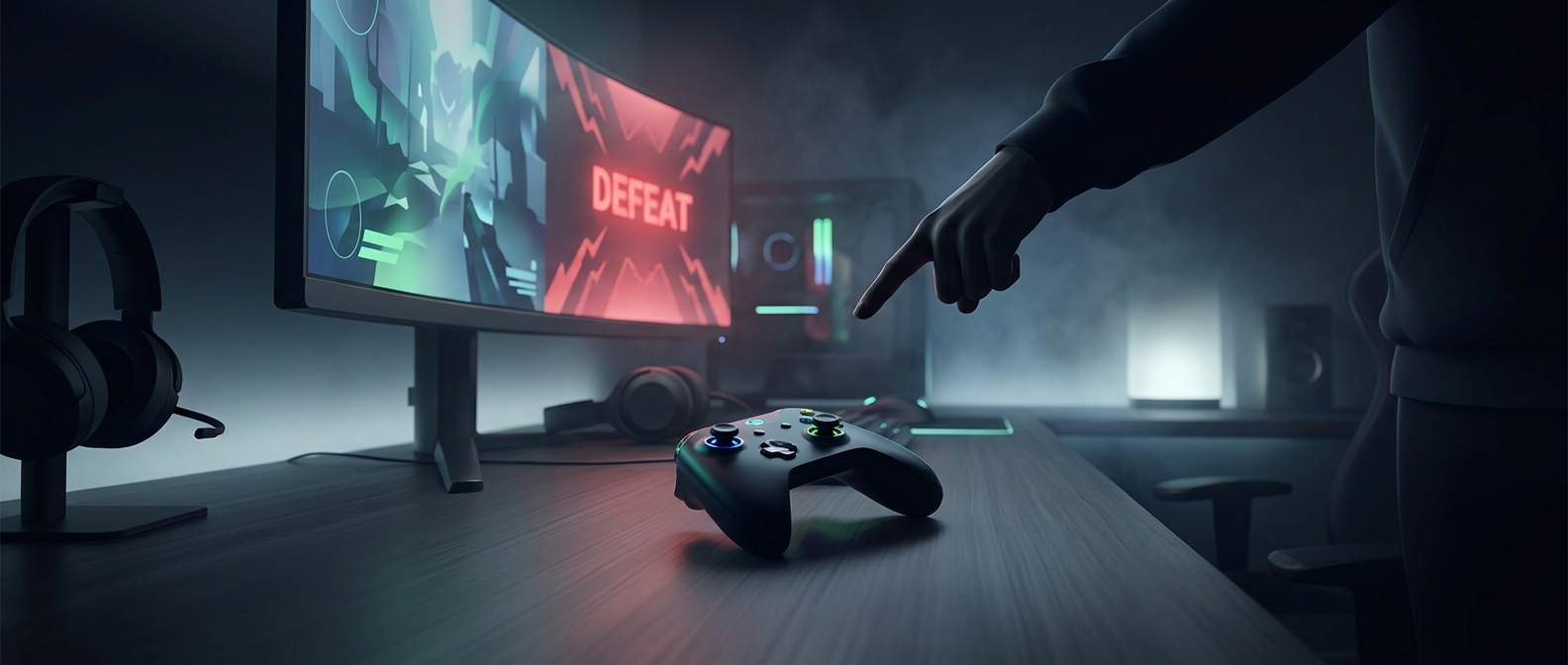
Why a controller makes a convenient suspect
A missed jump or mistimed attack is hard to diagnose in the moment. The game gives you an outcome—failure—but not always a clear explanation of what caused it. Was your timing off, did you press the wrong button, or did the game fail to register the input? When the cause is ambiguous, the controller offers a visible, testable suspect. You can press the buttons again or move the stick and watch what happens.
That uncertainty creates room for self-protection. If you blame a faulty input, the loss says less about your reflexes or judgment. This is a form of self-serving attribution: people often explain setbacks in ways that protect their view of themselves. It need not be a calculated excuse; the hardware really can malfunction, so suspicion feels plausible.
Why the hardware gets blamed
Controllers translate movement into signals the game can act on. A stick may register movement even when untouched—a problem commonly called stick drift—and a button can wear out or fail to respond reliably. Even without a defect, a brief delay between pressing a button and seeing the result can make a correct action seem ignored. A player who has just lost may not know whether any of these happened or whether their timing was simply late.
Checking the controller is also easier than reconstructing a fast sequence of decisions. A player can test a button immediately; assessing whether they reacted a fraction too slowly is much harder. The device becomes a concrete explanation for an invisible mistake.
A useful suspicion can become a reflex
Sometimes the controller really is at fault, and checking it can identify a problem worth fixing. But repeatedly blaming the hardware can also prevent a player from noticing a pattern in their own timing or choices. The revealing moment is what happens after the loss: a quick hardware check may be sensible, while treating every miss as proof of a bad controller turns a plausible cause into a shield against learning.