How Cahill’s giant synthesizer turned telephone wires into a music service
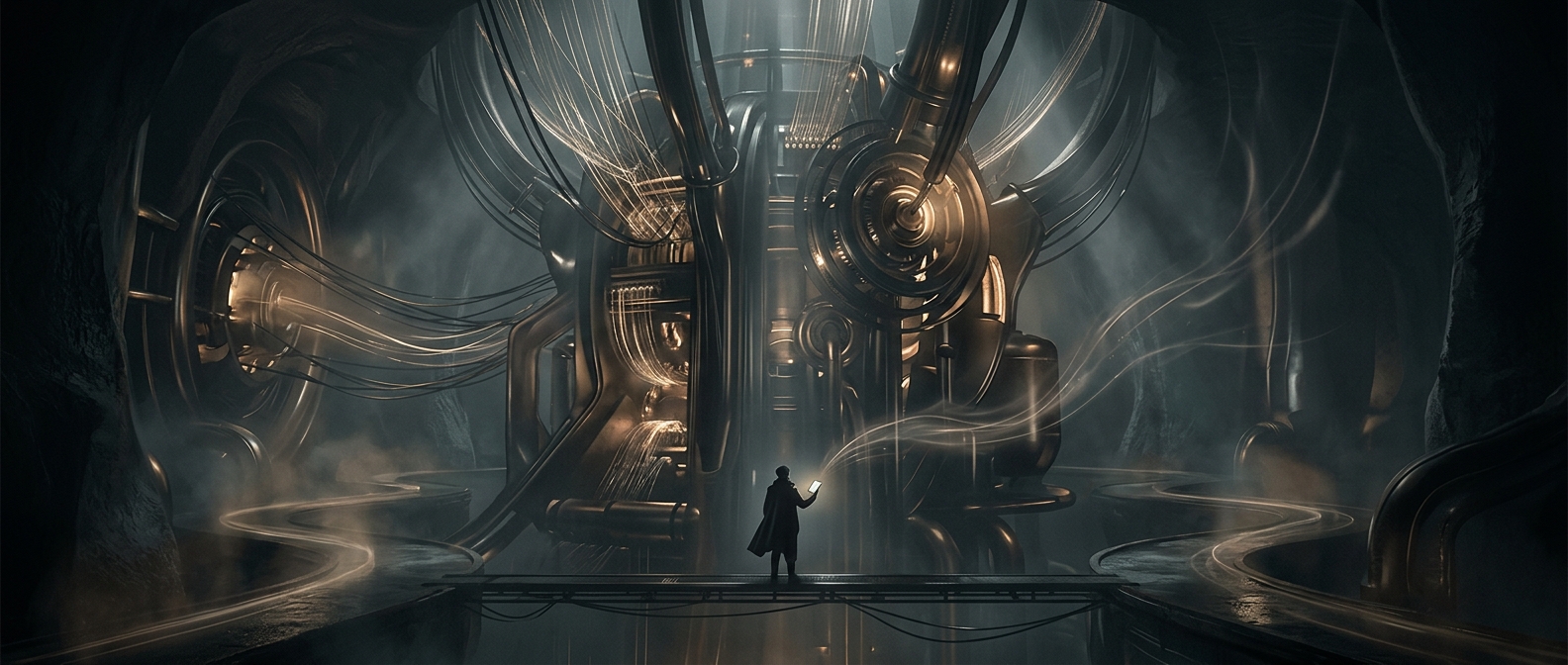
Thaddeus Cahill’s Telharmonium was not a recording machine. It made sound electrically, then used the telephone network to carry that sound to listeners. Inside the 200-ton instrument, rotating metal tone wheels passed electromagnetic pickups. Each wheel generated an electrical signal with a particular pitch; combining signals at different strengths could build a tone resembling an organ or another instrument. This method—assembling a sound from simpler tones—is an early form of additive synthesis.
The machine’s scale came partly from the challenge of making those signals powerful enough to distribute. Cahill envisioned music as a service: a performance could travel through wires to subscribers, rather than requiring each listener to attend a concert or own the enormous instrument.
The network was both the breakthrough and the problem
Telephone lines offered a ready-made path from the machine to listeners, but they were built for conversations, not continuous music broadcasts. The Telharmonium’s electrical signals could spill into nearby telephone circuits, so people trying to make calls in Manhattan might hear the instrument’s loud, organ-like tones. A system that made music broadly accessible could therefore disrupt the communication service it depended on.
That conflict exposed the project’s central engineering tradeoff. Cahill needed the reach of the telephone network, yet sharing it meant the music could intrude on ordinary calls. The phone company eventually shut the project down. The Telharmonium’s ambition—to send electronically generated music into homes over wires—was strikingly modern; its practical limit was that the wires were already busy carrying everyone else’s conversations.