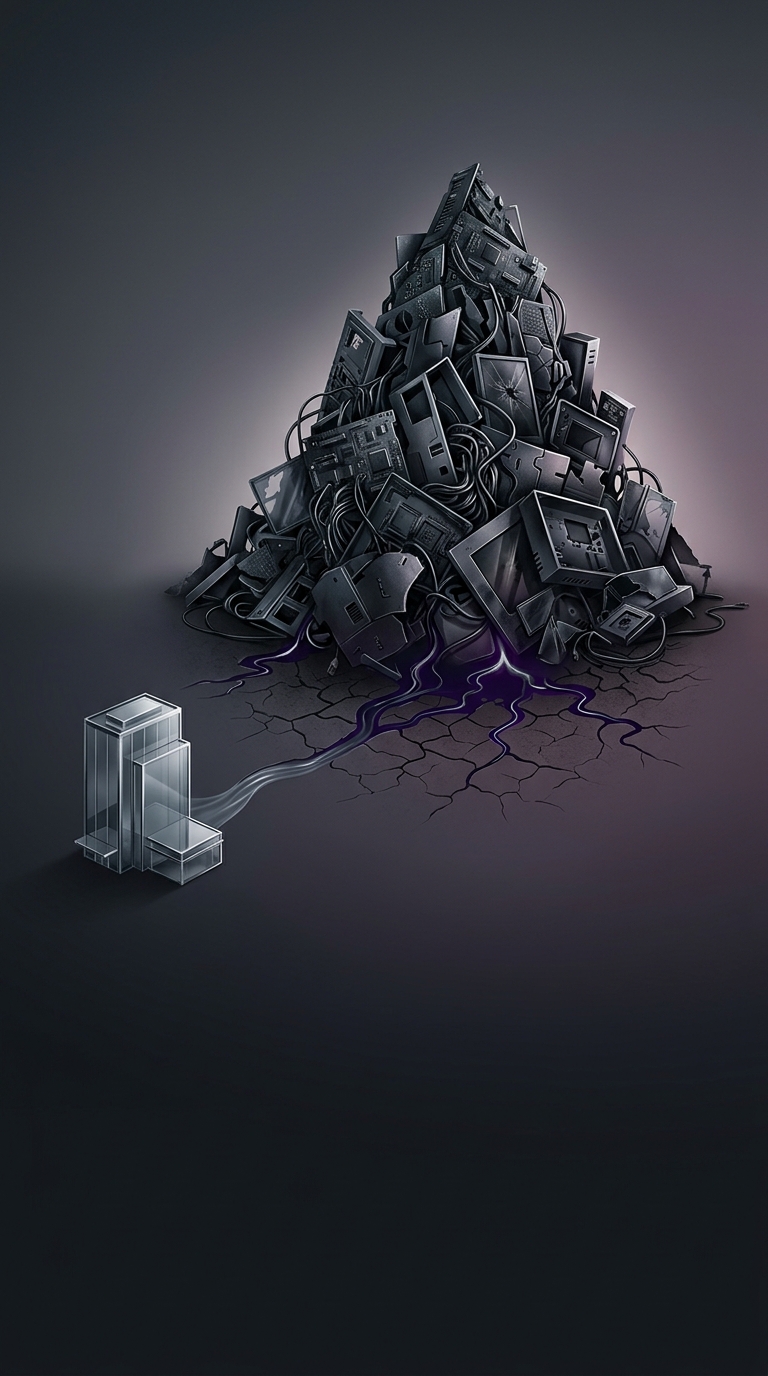
Why a Small Pile of Electronics Can Carry So Much Metal
A discarded phone or computer is compact, but it is not chemically like ordinary household rubbish. Electronics pack metals into circuit boards, batteries, screens, and other components because those materials conduct electricity, store energy, or perform specialized functions. That makes e-waste a small share of landfill trash by volume but a concentrated source of lead, mercury, and cadmium.
The contrast is between space taken up and hazardous material carried. Food scraps, paper, and packaging may fill far more room, while a much smaller mass of discarded electronics can account for much of the metals in the landfill.
What Happens After Electronics Are Thrown Away
In a landfill, devices can be crushed, broken, and exposed to water. Rain passing through waste can pick up dissolved substances and form leachate, the liquid that drains through the landfill. Modern landfills are designed to collect and manage that liquid, but keeping hazardous materials out of the waste stream reduces what the landfill must contain and control.
The metals are not all in the same part of a device: lead can be present in some solder and older display materials, mercury in certain lamps or screens, and cadmium in some batteries and components. When electronics are handled separately, specialized recycling can recover useful materials while keeping hazardous parts under controlled conditions. The small volume of a discarded device therefore understates its importance: a handful of electronics can matter more to a landfill’s metal burden than a much larger pile of ordinary rubbish.