What coal combustion leaves behind
Coal is mostly carbon-rich material, but it also contains tiny amounts of minerals and elements picked up during its formation. Among them are uranium and thorium, naturally occurring radioactive elements. Burning coal does not destroy these elements: the heat drives off much of the combustible material, while many mineral ingredients remain in the ash.
How the elements reach the air
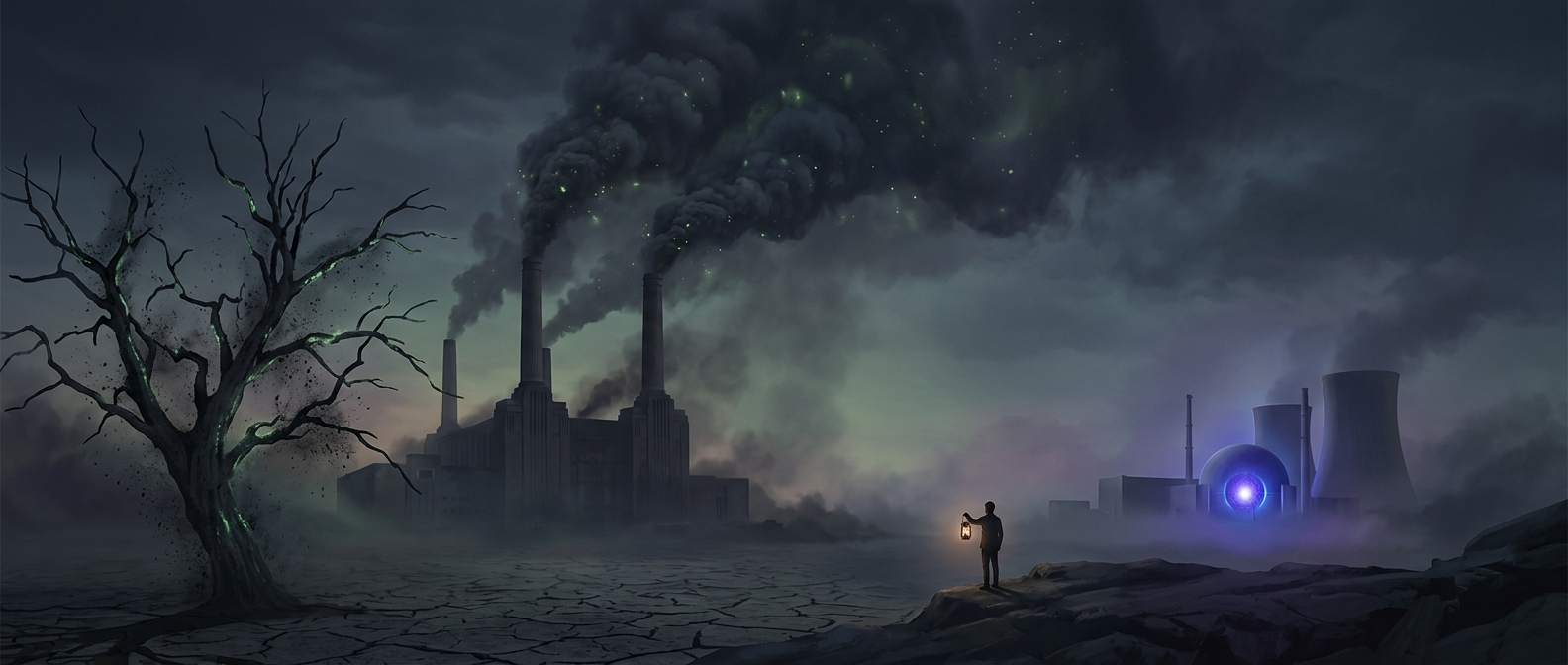
Some of the residue becomes fly ash—fine particles lifted by the hot exhaust moving through a power plant. Uranium and thorium can concentrate in this ash because burning removes a large share of the coal’s original mass as gases, leaving many noncombustible substances behind in a smaller amount of residue. If particles escape the plant’s pollution-control equipment, they can be carried into the air; other ash is captured and collected.
This is a different pathway from radioactive gases released by nuclear fuel. In coal plants, the concern is chiefly radioactive material attached to dust-like particles, not a cloud of radiation itself. The amount released depends on the coal’s composition, how it is burned, and how effectively emissions are controlled.
Where the residue goes
Captured fly ash does not vanish: it must be stored, reused, or otherwise managed. Material that is not captured can settle onto land or water, while the finest particles may travel farther before falling out. The key consequence is that burning coal redistributes trace elements from solid fuel into ash and, when controls are incomplete, into the surrounding environment.