Why a galaxy merger is not a stellar pileup
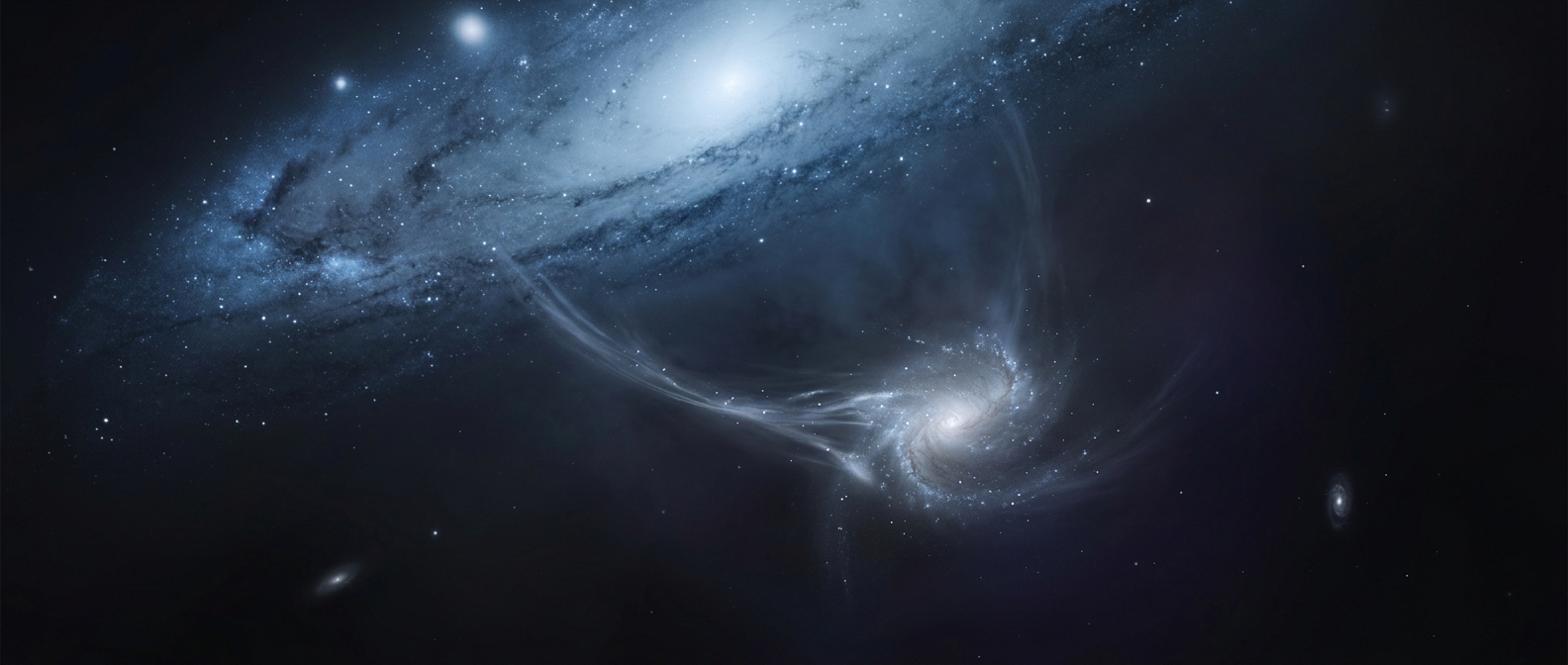
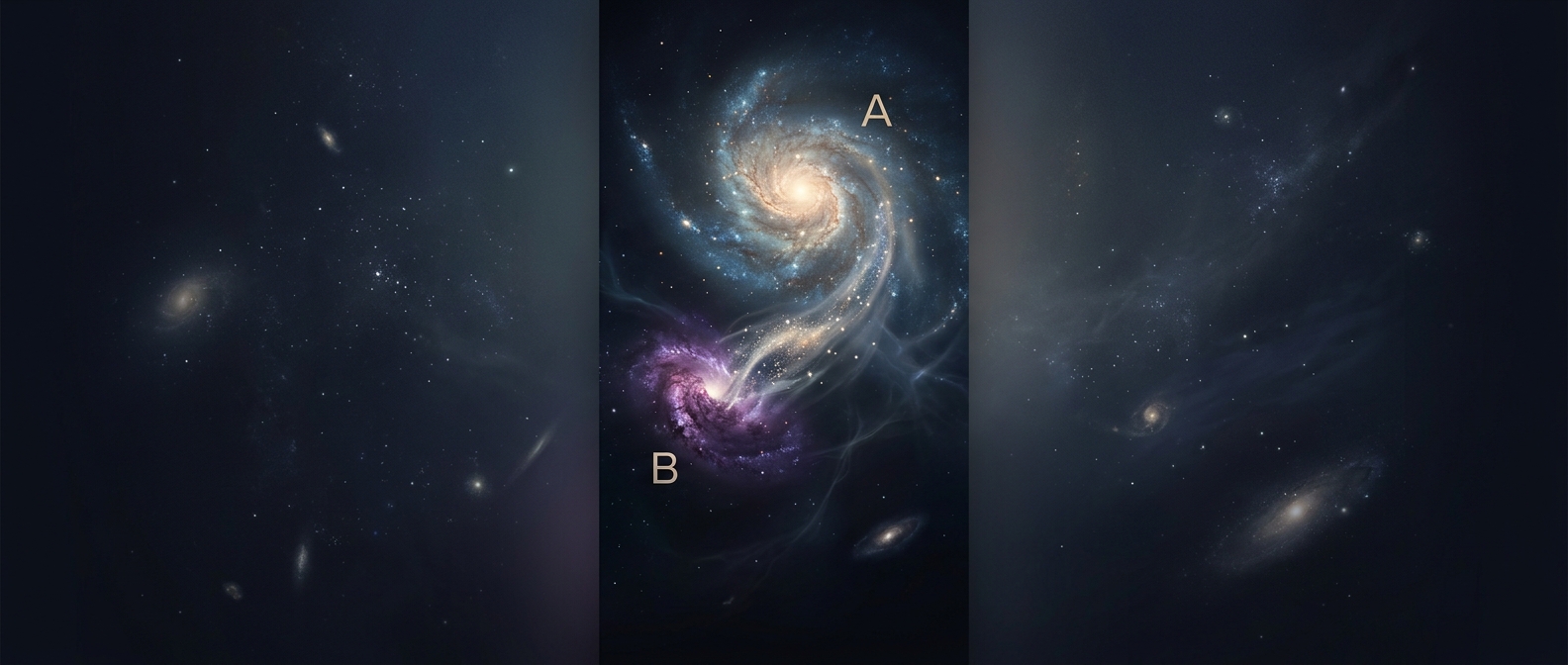
A galaxy can contain billions of stars and still be mostly empty space. Even though a collision between galaxies brings their stars into the same broad region, each star is tiny compared with the distances separating it from its neighbors. Their paths are therefore unlikely to cross closely enough for a direct impact. Instead, the galaxies’ gravity reshapes those paths, pulling stars into sweeping streams and sometimes flinging them far from their original orbits.
Gas behaves differently
The clouds of gas between stars are much more spread out than stars, but they can extend across enormous distances. When galaxies merge, these clouds can overlap and ram into one another. Gas is compressible: collisions can shock it, heat it, and then allow it to cool and become denser. Gravity can then gather parts of that dense gas into new stars.
The merger also rearranges the galaxies’ gravitational fields. That disturbance can funnel gas toward the central regions, where it may collect rapidly and fuel a concentrated spell of star formation. Astronomers call such a surge a starburst. It is not guaranteed in every merger; the outcome depends on how much gas the galaxies contain and how their encounter unfolds.
A collision measured in gravity and time
A galactic merger is not a single moment when two objects smash together. It is a long interaction in which gravity steadily changes the galaxies’ shapes and motions. Stars mostly pass through, while gas clouds lose some of their orderly motion through collisions and can clump together. The dramatic result is less a cosmic traffic accident than a rearrangement of the material that builds the next generation of stars.