A game changed what looked fashionable
In Tang-era Chang’an, polo was more than a pastime imported along the Silk Road. It gave elite clothing a visible purpose. Players rode at speed and swung mallets, so garments associated with riding and movement made sense on the field in a way that formal silk robes did not. The game put those clothes in front of spectators—and made them a recognizable part of an exciting, prestigious activity.
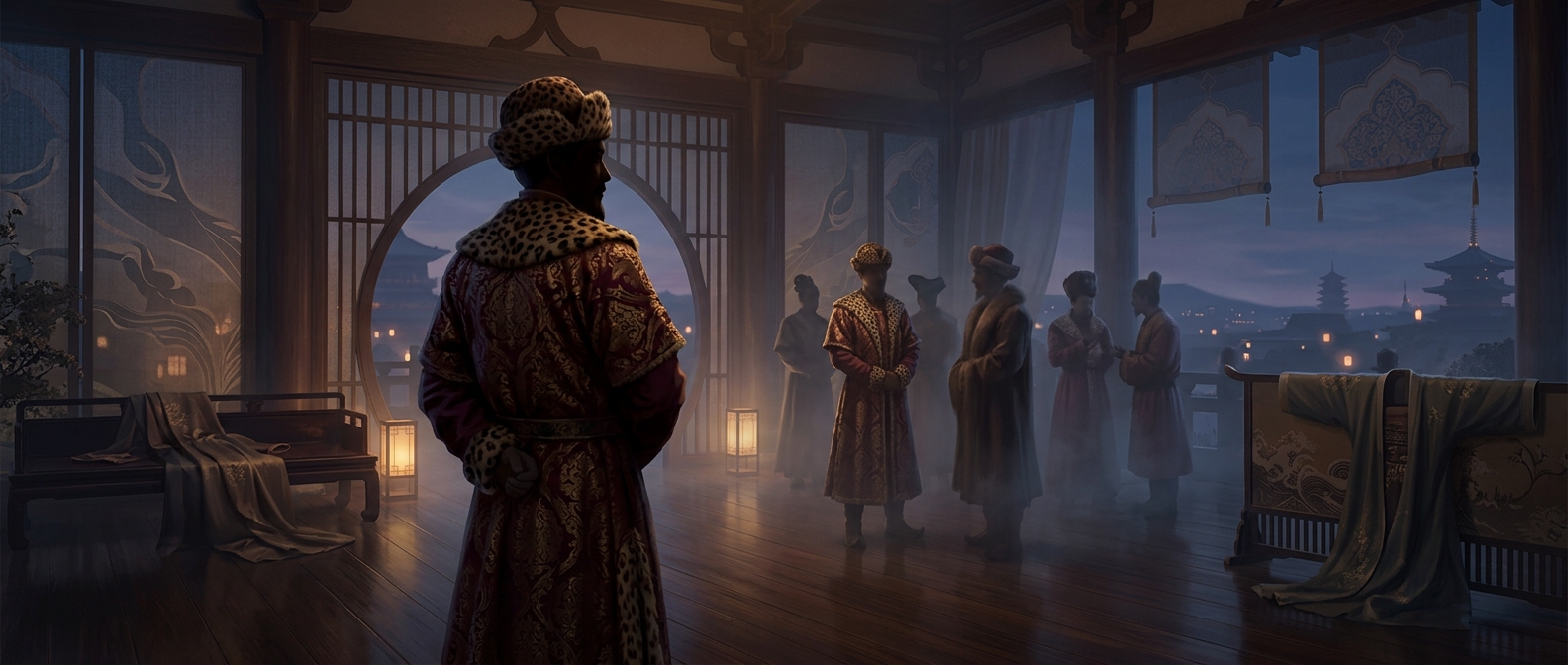
That visibility helped turn practical riding dress into a fashion signal. A polo coat suggested familiarity with the game and the wider world of Central Asian customs that reached the capital through trade and travel. Leopard-skin hats added an even more striking element to the look. The result was not simply a change in fabric or cut: it was a shift in what elite style could communicate.
From the playing field to the city
Chang’an’s nobles did not need to choose between imported styles and local identity in a single, sweeping break. Instead, a popular sport offered a setting in which new clothes could be worn, admired, and copied. Once associated with skilled riders and fashionable company, the styles could travel beyond the game itself.
This is how a trade route could reshape everyday appearances without anyone setting out to redesign fashion. Goods and customs arrived from Central Asia; polo gave some of them a public stage. On the field, a coat that allowed a rider to play was useful. In the city, the same coat—and a conspicuous hat—could show that its wearer belonged to a cosmopolitan elite.