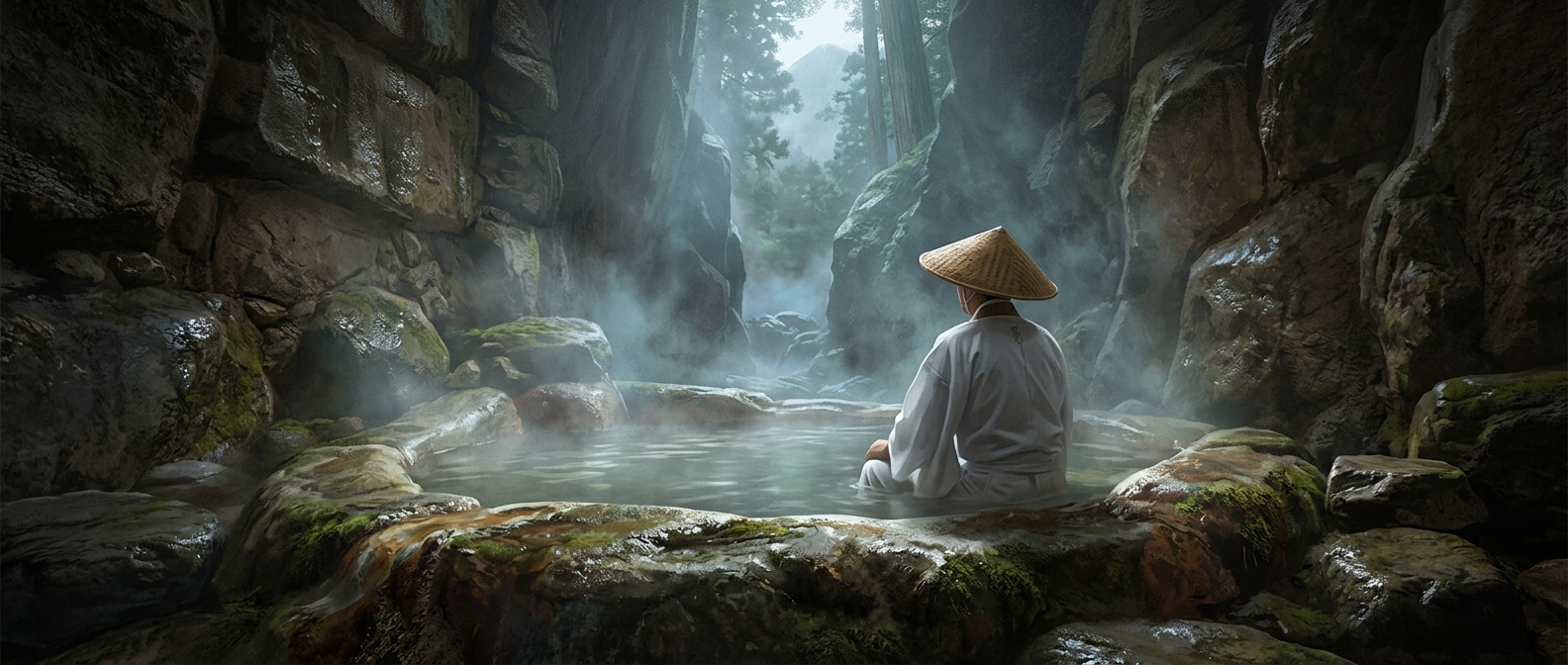
A pilgrimage bath in a mountain village
The cabin stands at Yunomine Onsen, a hot-spring village along the Kumano Kodo, the network of pilgrimage trails leading through Japan’s Kii Mountains. The trail links remote shrines across steep, forested terrain; arriving at a spring offered pilgrims a chance to tend to the body as well as prepare for worship.
The water rises naturally from underground, where heat from the Earth warms it and minerals give it a sulfurous character. The bathing place known as Tsuboyu encloses a small rock basin inside a wooden hut. Its tight scale is part of the experience: this is not a large public pool, but a brief, close encounter with a spring embedded in the route.
Washing before entering sacred space
For pilgrims, bathing was a form of purification before visiting the mountain shrines. In Japanese religious practice, washing can mark a transition from ordinary activity toward ritual; here, the journey itself made that transition tangible. After days on the trail, pilgrims could leave the dust and fatigue behind in the hot water before continuing to a shrine.
The Kumano Kodo is recognized by UNESCO as part of the Sacred Sites and Pilgrimage Routes in the Kii Mountain Range. That recognition connects the bath to a larger cultural landscape: mountain paths, sacred places, and the practices that made travel between them meaningful. The basin is so small that bathing remains an intimate stop on a much longer pilgrimage—not a destination separate from the route, but one of its surviving rituals.