Why Japan’s vending machines fit into ordinary routes
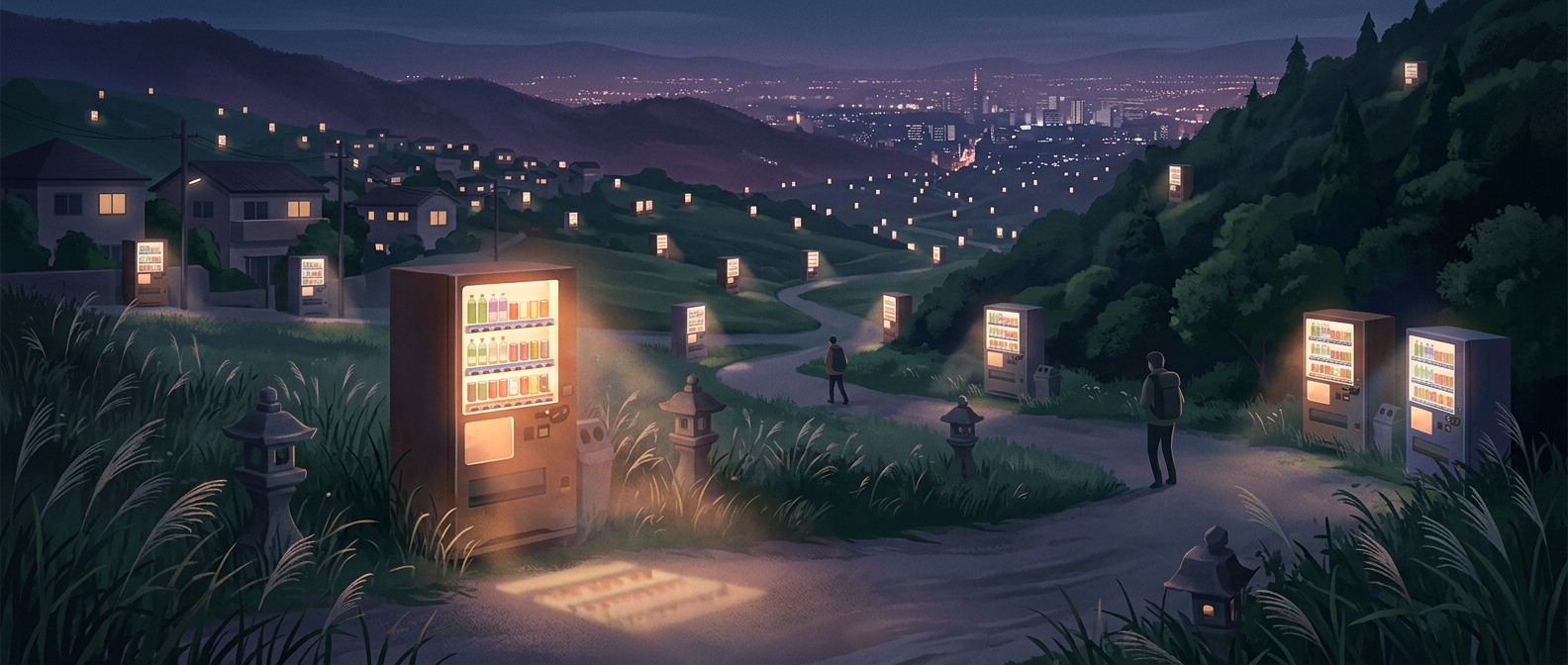
A vending machine works best when many people pass it repeatedly but stopping for a staffed shop would be inconvenient. Japan’s dense neighborhoods, busy stations, office districts, and narrow streets create plenty of those small, steady streams of customers. A machine can occupy a building entrance, parking lot, or patch of roadside space where a full shop would not make sense.
That makes the machines less like isolated attractions than tiny, unattended storefronts. They serve people on the way to work, between trains, or after nearby shops have closed. The mix of products depends on the setting: a machine near a workplace can meet a different need from one near a farm or a residential block.
The practical system behind the convenience
The machines are useful only because someone keeps them stocked and working. Suppliers organize regular delivery and maintenance routes, often servicing several machines in one trip. Operators also choose locations and products with local demand in mind; a machine that sells slowly or is difficult to reach is not automatically worth keeping there.
Japan’s comparatively safe public environment and widespread acceptance of unattended services help make this arrangement workable. So does the compact, packaged nature of many vending-machine goods: they can be stored in a small space and sold without a cashier. Hot and cold drink machines add another layer of engineering, keeping different products at serving temperatures inside the same cabinet.
Not every machine is a miniature supermarket
The striking range of goods reflects local problem-solving, not a single machine stocked with everything. A machine selling a specialized item can serve a particular neighborhood or fill a gap when no nearby shop offers it. The result is a visible network of small conveniences—and, in some places, an errand that once required planning becomes a purchase made on the walk home.