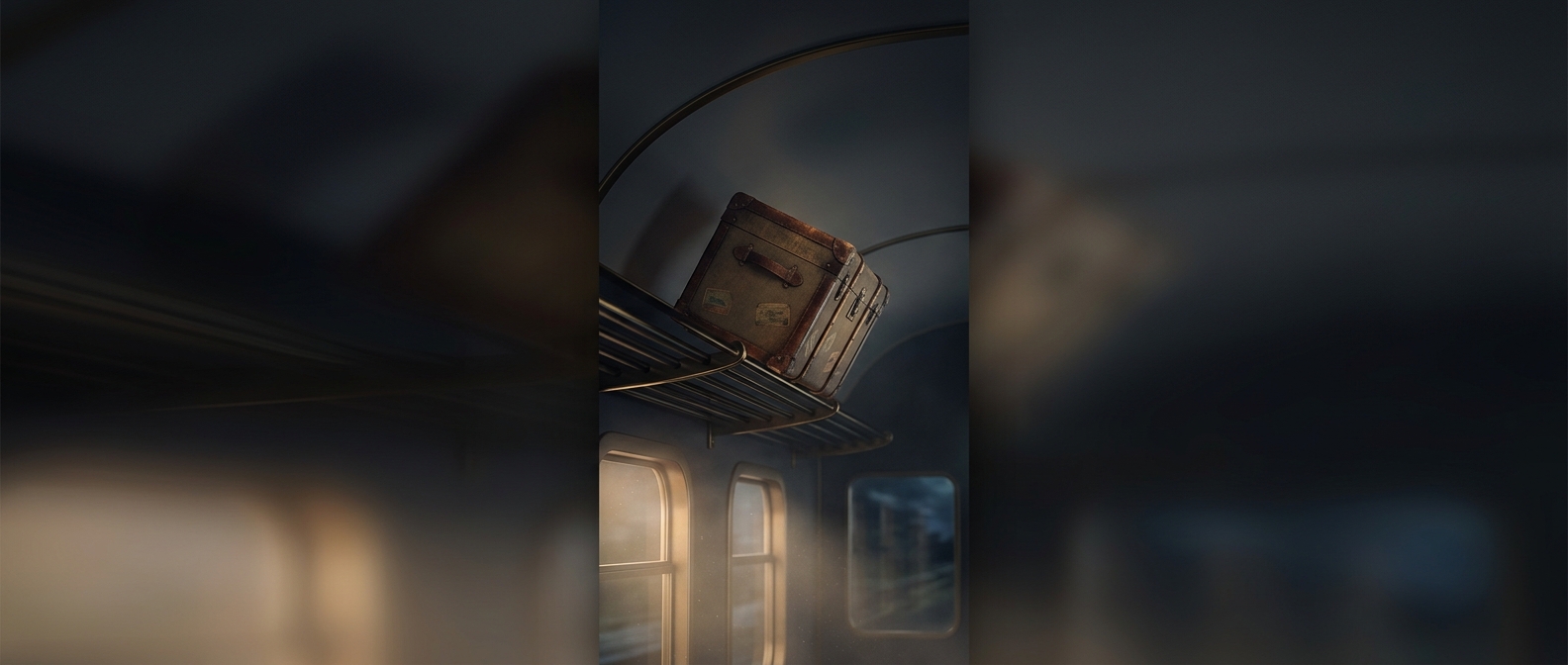
A tilted rack turns gravity into a restraint
When a train brakes abruptly, a bag tends to keep moving at its previous speed. From the passenger’s point of view, it seems to slide forward—toward the aisle—even though the train is slowing beneath it. This is inertia: an object resists a change in its motion.
A rack angled away from the passenger gives the bag a slight uphill path in that forward direction. To slide toward the aisle, the bag must move against gravity, which pulls it toward the lower, rear part of the rack. The tilt does not lock the luggage in place, but it makes forward sliding harder.
Friction supplies the grip
The bag also presses against the rack surface. That contact creates friction, a resisting force that helps prevent sliding. The tilt and friction work together: the slope biases the bag away from the aisle, while friction opposes motion across the surface.
In a sudden stop, the train’s forward deceleration makes the bag’s tendency to move forward stronger. The rack’s angle can help counter that tendency, but it is not a substitute for a barrier or a secure luggage area; a heavy or poorly balanced bag may still shift. That is why rack shape, surface grip, and any retaining edge all matter.
The angle is a small piece of passive engineering: it uses the direction gravity already pulls to make an ordinary bag less likely to slide toward someone standing below.