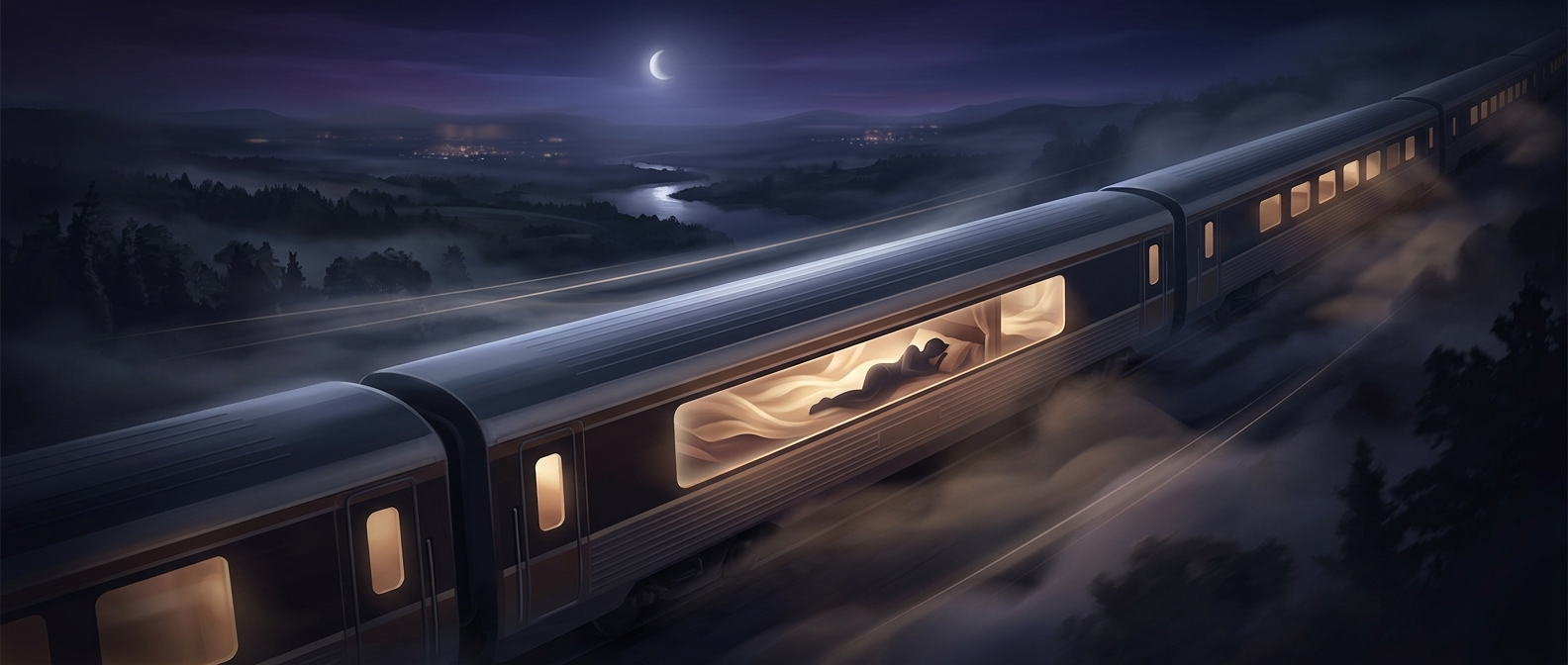
A sleeper berth competes with the aisle
A train car has a fixed outer width, set by the track and the space it must safely fit through. Inside that shell, designers divide the floor into sleeping spaces, corridors, and sometimes washrooms or luggage areas. Every extra inch given to a bed has to come from somewhere else.
The result is a berth sized around the car’s layout, not necessarily around the tallest traveler. In compact sleeper cabins, bunks may also be stacked, so making each one longer can constrain the arrangement of the others or reduce the room left for moving through the compartment.
The tradeoff is capacity versus comfort
Rail operators need each car to carry enough passengers to make overnight service practical. Shorter berths help fit multiple beds into a limited footprint, but they shift the inconvenience onto passengers who cannot lie flat. A traveler may have to bend their knees, sleep diagonally if there is room, or let their feet extend beyond the mattress.
That compromise is especially noticeable because a sleeper berth is meant to serve as a bed for hours, not just a seat for a brief ride. The shortness is a consequence of fitting a useful number of sleeping places inside a narrow moving building. The aisle beside the berth is not wasted space: it is the route passengers need to reach their bunks and move through the car, and narrowing it would create its own practical problem.