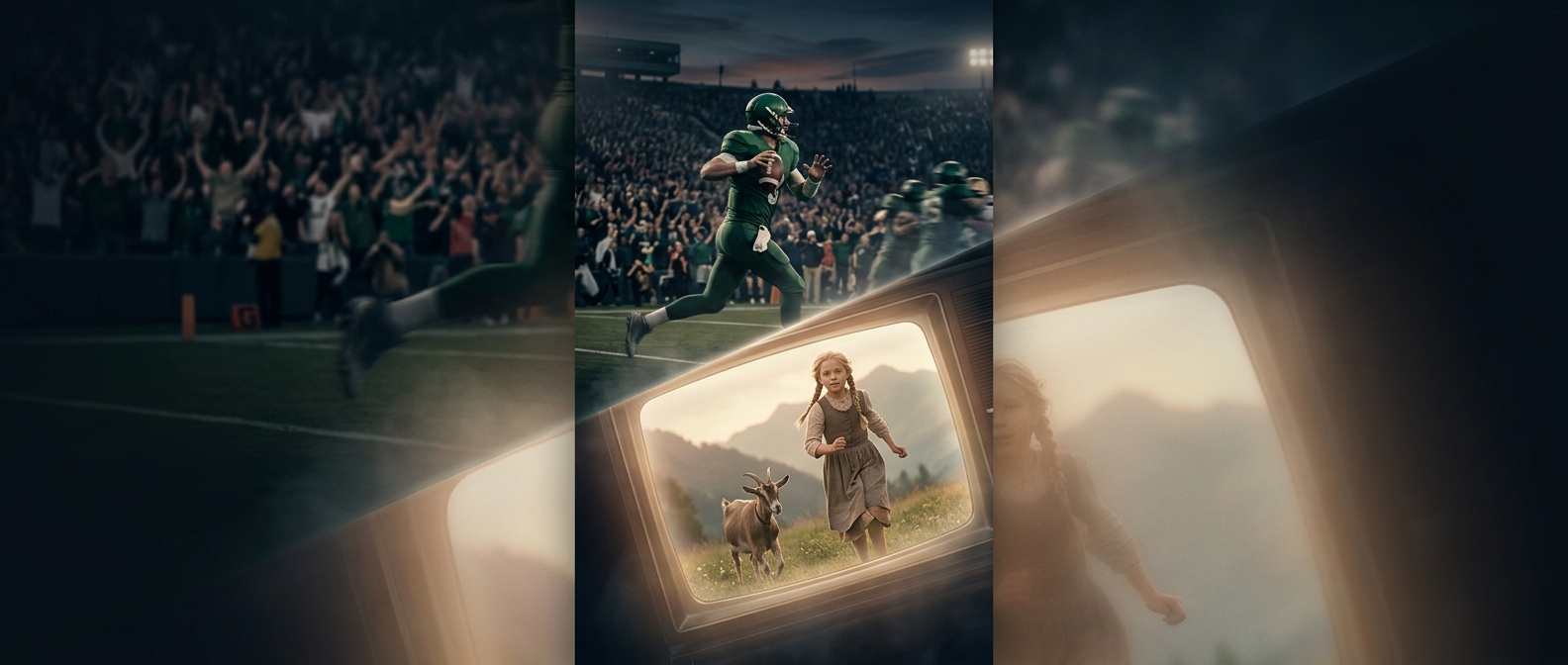
A TV schedule collided with a live game
In 1968, network television treated its evening schedule as a firm handoff: when one program’s time was up, the next was expected to begin. A football game, by contrast, could not be made to finish on cue. NBC’s plan was to leave the Jets–Raiders broadcast for the television film Heidi at its scheduled start, even though the game was still underway.
That conflict turned a routine programming decision into a uniquely frustrating experience. Viewers who stayed with the game saw the Raiders’ late scores; viewers whose screens switched to the film did not. The surprise was not simply that a team rallied, but that the broadcast disappeared while the outcome was still changing.
The problem was coordination, not just timing
A live sports broadcast involves more than the people calling the game. Network staff must decide what airs next, and affiliates and other parts of the operation need to know when the schedule changes. When the game ran long, a last-minute decision had to travel through a system built around planned program times. The rush of viewers trying to find out what had happened then overwhelmed NBC’s switchboard.
The network’s response was to install a dedicated “Heidi Phone,” giving staff a direct line for handling the kind of scheduling decision that had become a public fiasco. The deeper lesson was practical: live events need a clear way to communicate overruns and keep the broadcast on air. After Heidi, a television schedule could no longer be treated as if the game would politely obey it.