Why a Short Flight Could Wear Out an Airliner
An aircraft fuselage is not just a shell around the cabin: it is a pressure vessel. At cruising altitude, the air outside is thin, so the cabin is kept at a higher pressure. Each climb and descent changes the pressure difference across the fuselage, making its skin expand slightly and then relax. That repeated loading is called a pressure cycle.
A single cycle is small enough to be harmless. But takeoffs and landings accumulate, and tiny flaws near joints and fasteners can grow under repeated stress. This is metal fatigue: damage that develops gradually, even when the metal is never bent far enough to break in one dramatic event.
How Small Cracks Became a Large Tear
The fuselage’s joints are natural stress points. Fastener holes and overlapping sheets interrupt the smooth flow of force through the metal, concentrating stress in a small area. If cracks form at several nearby points, they can lengthen and join together. A section that once carried the cabin’s pressure load can then lose much of its strength at once.
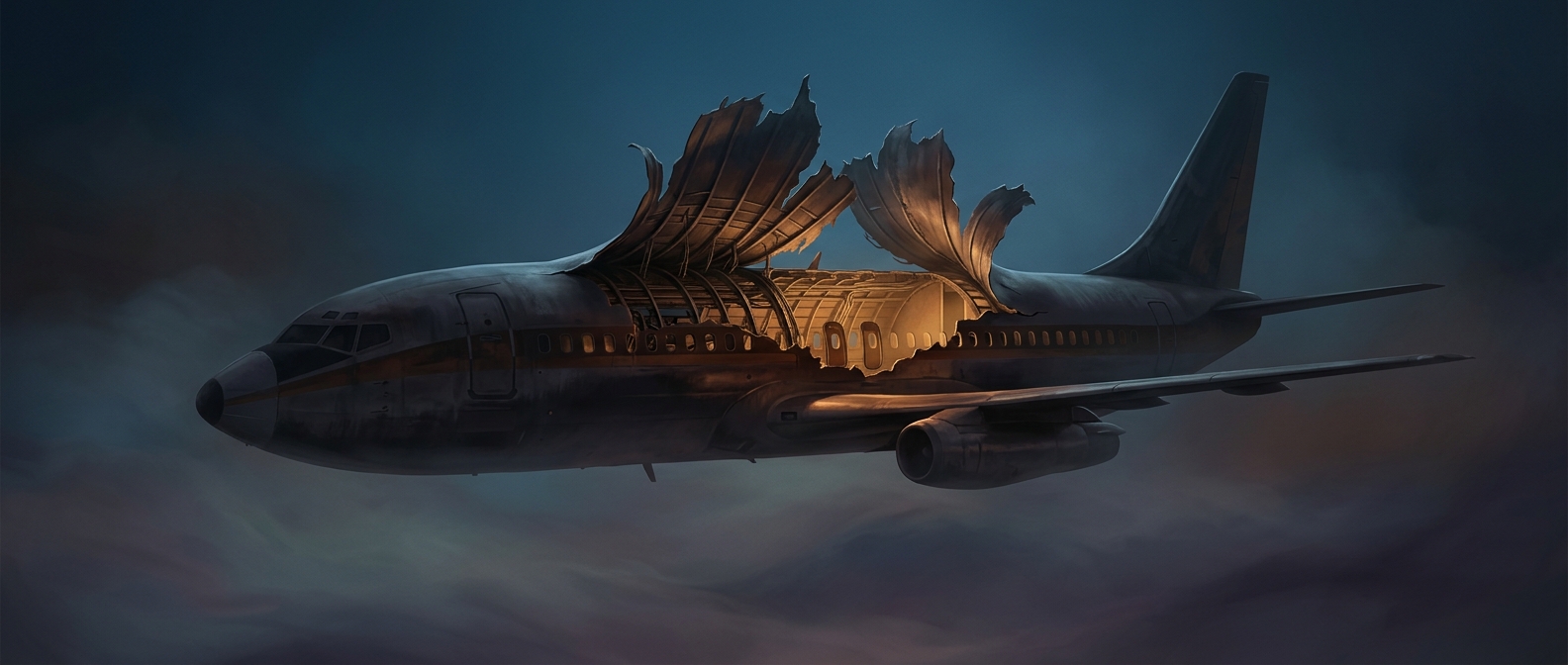
That helps explain how a large piece of the upper fuselage could separate rather than leaving only a small hole. Once the cabin roof was gone, the aircraft was badly damaged, but the remaining structure and the crew’s control inputs still mattered: the plane had to be kept stable and guided to a landing.
The Maintenance Lesson
The danger in fatigue is that an aircraft can appear usable while damage is developing out of sight. Inspecting the exterior is not always enough; close checks of joints and other high-stress areas are needed to find cracks before they link up. The incident made the consequences of overlooking such damage unmistakable: a plane’s service history—especially the cycles it has endured—matters as much as its age.