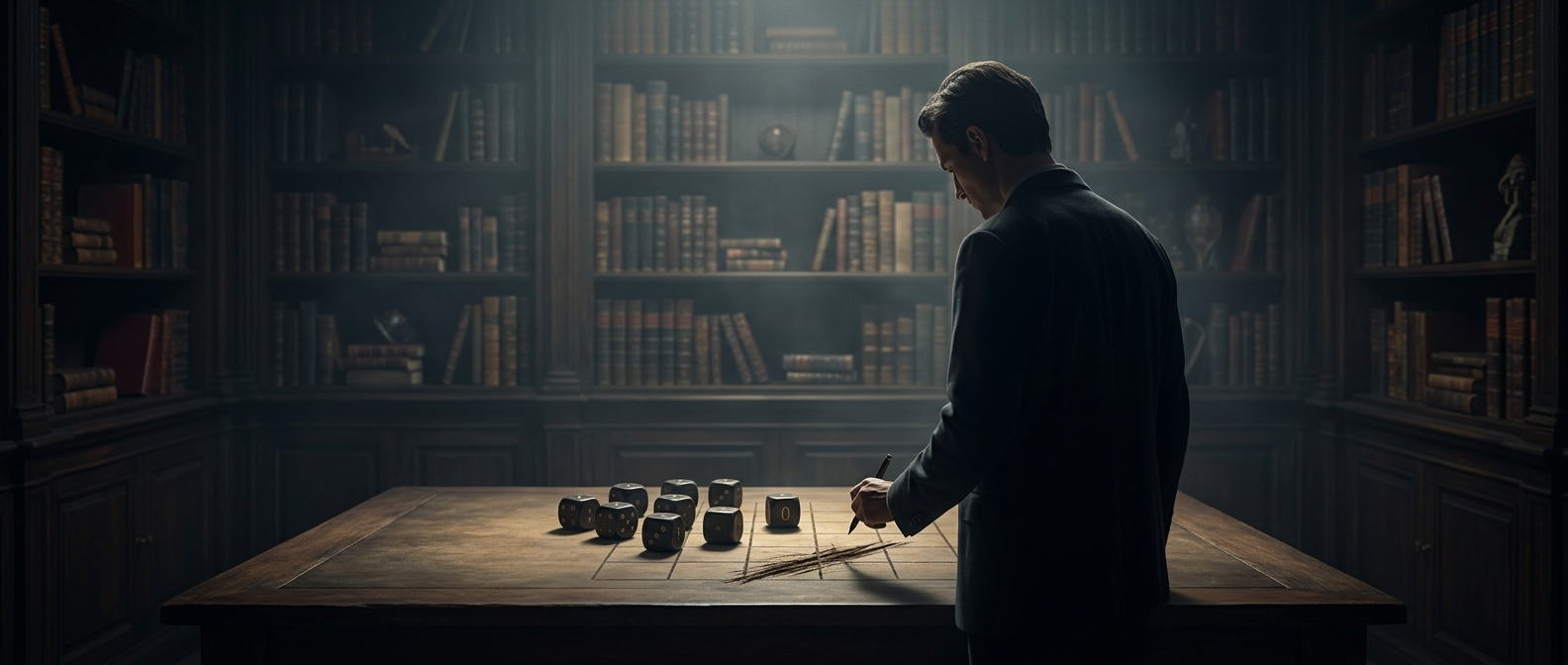
A party game built around five dice
The Yacht Game began as entertainment for guests aboard a yacht, but its appeal came from a format that needed little equipment: dice, a score sheet, and a table. In the familiar game, players roll five dice and decide which results to keep, aiming to make combinations such as a full house or a straight. Each roll is a small gamble: hold onto a promising set, or risk it for a better one.
That mix of luck and choice makes the game easy to teach while giving players meaningful decisions. The dice supply uncertainty; the scoring categories give each turn a goal.
From private amusement to a public name
In 1954, toy entrepreneur Edwin Lowe brought the couple’s game to the public and renamed it Yahtzee. That shift mattered beyond the label: a pastime created for a particular group of guests became something people could encounter as a packaged game and play in their own homes.
The name change also gave the game a memorable identity distinct from its original setting. Its central appeal, though, remained practical and social: a handful of dice could turn an ordinary gathering into a contest of risk, patience, and luck.