The score depends on the whole turn, not just one roll
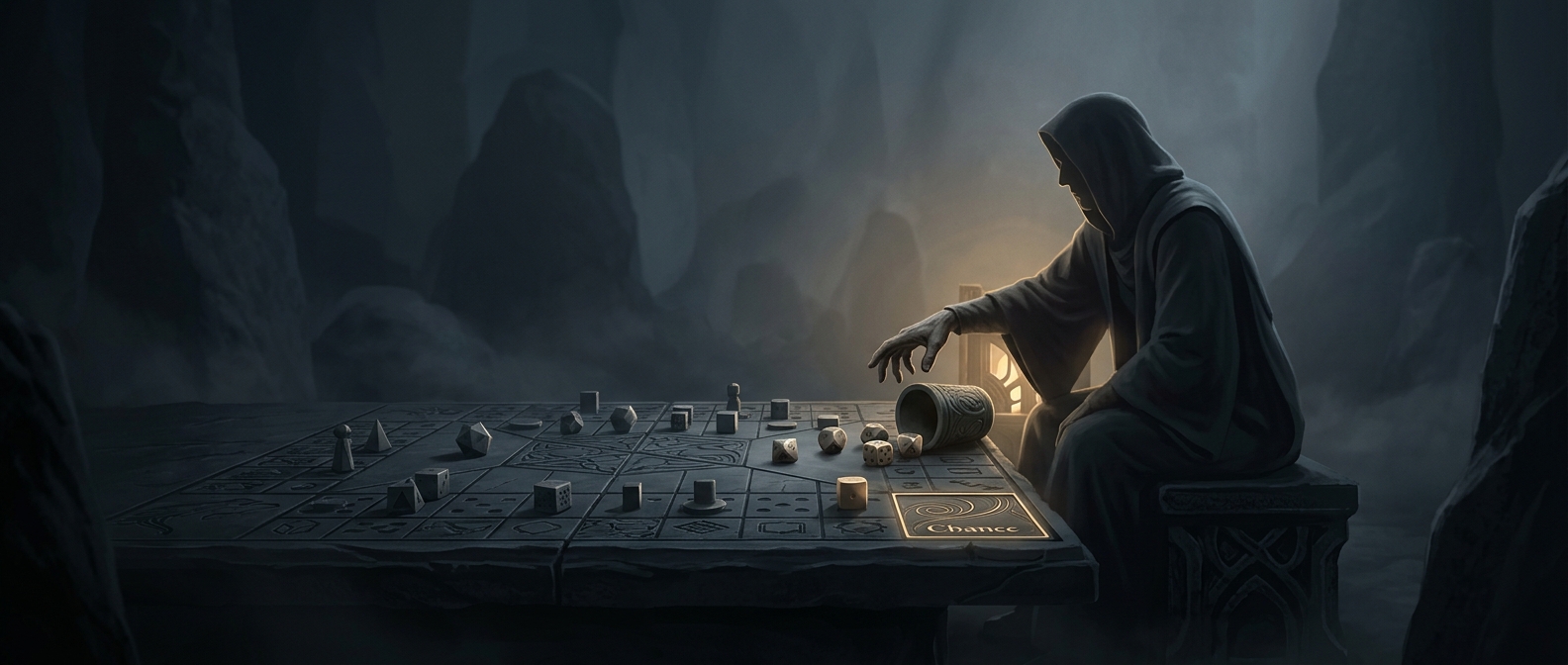
Yahtzee gives a player up to three rolls on a turn. After each roll, they can set aside dice they want to keep and reroll the rest. That choice turns a lucky-looking result into a small planning problem: keep a promising group, or abandon it to chase a more valuable combination.
A high score comes with a risk
A player aiming for five of a kind may keep matching dice and reroll the others. Each reroll can improve the set, but it can also leave the player with a weaker combination than another scoring category would have offered. The Yahtzee box on the scorecard is therefore a wager: the player must decide whether the chance of reaching the top category is worth spending a turn on it.
That tension is what makes the 50-point result matter. The number is fixed, but earning it requires both favorable dice and choices about when to stop pursuing a goal. A near miss can still score elsewhere—or force a player to sacrifice a category—while five matches convert that risky turn into the scorecard’s biggest single-category payoff.