How a Helmet Can Aim a Helicopter’s Gun
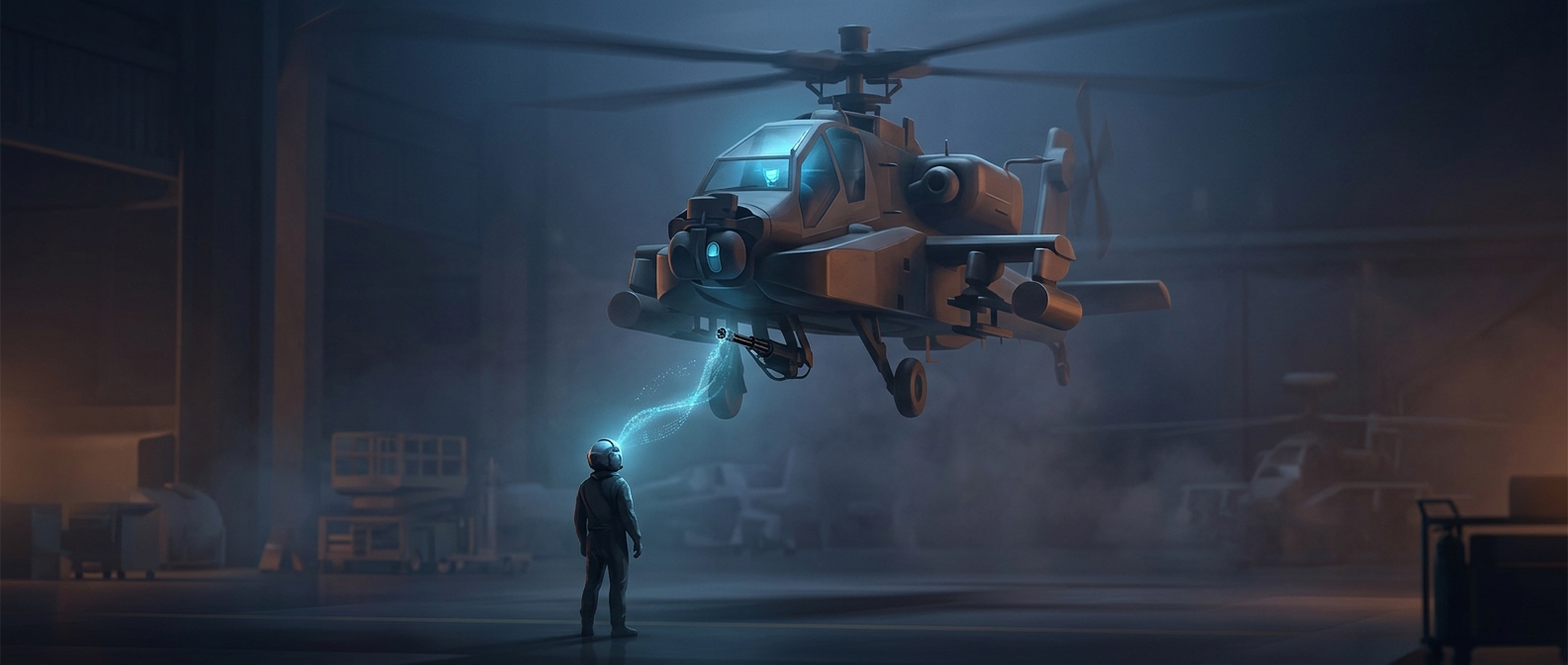
The key is that the gun mount can move independently of the helicopter. Sensors associated with the pilot’s helmet measure which way the pilot’s head is turned. The aircraft’s sighting system compares that direction with the helicopter’s orientation, then commands powered actuators—motors that move the mount—to turn the gun toward the same line of aim.
This is head direction, not necessarily eye tracking: the system follows where the helmet points. The pilot still has to identify a target and operate the weapon controls; looking at something does not, by itself, fire the gun.
Why Separate the Gun From the Aircraft?
A helicopter can keep its nose pointed along its flight path while the pilot looks toward a target off to one side. Without a movable mount, bringing a fixed gun onto that target would require turning the whole aircraft, changing its direction of travel and potentially disrupting the pilot’s view of the surrounding terrain.
A head-coupled sighting system shortens the chain between spotting and aiming. The pilot turns toward what needs attention, and the gun can follow without requiring the helicopter to swivel with it. The mount has a limited range of motion, however, and the system must coordinate the weapon’s aim with the aircraft rather than treating the pilot’s head direction as an unrestricted command.
The striking part is that the helicopter and its weapon can momentarily have different orientations: the aircraft continues flying one way while the gun is aimed another.**