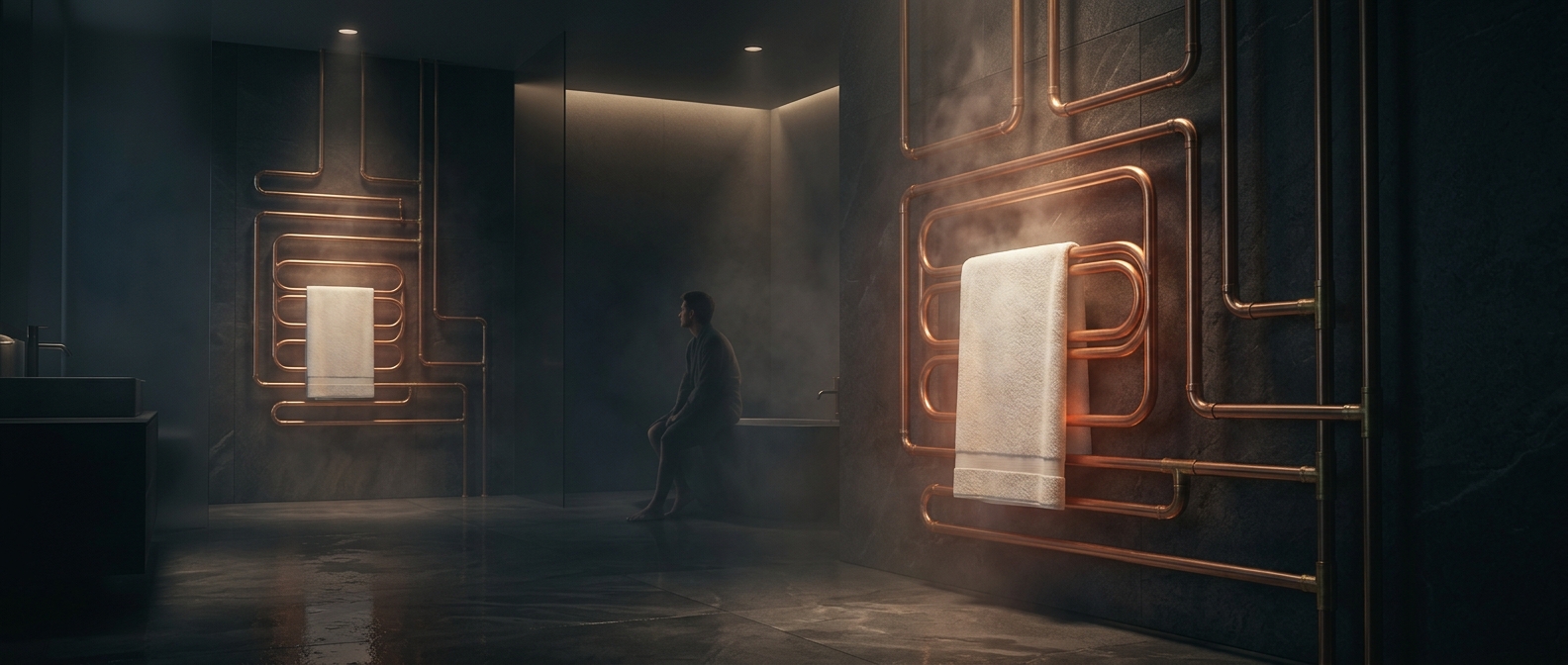
How a hot-water towel rail gives off heat
In a water-heated towel rail, hot water circulates through hollow metal bars. The water warms the metal, which then transfers heat to towels touching it and to the air around it. This is the same basic process used by a radiator; the rail is both a place to hang towels and a small part of the room’s heating system.
A valve controls the flow of water through the rail. When the building’s heating system is running and the valve is open, the bars warm up. When the system is off—or the valve is closed—the rail may cool, even if it looks like an appliance that should work independently.
Why it matters in a bathroom
Warmth helps water evaporate from damp fabric, while spacing towels across the bars lets air reach more of their surface. But the rail’s performance depends on how hot the circulating water is and how long it stays warm. It may keep a towel pleasantly warm without drying a thick, wet one quickly.
That connection can also explain why a rail behaves differently from an electric heater: it may follow the building’s heating schedule rather than respond to a separate power switch. In older or centrally heated buildings, the towel warmer can be part of the plumbing infrastructure—not a standalone gadget.