How Silver Can Disrupt Microbes
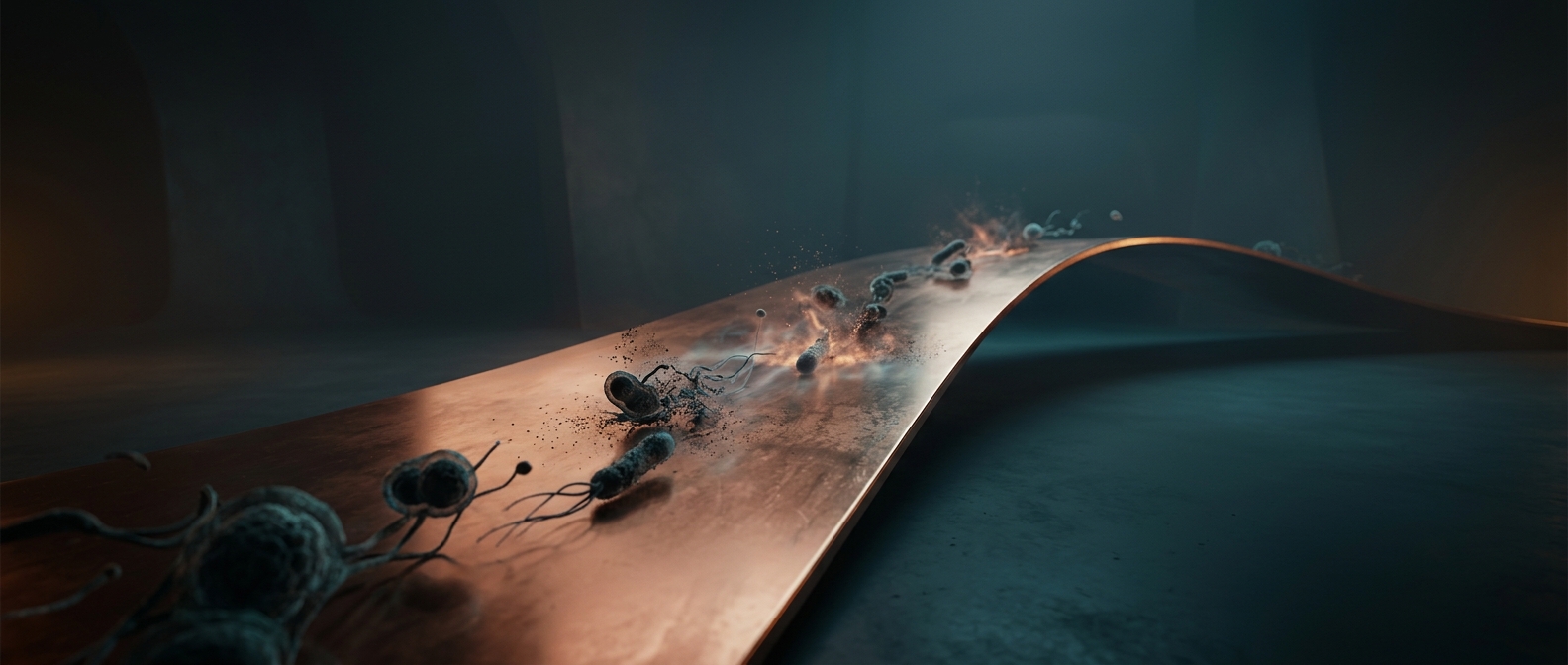
Silver’s antimicrobial effect comes mainly from silver ions: electrically charged silver atoms that can detach from a surface when silver meets moisture. If microbes encounter enough of these ions, the ions can interfere with several parts of a cell at once. They can bind to proteins that help the cell carry out essential chemical reactions, and they can damage the cell’s outer membrane. In some microbes, silver can also disrupt processes involved in copying genetic material.
A microbe that cannot maintain its cell or reproduce is less able to grow into a population. That is the key difference between an antimicrobial effect and instant sterilization: disrupting growth does not mean every pathogen is killed on contact.
Why a Dinner Fork Is Not a Disinfectant
The effect depends on how much silver becomes available and how long microbes remain in contact with it. A utensil is not a controlled antimicrobial treatment: food, moisture, surface condition, and the particular microbe all affect what happens. The presence of silver therefore does not guarantee that a meal or utensil is free of pathogens.
The surprising part is the scale of the mechanism. A familiar piece of tableware can interact with microbes through chemistry too small to see—but that molecular action is not a substitute for washing utensils or handling food safely.