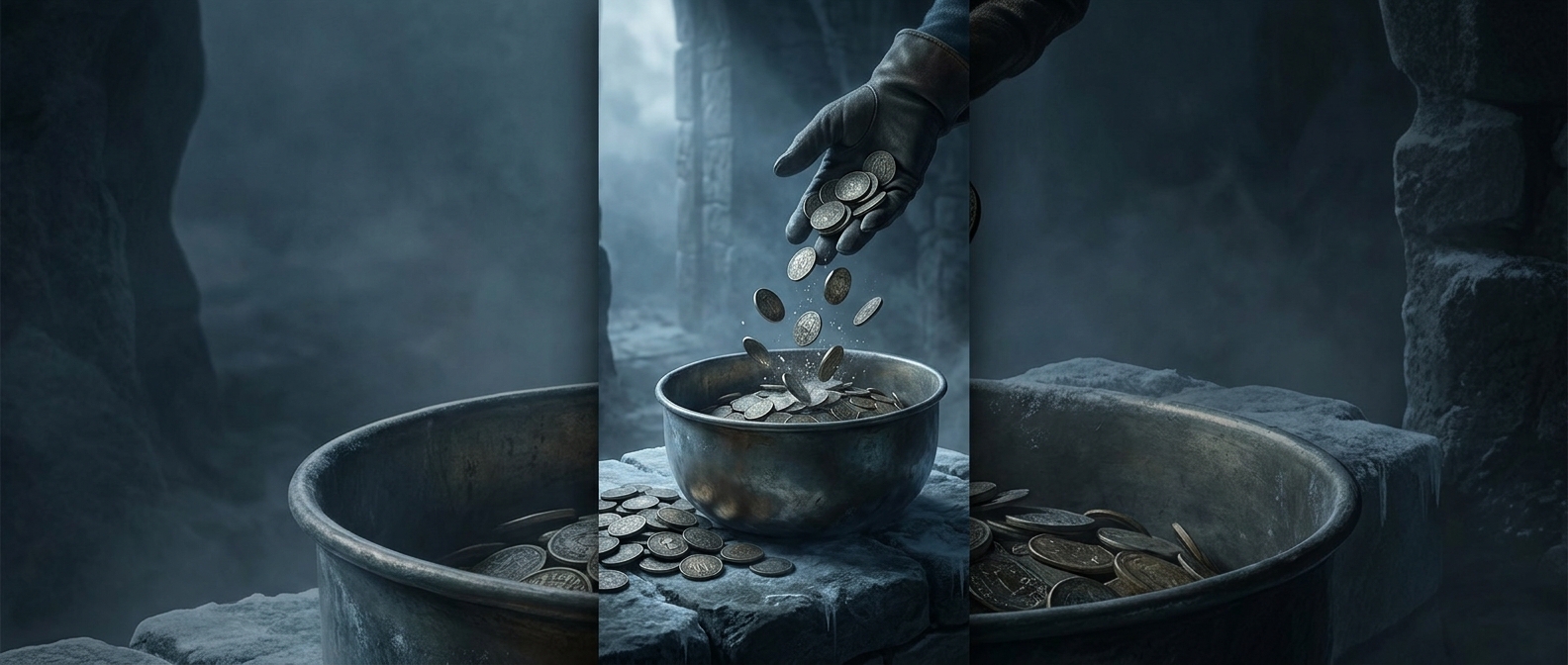
A currency name born from a practical cut
Before coins were the everyday measure of money in parts of medieval Rus’, silver could circulate in larger pieces. A merchant who needed only a fraction of one could cut off a portion rather than hand over the whole ingot. The Russian word rubl’ is linked to rubit’, meaning “to chop” or “to cut,” reflecting that practice.
Weight did the work of a stamped value
A cut piece was not automatically worth a fixed amount simply because it had a particular shape. Its value depended chiefly on how much silver it contained, so pieces could be weighed in a transaction. That made silver divisible, but it also meant that payment involved checking the metal rather than relying on a modern coin’s stated denomination.
The arrangement suited trade where people needed to make payments of different sizes from a limited supply of silver. Cutting made a large piece more usable; weighing helped establish what the smaller portion was worth.
The name outlasted the metal
As monetary systems changed and the ruble became a named unit of currency, the old word remained even though ordinary payments no longer required chopping up silver. The name preserves a trace of money’s earlier physical form: value could be portioned with a cut, then judged by the metal in the piece.