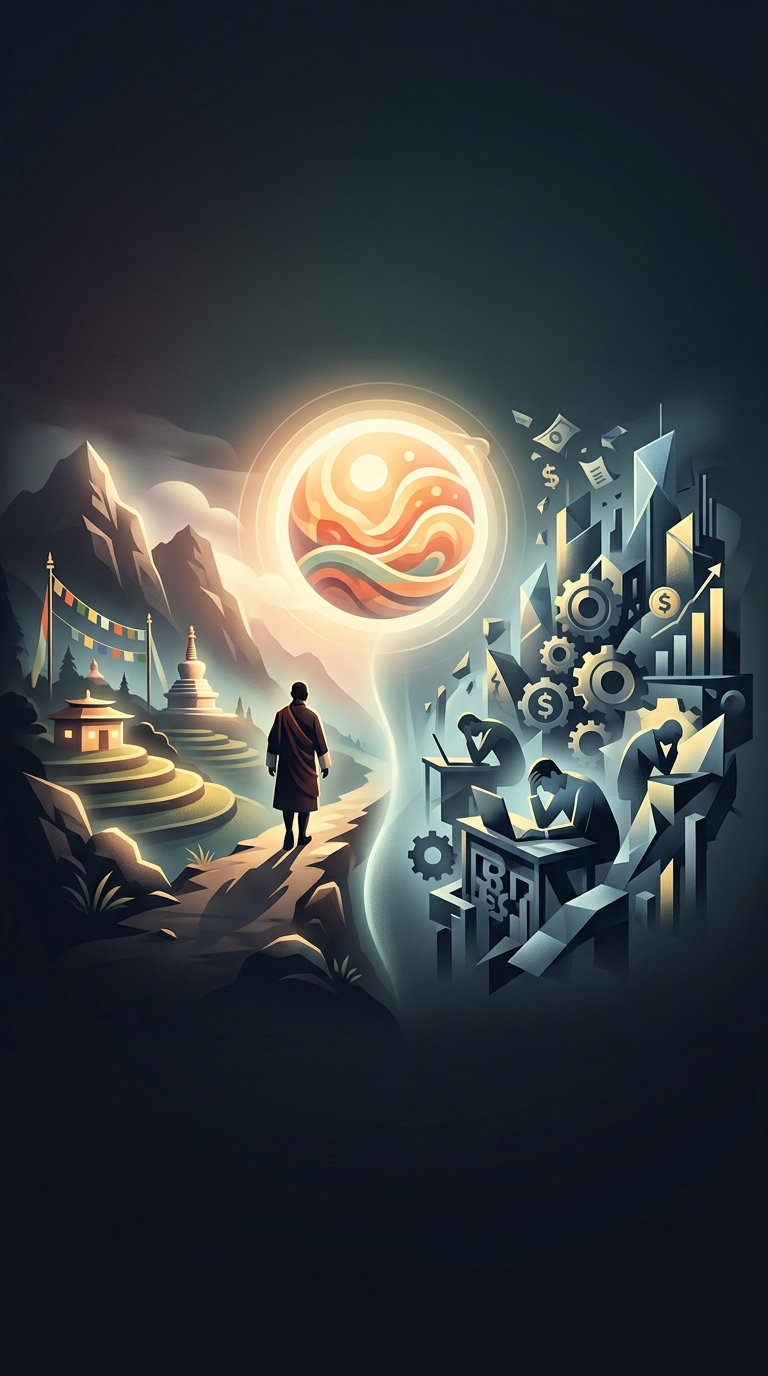
How Bhutan Turns Happiness Into a Planning Tool
Bhutan’s Gross National Happiness (GNH) framework is not a replacement for economic statistics. It is a way to ask a broader question alongside them: are people’s lives improving in ways that matter beyond income and production? The framework gives government a structure for considering well-being, culture, community, and the natural environment when setting priorities.
What the Index Looks At
GNH organizes well-being into nine domains, including psychological well-being, health, education, time use, living standards, cultural resilience, community vitality, good governance, and ecological diversity. The domains matter because a single economic measure can miss tradeoffs: growth may raise incomes while also increasing pressure on local landscapes or ways of life.
The index draws on information about people’s circumstances and experiences, rather than treating happiness as a passing mood. Its purpose is to make several dimensions of life visible together, so policymakers can see where progress is uneven and what may need attention.
From Measurement to Decisions
The framework also shapes how policies are considered. Instead of judging a proposal only by its expected economic return, officials can examine how it may affect different aspects of well-being. That does not guarantee that every decision benefits everyone, or that cultural and environmental goals never conflict with development. It makes those consequences part of the planning conversation.
For visitors, this approach helps explain why Bhutan’s national identity is often discussed in terms of more than scenery or prosperity. The country is trying to assess development by asking not just what it produces, but what kind of life that development supports.