A Costume Change Became a Game-Design Tool
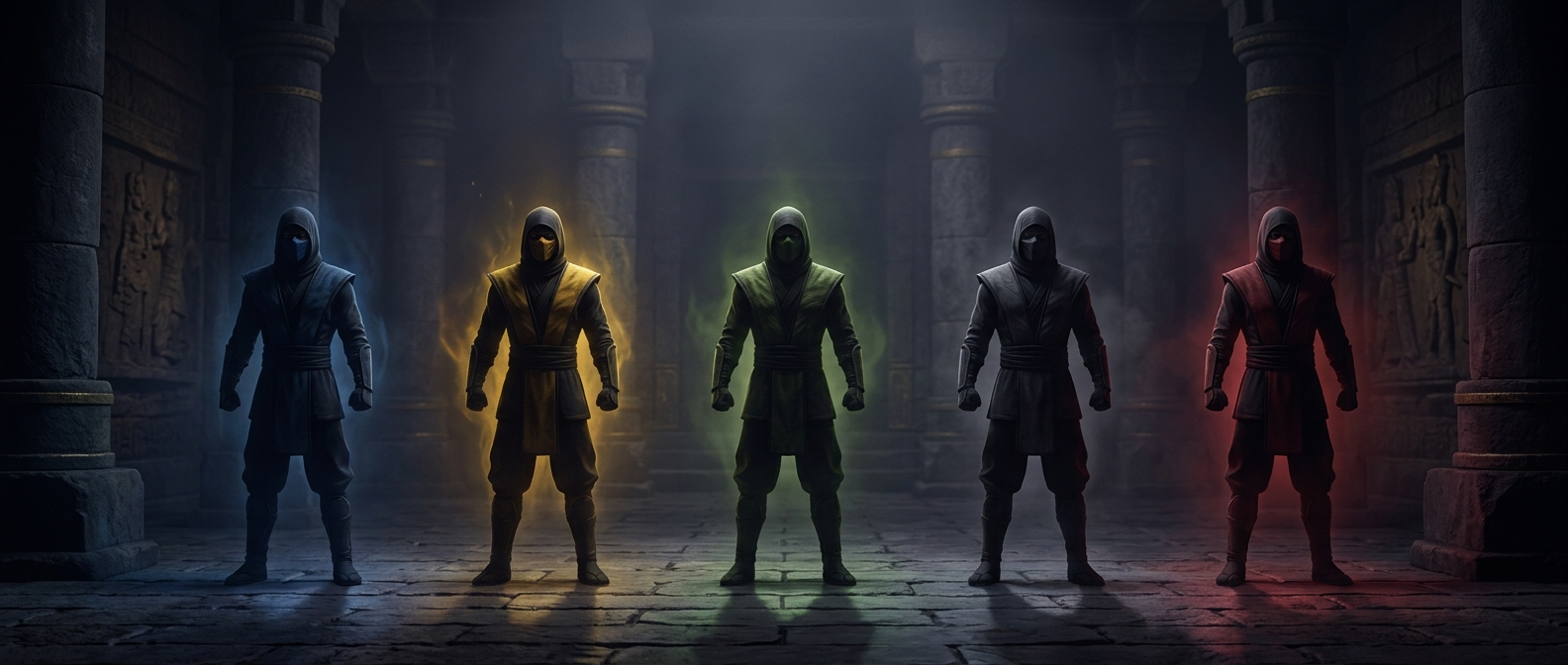
In the original Mortal Kombat, the ninja fighters could look distinct without requiring a completely new set of character images for each one. The game’s visuals came from digitized photographs of performers: a sequence of poses was turned into the images players saw during attacks, jumps, and other actions. Reusing those images and changing their colors created a new look at a fraction of the work of photographing and preparing an entirely separate fighter.
That mattered in an era when arcade games had tight limits on memory and development time. A character was not just one picture; the game needed many images to make movement and combat feel responsive. Reusing a completed animation set let the team add recognizable faces to the roster without duplicating all that visual work.
Color Made the Reuse Read as Character
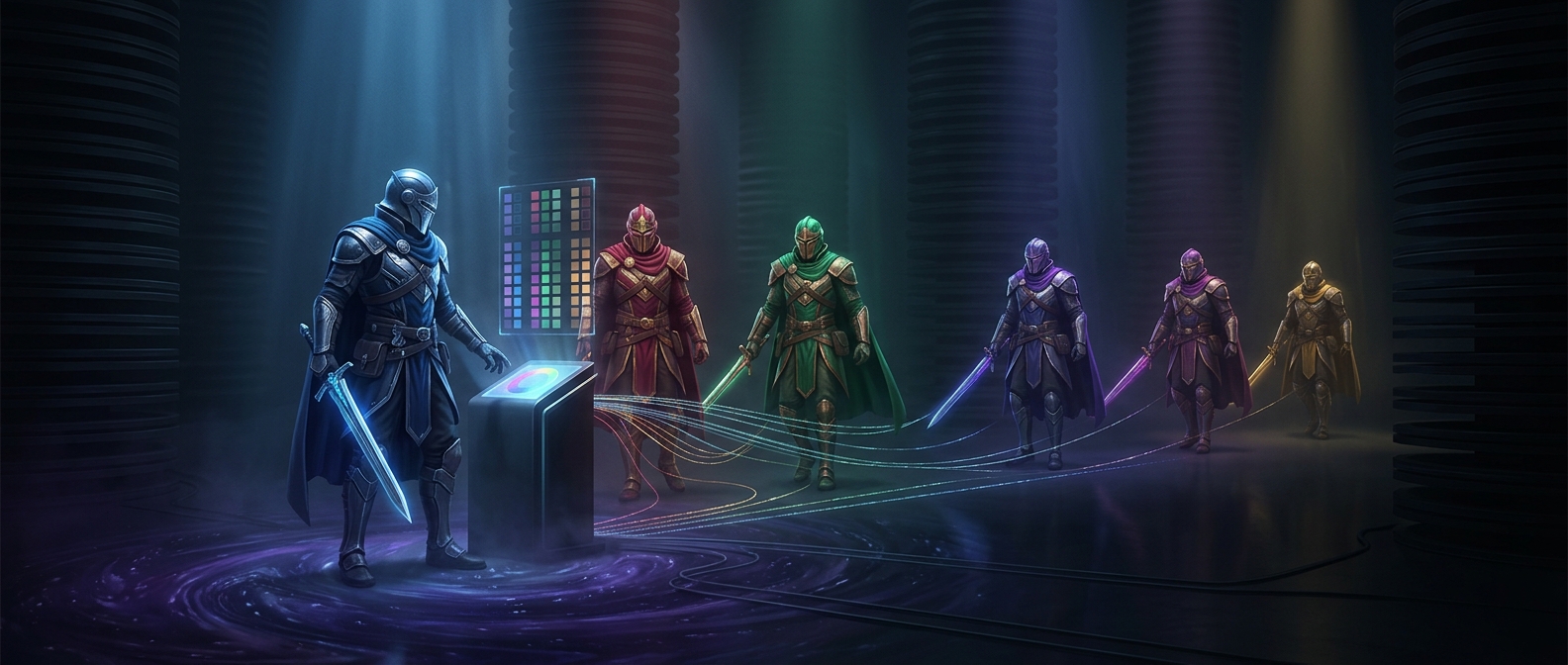
A palette swap changes the colors assigned to an image while leaving its shapes and poses intact. On a masked ninja, that simple change was especially effective: the costume’s silhouette stayed consistent, but its color gave players an immediate cue about which fighter they were seeing. The same visual shortcut could support several characters while keeping them legible in the middle of a fast match.
The reuse was a starting point, not the whole identity. Names, moves, and roles in the game gave players reasons to treat the color variants as separate fighters rather than merely alternate costumes. Reptile, for example, was presented as a hidden character, turning the familiar ninja image into part of a discovery as well as a roster design.
The result was a practical compromise with a lasting visual signature: a production shortcut became one of the series’ most recognizable motifs, and a different color could be enough to make a familiar pose feel like a new opponent.