Why body position changes nighttime reflux
Heartburn happens when stomach contents move backward into the esophagus, the tube that carries food to the stomach. A ring of muscle at their meeting point—the lower esophageal sphincter—normally helps keep that passage closed. It is not a perfectly sealed valve, and reflux becomes more likely when it relaxes or pressure pushes stomach contents upward.
When you lie down, gravity no longer helps keep those contents pooled in the lower part of the stomach. But the stomach’s shape and its connection to the esophagus mean that changing sides can still change how close liquid acid sits to the opening.
The difference between left and right
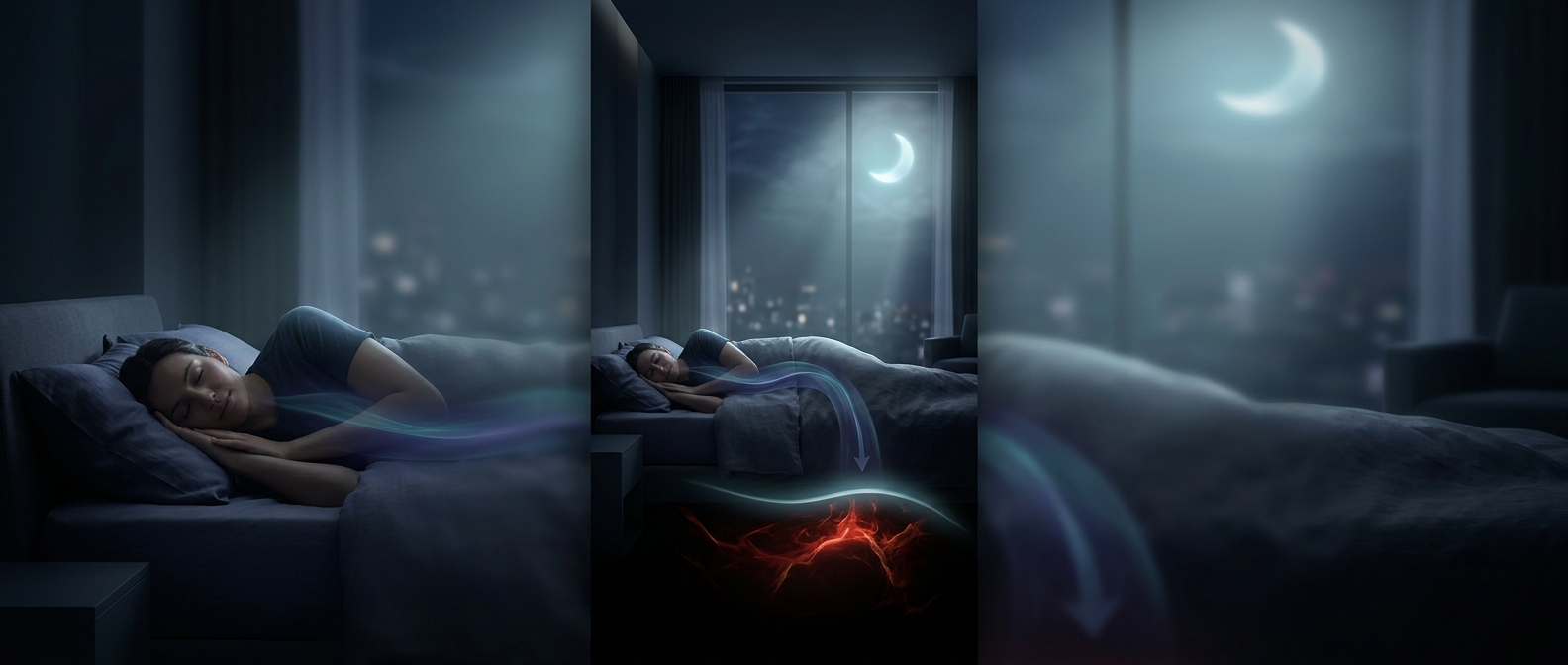
On the left side, the stomach’s arrangement tends to leave the junction with the esophagus higher than the pool of stomach contents. That makes it less likely for liquid to reach the opening. Turning onto the right can put the opening closer to, or below, the stomach’s contents, making upward flow easier when the muscle barrier briefly relaxes.
The result is not a stronger valve or less acid production; it is a change in the position of the fluid relative to the opening. That can mean fewer or shorter episodes of acid reaching the esophagus for some people.
A practical position, not a cure
Left-side sleeping may help with nighttime symptoms, but it does not remove the underlying tendency to reflux, and people can respond differently. The useful takeaway is simple: if heartburn tends to wake you, switching sides may change the plumbing enough to reduce how readily stomach contents reach the esophagus.