Why Capricorn gets a full zodiac sign
The apparent mismatch comes from two different ways of dividing the sky. A constellation is a recognized region of the celestial sphere, and constellations vary greatly in size. The zodiac signs used in astrology, by contrast, are twelve equal 30-degree sections of the Sun’s apparent yearly path, called the ecliptic. Equal sign size does not mean equal constellation size.
A sky map and a symbolic calendar
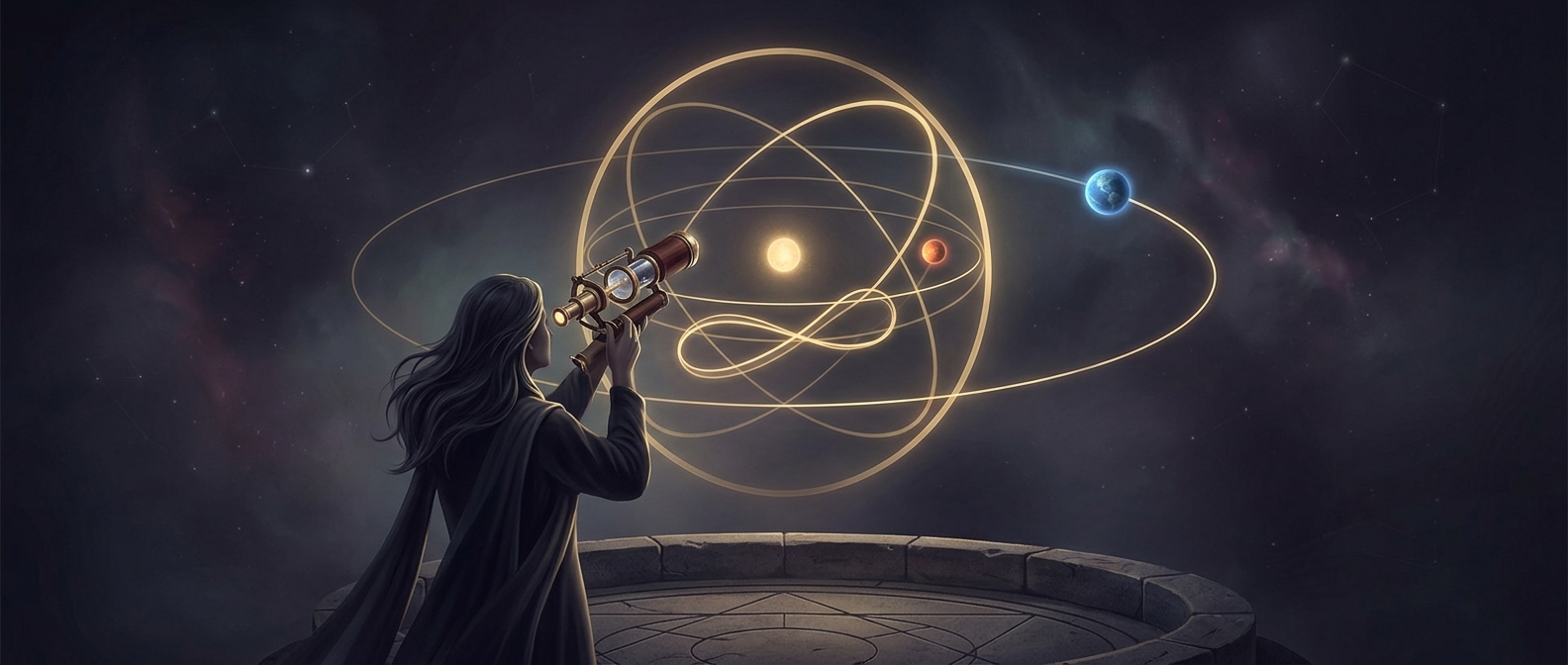
As Earth orbits the Sun, the Sun appears to move against the background stars along the ecliptic. The zodiac is organized around that path: each sign occupies the same slice of it, whether the constellation associated with the sign is sprawling or compact. Capricorn’s small area on a constellation map therefore does not shrink its share of the astrological zodiac.
The distinction also reflects different purposes. Astronomical constellations are mapped regions of the sky; astrological signs are units in a symbolic system. Their names overlap, but the boundaries and divisions are not interchangeable. The familiar twelve-sign framework gives every sign equal length along the ecliptic, not an equal patch of stars.
That is why Capricorn can be one of the smallest constellations and still occupy one-twelfth of the zodiac’s symbolic circle: the equal division belongs to the signs, not to the constellations.