Why a Leaning Ladder Became a Forbidden Doorway
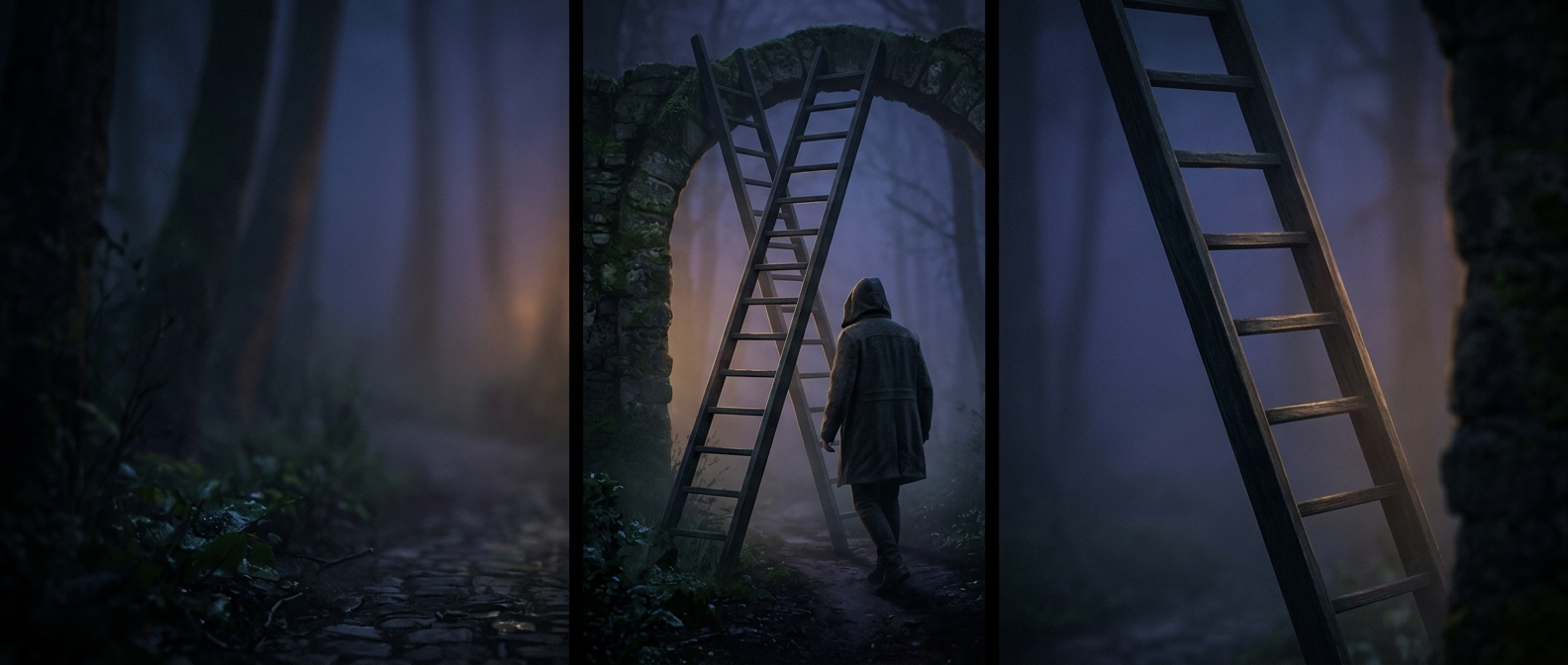
A ladder propped against a wall makes a triangle with the ground. In some explanations of the superstition, that shape is more than geometry: triangles have carried sacred meaning in several traditions, and Christian interpretations sometimes connect the three-sided form with the Trinity. Passing through the space could therefore feel like crossing a boundary that ought to be left untouched.
That explanation is familiar, but there is no single, firmly established origin for the taboo. Folk beliefs often gather meanings over time, and the ladder’s triangular gap offers an unusually vivid setting for ideas about trespass, bad luck, or spiritual danger.
A Practical Hazard Helps the Belief Persist
There is also a plain physical reason to avoid a ladder. Someone walking beneath it may bump a leg, startle a person working above, or put themselves in the path of a falling tool. A warning that began—or was later reinforced—as practical advice can take on a supernatural meaning, especially when people remember the rare mishap more vividly than all the uneventful times they passed by.
Once the rule is learned, a detour can feel like the safer choice even when the ladder is stable. If nothing goes wrong, the person may credit the detour; if something bad happens after ignoring the taboo, the coincidence can seem like confirmation. The triangle thus turns an ordinary worksite precaution into a memorable test of luck—and, occasionally, a reason to take a much less sensible route around it.