Why a Familiar Face Can Look Strange in a Dim Mirror
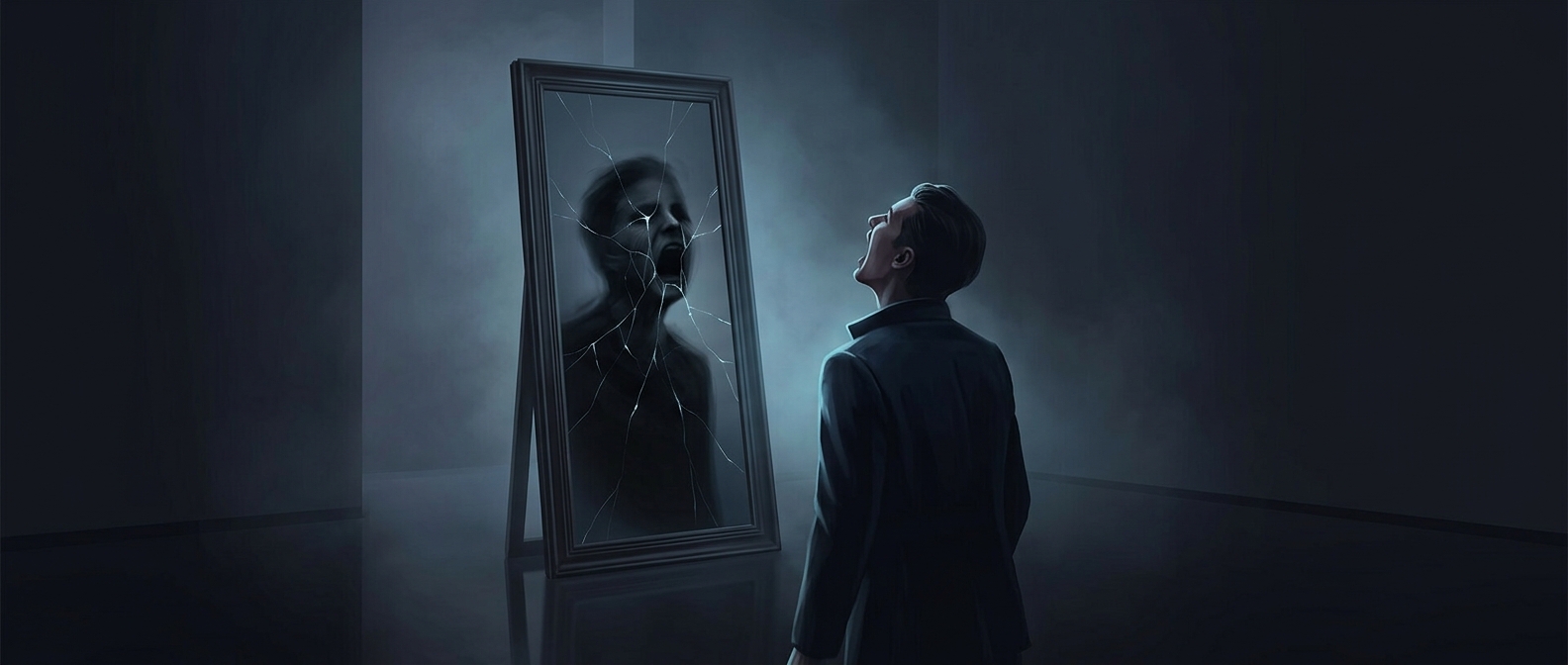
A mirror does not have to change for its reflection to seem different. In low light, the face offers the visual system less detail to work with: edges soften, colors blur, and small features become harder to distinguish. When you keep staring at the same nearly motionless image, your perception can shift, making parts of the face seem to fade, move, or take on an unfamiliar shape.
The Brain Is Filling In Missing Detail
Vision is not a camera recording every feature equally. The brain continually interprets incomplete signals, drawing on context and memory to make a coherent picture. But a dim, unchanging reflection gives it weak information and few new clues. That makes the interpretation less stable: a shadow may seem like a change in shape, or a familiar feature may stop standing out.
The effect is especially unsettling with a face because people are highly practiced at recognizing facial patterns. You expect the reflection to match a well-known identity, so even a fleeting mismatch can feel meaningful. Yet the strangeness is a shift in perception, not evidence that the reflection has actually changed.
Why Staring Makes the Effect More Noticeable
Normally, tiny eye movements and changes in what we look at help keep visual details vivid. Holding your gaze on one spot reduces those changes. Meanwhile, your eyes adjust to the dim conditions, and the brain continues trying to interpret a scene that supplies little new information. The result can be a reflection that seems to alter even though the lighting and mirror remain the same.
This is why a familiar face can feel briefly like a stranger’s in a darkened room: the image is visually ambiguous, while the mind is working hard to recognize it. Turning on a light, shifting your gaze, or looking away supplies fresh detail—and often makes the odd impression disappear.