Why a Scene Needs a Memory
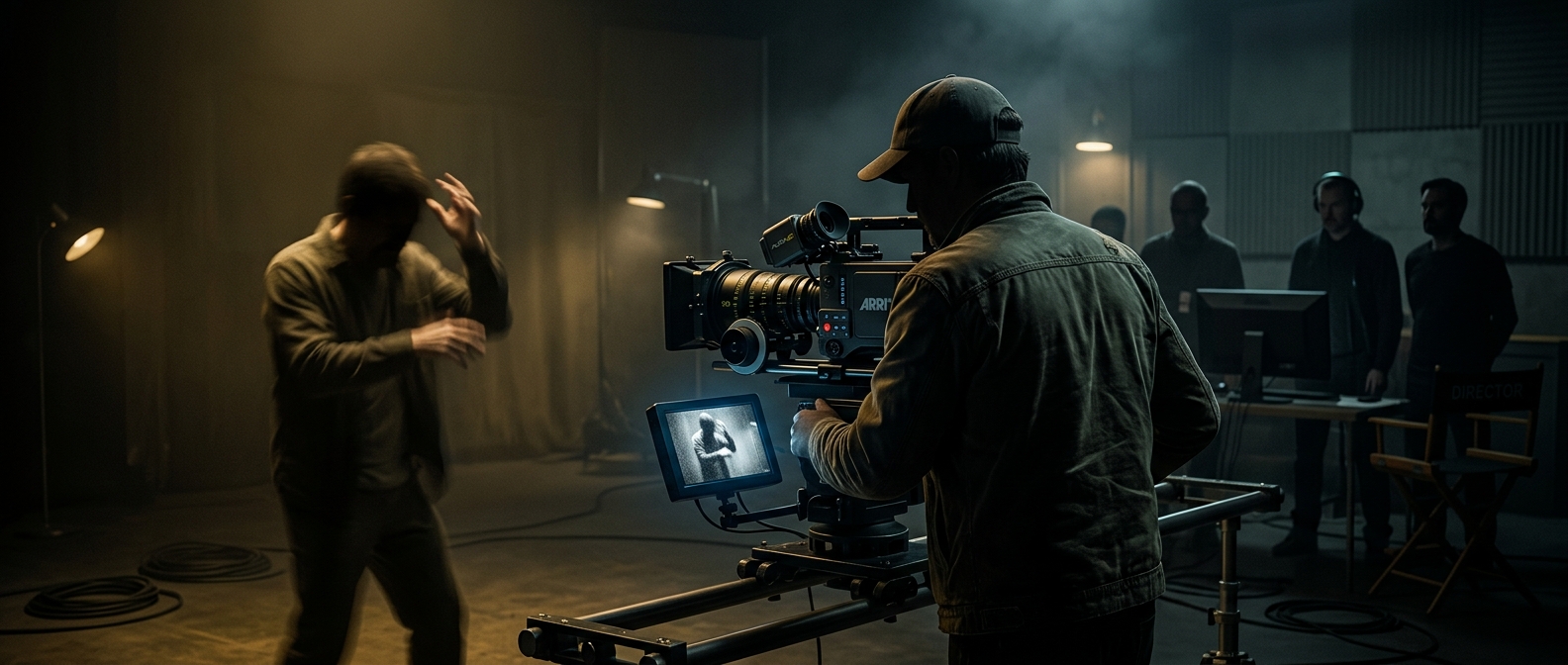
A film scene may look continuous on screen even though its shots are made at different times, from different angles, or out of story order. An actor might perform one part of a conversation in a wide shot, then repeat it for close-ups. The edit later joins those takes, so small changes can make the action appear to jump.
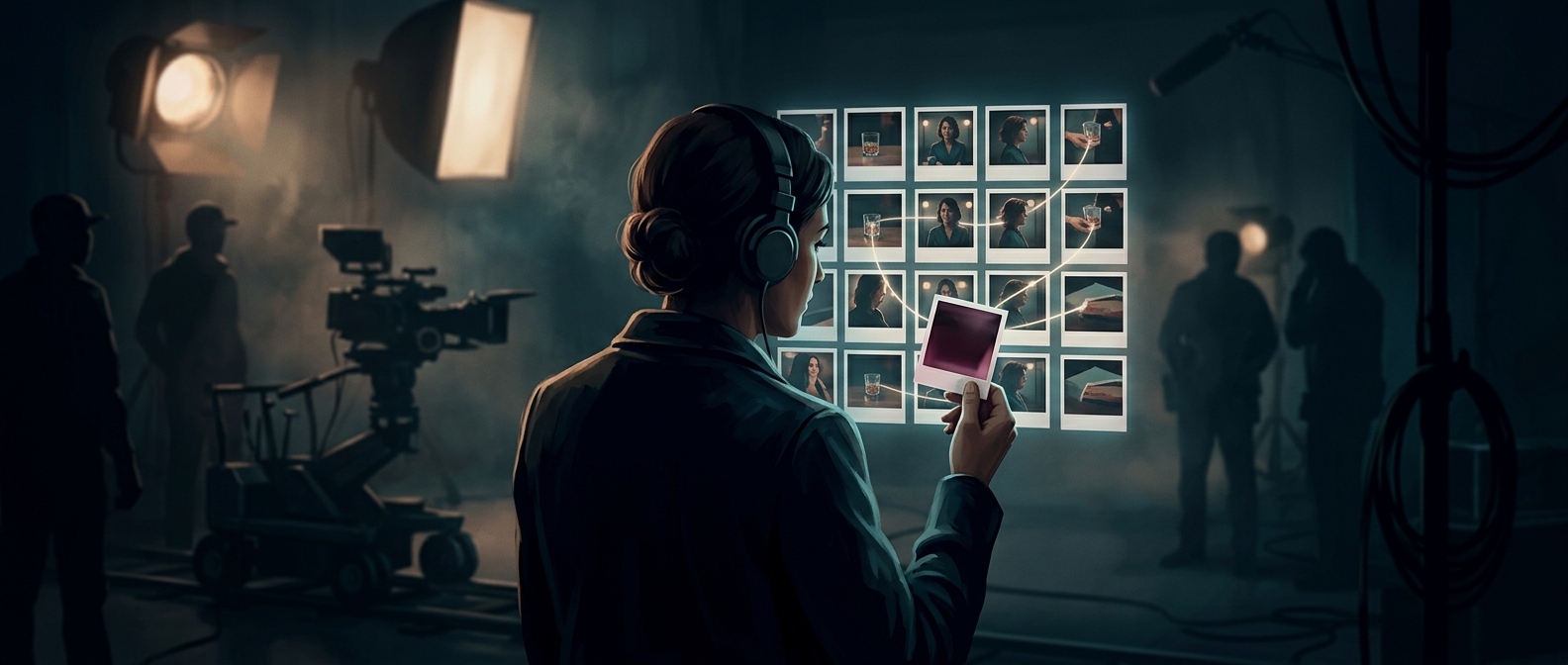
That is where continuity work comes in. A script supervisor—the crew member who monitors how scenes match from take to take—keeps track of details that the camera may reveal: which hand holds a glass, where a prop sits, or how much has been used. The record gives the director and editor a way to compare performances and choose shots that can be assembled smoothly.
Turning Observations Into Repeatable Action
Continuity is not just a matter of remembering what happened. The crew has to reproduce it. If an actor takes a sip before a line in one take, the next angle may need the same sip at the same point. A prop team may reset the glass, while the actor repeats the movement. Photographs and written notes can help preserve positions and details between setups.
Some differences are hard to control: a cigarette shortens as it burns, liquid is consumed, and a gesture varies slightly with each performance. Tracking them helps the crew spot mismatches early, while there is still time to adjust a reset or choose another take.
The Edit Is the Final Test
The goal is not to make every take identical; performances need room to feel natural. It is to keep visible details from distracting viewers when separate pieces of a scene are cut together. A tiny change may go unnoticed in one shot but stand out in a close-up placed immediately after it. Careful continuity lets the editor build that close-up into the scene without making the audience wonder why the glass suddenly looks fuller.