The helmet is a prop with a camera-facing job
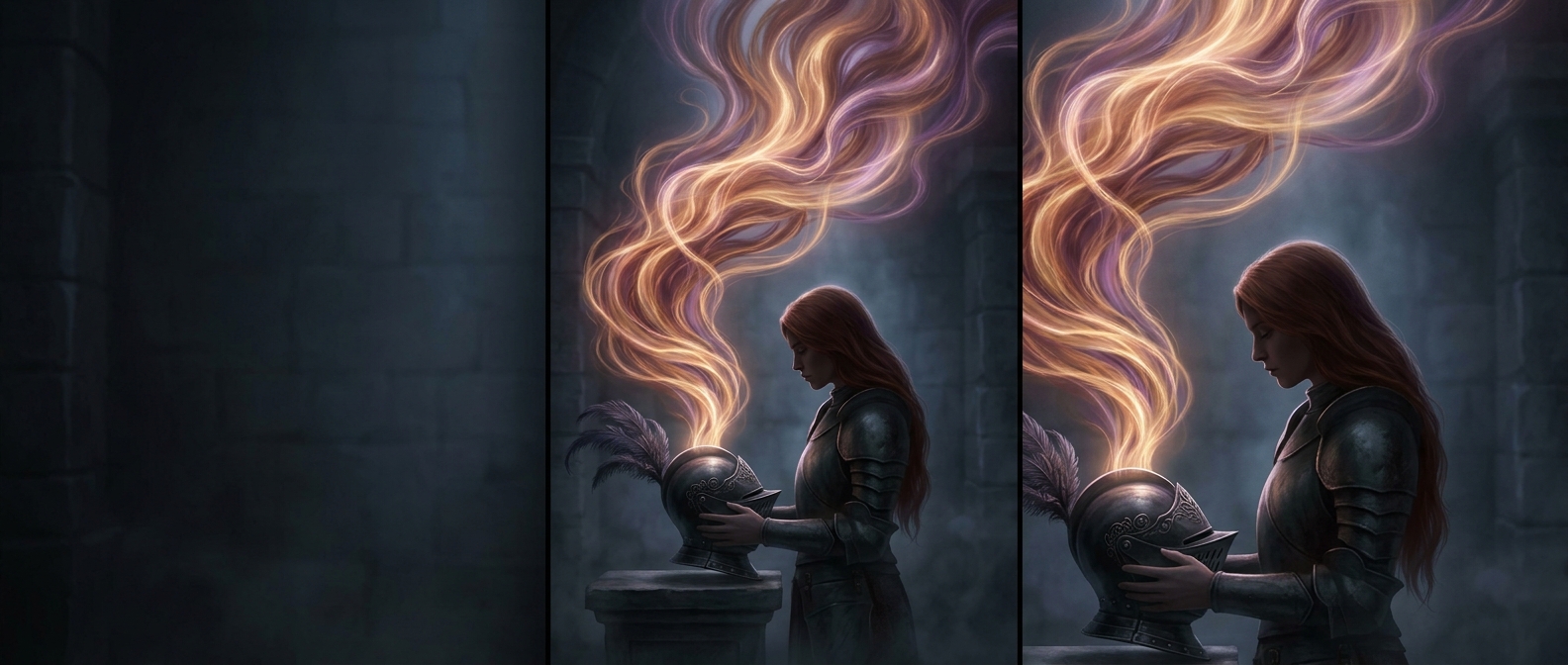
A real helmet has to fit closely enough to protect its wearer. A screen helmet has a different priority: it must read clearly on camera, come off on cue, and leave the actor’s face visible. That can mean a roomier shell, a removable section, or a fit adjusted around the actor’s hairstyle. The design is a compromise between looking convincing and allowing the scene to work.
Hair departments plan for that compromise. Long hair may be pinned, braided, or tucked into a wig cap beneath the helmet; a wig may be chosen because it can be shaped and reset more predictably than an actor’s own hair. When the helmet comes off, stylists can restore the visible waves, volume, or parting before the next take.
The polished reveal is built between shots
Film scenes are rarely captured as one uninterrupted event. A shot of the character putting on a helmet and a later shot of them removing it may be filmed at different times, from different angles. Editors can join those moments while hair and makeup staff reproduce the same look for each take. This is continuity: keeping appearance consistent across shots so the audience experiences them as one moment.
The styling itself is also designed for the reveal. Hair can be arranged to fall into a pleasing shape, while the helmet removal is slowed or angled to conceal snags and give strands room to settle. If the character’s hair looks remarkably untouched, that’s not an accidental escape from physics; it’s the result of choices about the prop, the styling, and what the camera shows.
The trick works because viewers read the helmet as equipment, but the production treats it as part of the costume—and part of the hairstyle.