Why a 28-foot trailer works in a pair
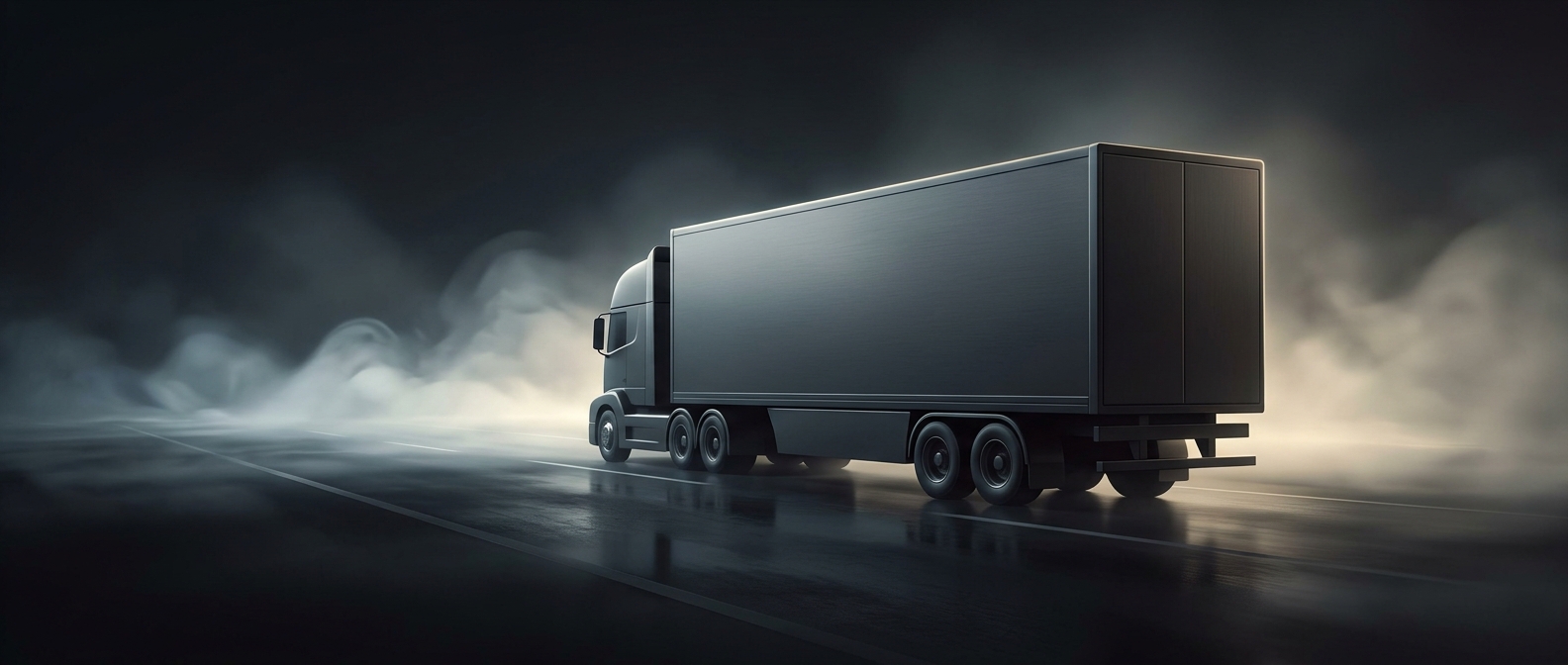
A pup trailer is a short freight trailer designed to run in a “double” combination: one tractor pulls two trailers linked end to end. The length is a compromise. Each trailer can carry a useful load, yet the pair can be joined into a road-going combination without requiring one exceptionally long trailer.
The link between them is usually a converter dolly—a small wheeled frame with a coupling that lets the rear of the first trailer pull the front of the second. The tractor steers the lead trailer; the dolly and couplings let the trailing unit follow behind it.
Following the path through a turn
A long trailer’s rear wheels do not trace the exact path of its tractor. In a turn, they cut toward the inside of the curve, a movement called off-tracking. Shorter trailers generally cut in less, which helps explain why two compact units can negotiate routes that would be difficult for a single trailer of comparable combined length.
But a double is not as simple to steer as one trailer. Each connection can pivot, so the second trailer responds indirectly to the tractor’s movement. Drivers must allow room for both units through turns and manage the combination’s sway and spacing. The design gains flexibility, not the maneuverability of a single short vehicle.
A modular way to move freight
The short units can be loaded and handled separately, then coupled for the road portion of a trip. That modularity lets a trucking company combine freight into one tractor movement while keeping each trailer within a manageable size. The 28-foot length is useful because it makes the trailer short enough to pair, but substantial enough to function as an independent freight unit.