How a spill became a lethal drink
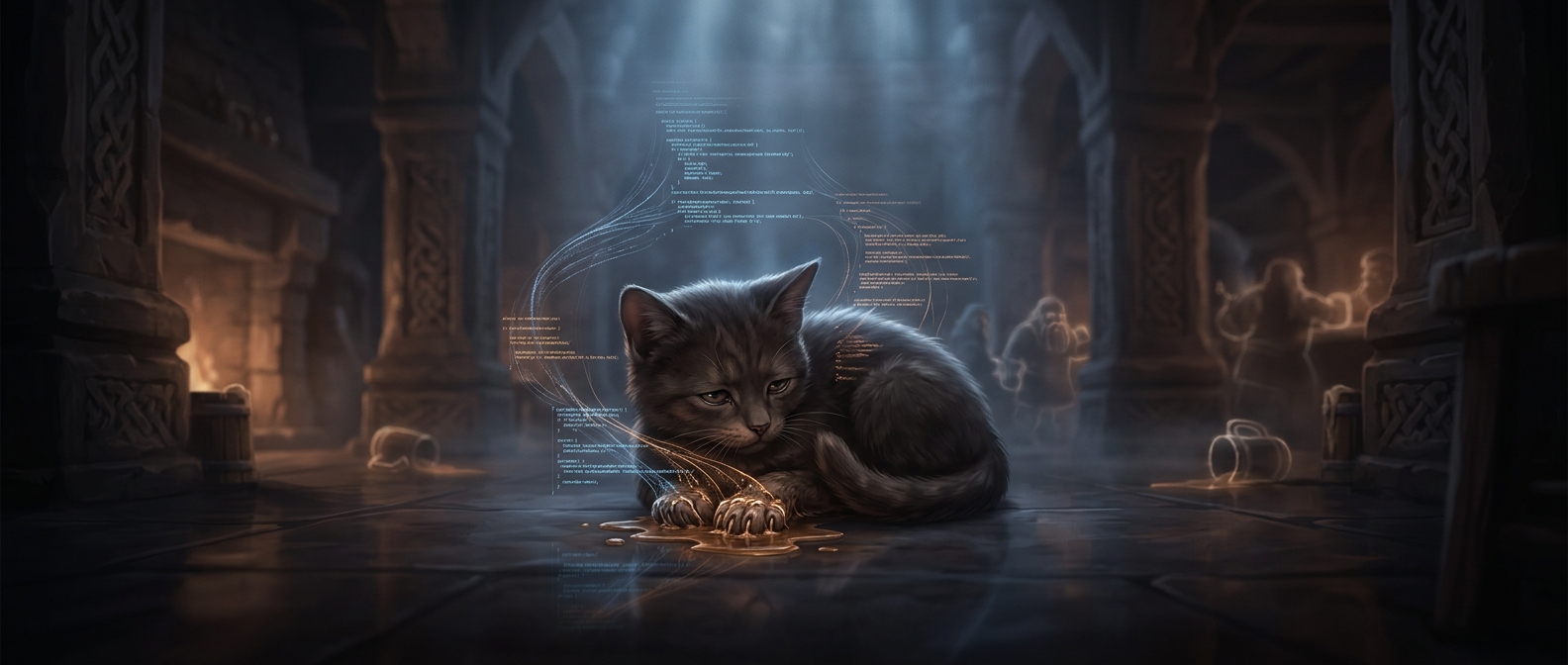
In Dwarf Fortress, cats could walk through spilled alcohol and later groom themselves by licking their fur. Each behavior made sense on its own: spilled liquid could coat an animal, and grooming could move material from fur into the body. The trouble was how the simulation connected those steps.
When a cat licked off the coating, the game counted the ingested alcohol as far more than the small amount that would realistically cling to its fur. The cat’s small body size made that inflated dose especially consequential. A routine cleanup behavior could therefore push the animal into dangerous intoxication.
Why the bug was hard to spot
The failure depended on several systems meeting: a spill had to be present, a cat had to walk through it, grooming had to transfer the coating inward, and the game’s dose calculation had to account for the animal’s size. None of those mechanics was inherently absurd. Their interaction produced the absurd result.
That kind of problem is common in simulations with many interacting rules. A developer can test whether spills appear, whether animals groom, and whether alcohol affects creatures—and still miss the outcome when all three happen together. The bug lived in the handoff between systems, where a plausible chain of actions turned into an implausible quantity.
A tiny animal exposed a big modeling gap
The incident illustrates a design challenge in Dwarf Fortress: detailed rules can make a world feel alive, but every added interaction creates more combinations to check. Here, body size was not just descriptive; it changed the consequences of a substance transfer. Once the game misjudged that transfer, small animals became unusually vulnerable.
The memorable part is the chain of cause and effect: a cat crossed a spill, cleaned its coat, and suffered the consequences of a dose the simulation had effectively magnified.