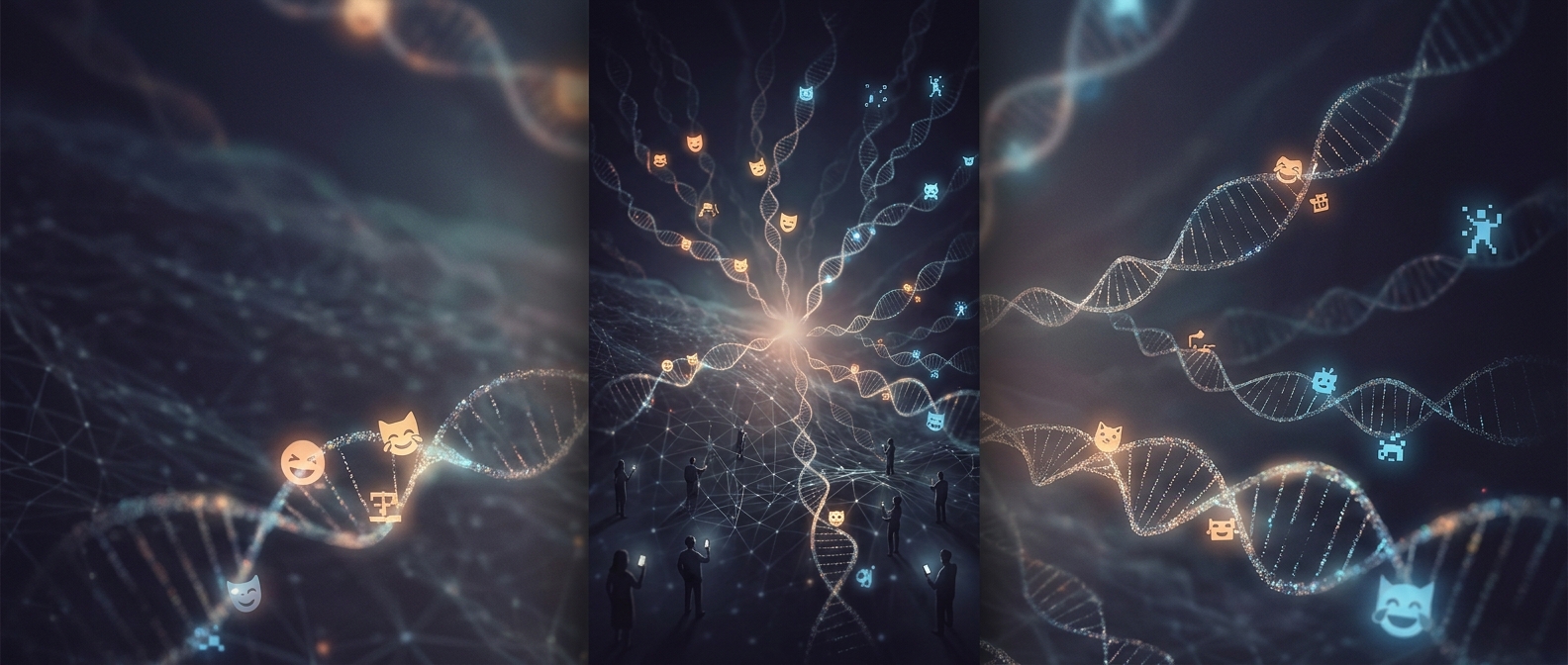
Why Dawkins Reached for the Word “Meme”
A tune that sticks in your head, a catchphrase repeated by strangers, or a fashion copied by a new crowd can all travel from person to person. Richard Dawkins coined meme in his 1976 book The Selfish Gene as a name for this kind of cultural transmission. He shortened the Greek-derived word mimeme, meaning something imitated, to echo gene.
The comparison offered a way to think about how ideas persist and change. A person encounters an idea, remembers or copies it, and passes along a version. Each handoff can introduce a variation; versions that are easier to remember or more appealing may be repeated more often. In that sense, cultural ideas can spread through a population in a pattern resembling biological evolution.
A Useful Analogy, Not a Literal Gene
Genes are physical sequences of DNA copied through biological reproduction. Memes, in Dawkins’s broader sense, move through learning and imitation instead. They have no single molecular form, and a person can alter an idea while passing it on. A melody, for instance, might survive even as its lyrics or performance change.
The word’s meaning has since narrowed in everyday use. Today, “meme” often calls to mind a joke or image circulated online, but Dawkins’s original idea was broader: any cultural element that can be copied and modified. The useful implication is that a successful idea need not be true or beneficial to spread—it only needs to be passed along.