Why a planet seems to reverse course
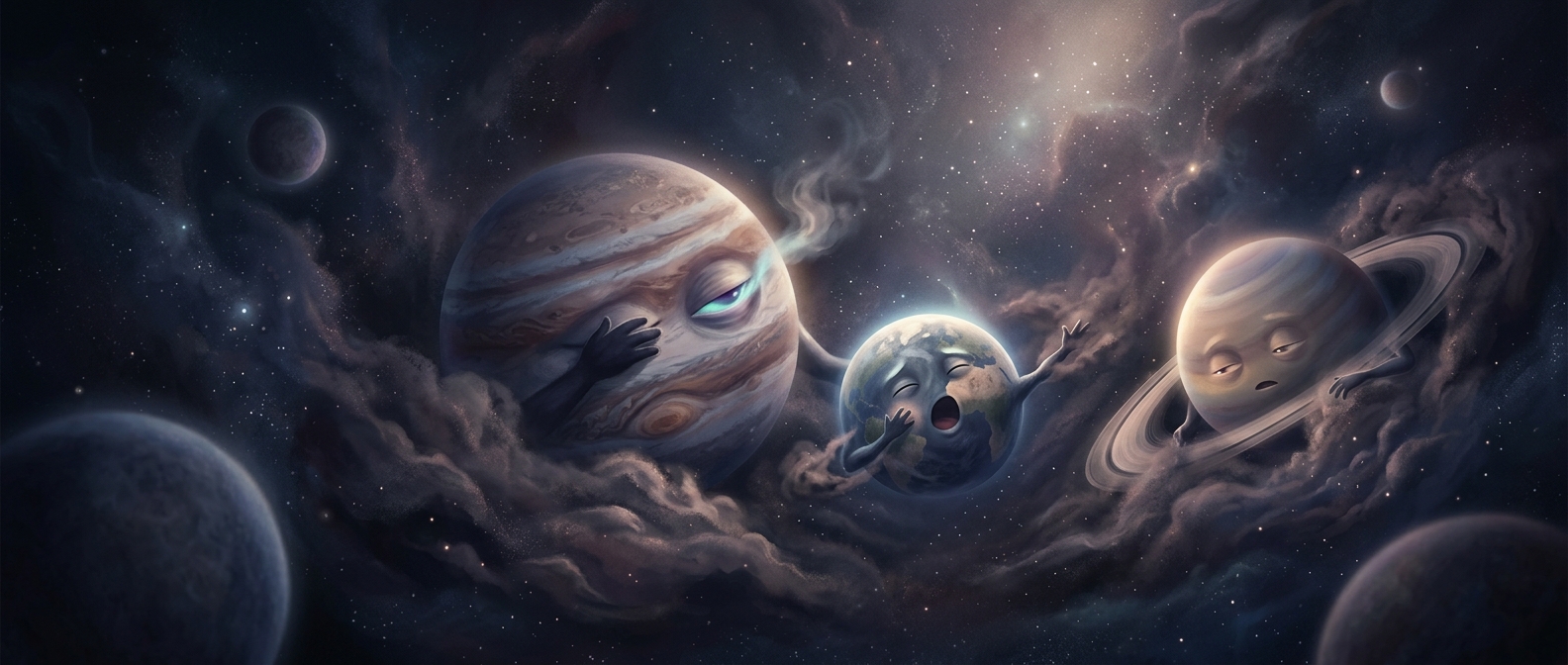
Planets usually drift eastward against the distant stars from one night to the next. Sometimes, over several weeks, one appears to slow, stop, and move westward before resuming its usual direction. Astronomers call this apparent retrograde motion: the planet changes position in our view, not the direction of its orbit.
For Mars and other planets farther from the Sun than Earth, the effect comes from changing vantage point. Earth travels around the Sun on a smaller, faster orbit. As it passes one of those outer planets, our viewing angle shifts, making the planet seem to slide backward against the star patterns behind it—much as a nearby car can appear to drift backward when your car overtakes it. Mercury and Venus can also appear to reverse, but their motion is seen from a different orbital geometry as they pass between Earth and the Sun.
How the sky became a symbol
The apparent reversal is real as a visual pattern, even though no planet turns around. Astrology gives that pattern symbolic meaning, often treating a retrograde period as a time to revisit or reconsider matters associated with the planet. Those meanings belong to an interpretive tradition; the orbital geometry itself does not demonstrate that a planet causes events in people’s lives.
The striking part is that the same sky can tell two stories: a moving viewpoint explains the track astronomically, while astrologers read that track as a sign. In either case, the planet’s path around the Sun continues uninterrupted.