The texture begins in the skin
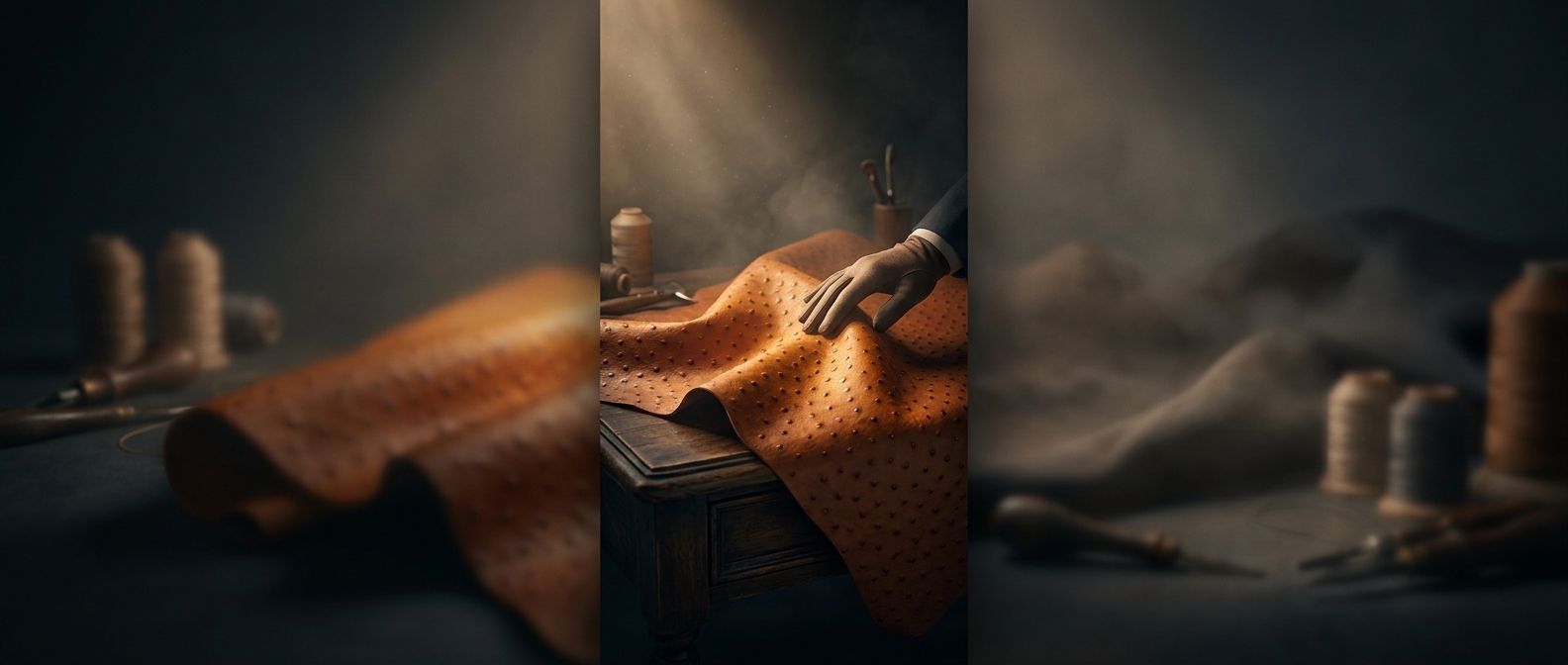
An ostrich’s large feathers grow from follicles—small openings in the skin. When the feathers are removed, those openings remain as raised marks. The familiar bumps in ostrich leather are therefore part of the hide’s natural structure, not a pattern pressed into it later.
Tanning turns perishable skin into durable leather by treating and stabilizing its collagen, the protein fibers that give skin its structure. The process can soften and finish the surface, but careful handling leaves the follicle pattern visible. The result is a texture built into the material rather than added as decoration.
A natural pattern becomes a selling point
That visible texture helps distinguish ostrich leather from smoother hides and from leather made to imitate it. Because the bumps arise from real feather follicles, their spacing and prominence vary across a hide. Makers must account for that variation when choosing and cutting pieces: a surface meant to showcase the pattern benefits from sections where it appears clearly and evenly.
The tradeoff is that the material’s appeal depends partly on features that cannot be made identical from one piece to the next. Its signature look is also a record of how the animal’s feathers grew. What might seem like an irregularity in ordinary leather becomes, in ostrich leather, the detail that gives the surface its identity.