The Sirens’ song was a trap made of choice
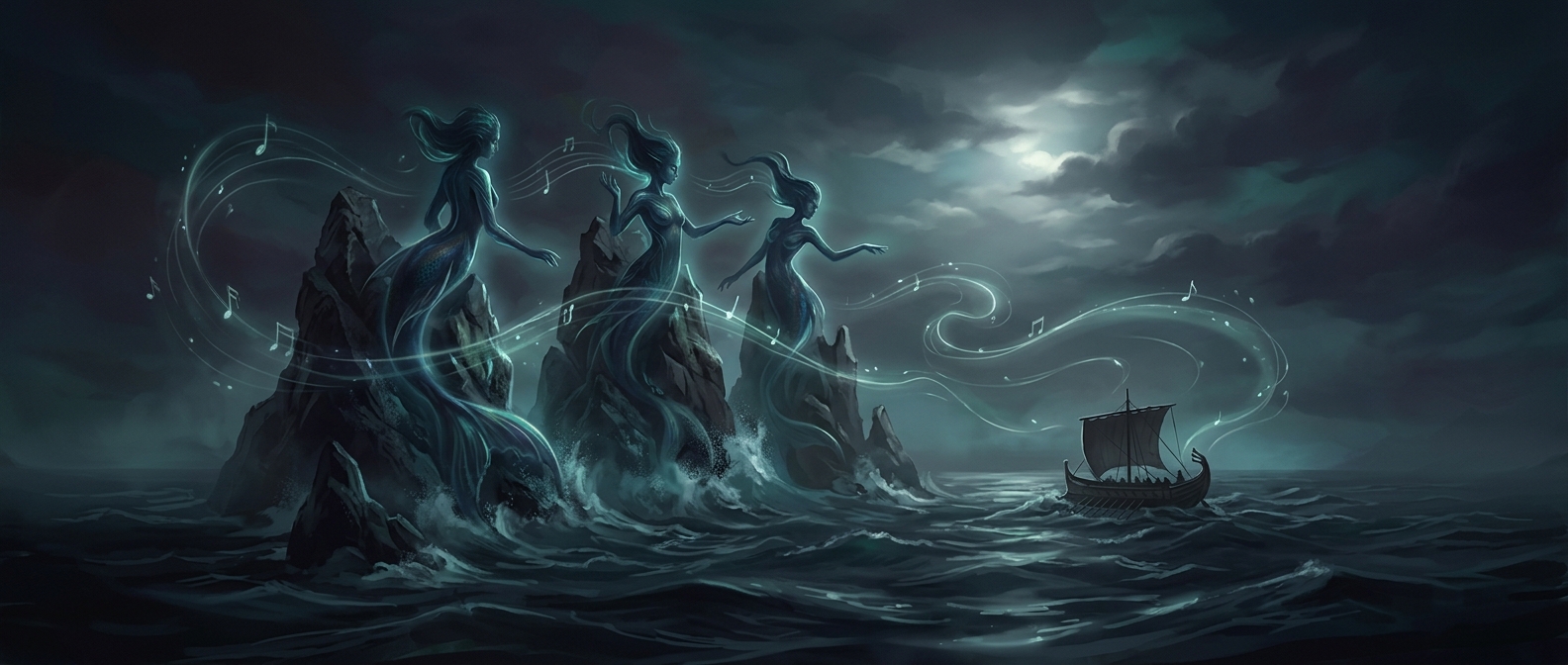
In Greek myth, the Sirens’ danger lay not in force but in attraction. Their singing drew sailors toward the rocks because the men wanted to hear more. That makes the episode more than a tale about a monster: it turns a familiar human weakness—being unable to resist a tempting experience—into a perilous voyage.
Odysseus makes the danger visible
In Homer’s Odyssey, Odysseus knows the Sirens’ song is dangerous but still wants to hear it. He has his crew plug their ears with beeswax, then orders them to tie him to the mast. The plan separates curiosity from control: Odysseus can listen, but cannot steer the ship toward the singers. When he begs to be released, the crew binds him more tightly and keeps rowing.
The contrast matters. The crew avoids the temptation by blocking it out; Odysseus faces it only after arranging, in advance, a way to keep his desire from becoming an action. The story’s suspense comes from the gap between knowing the risk and being able to resist it in the moment.
A song that promises more than pleasure
The Sirens’ appeal is also intellectual. In the Odyssey, they promise knowledge of what happened at Troy and of the suffering endured there. Their song offers sailors something they might deeply want to hear, not merely a pleasant distraction. That makes the trap harder to dismiss: the danger arrives disguised as a reward.
The episode leaves a vivid image of temptation with consequences. A ship can be steered toward destruction one willing turn at a time—and sometimes the safest choice is to decide beforehand what you will not be allowed to do.