A vivid early memory may not be a memory of the event
Most people have few lasting, detailed autobiographical memories from before about age three. This gap is often called childhood amnesia. It does not mean infants cannot learn or remember: young children recognize people, places, and routines. The harder thing is keeping an event as a durable, consciously recalled episode that can later be placed in a personal timeline.
Remembering is a process of rebuilding
When you recall an event, your brain does not play back a perfect recording. It reconstructs the scene from stored details and what you know now. Early in life, the brain systems involved in forming and organizing lasting episodes are still developing. Language and a more stable sense of self also help turn experiences into stories that can be revisited years later.
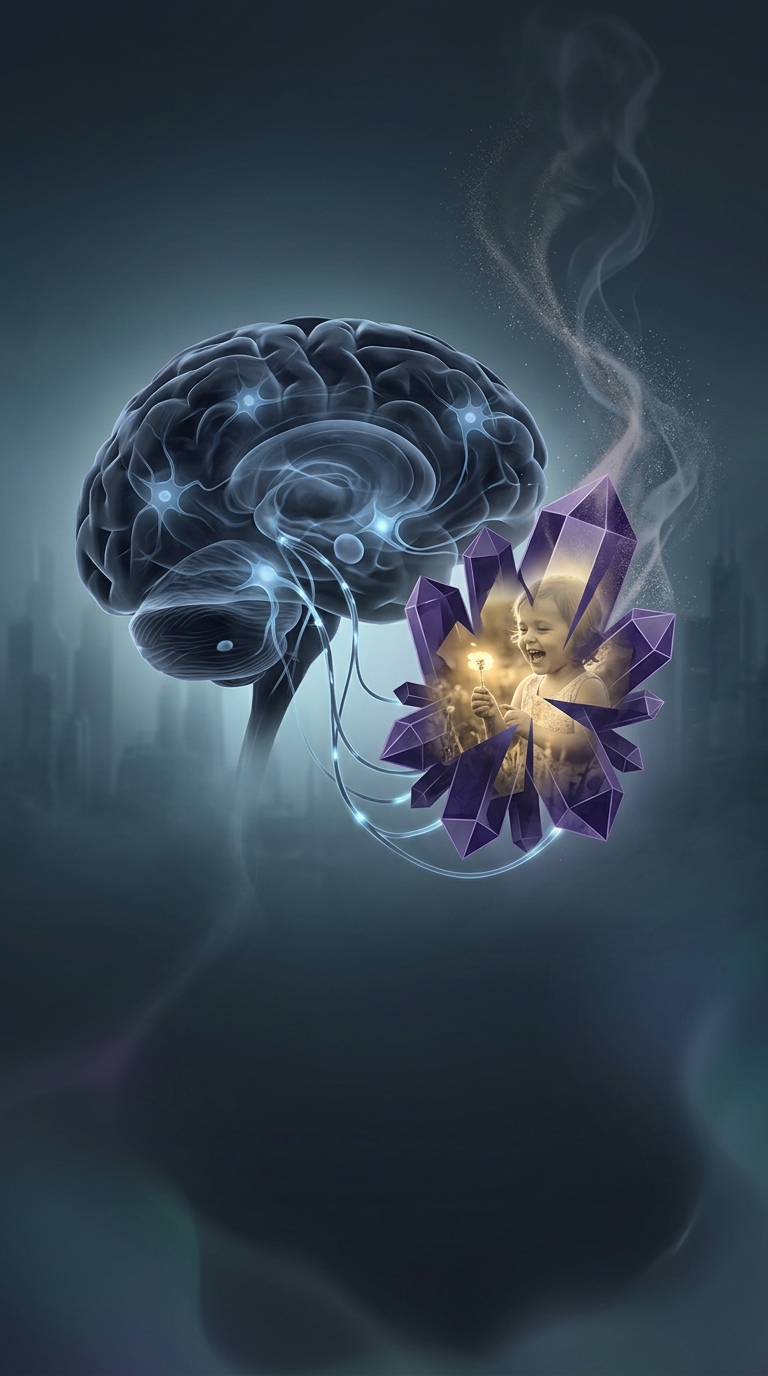
That leaves room for an early experience to survive as a fragment—a feeling, image, or familiar scene—without preserving all the details of when it happened or how it unfolded. Later, family stories, photographs, or repeated imaginings can supply a plausible narrative around that fragment. Over time, the reconstructed version may feel as vivid and immediate as a direct recollection.
Vividness is not a timestamp
A strong sense of certainty does not, by itself, establish that a memory is accurate or that it dates from before age three. The scene may be partly genuine, misdated, or shaped by information encountered later; there is usually no simple way to tell from vividness alone. The harsh truth is not that the memory must be false, but that confidence cannot prove it is an intact record of the original event.