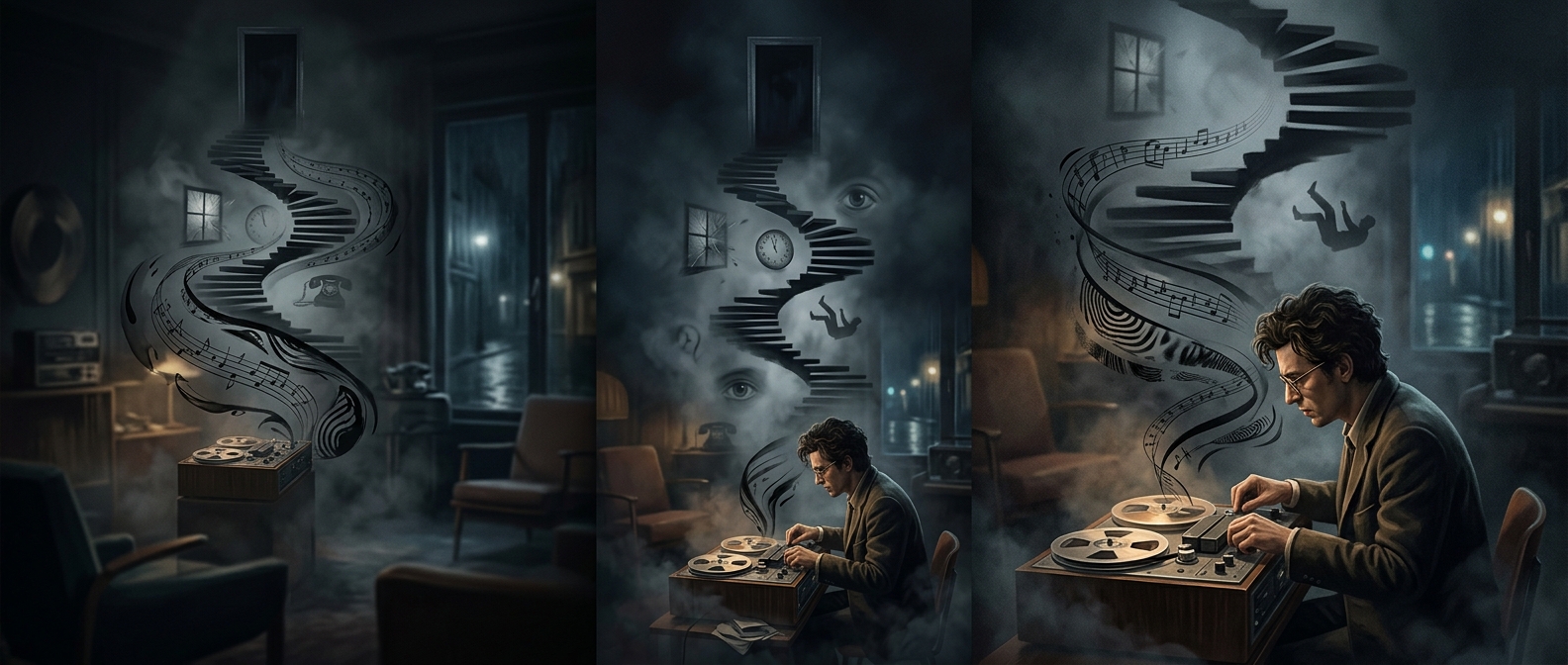
A signature sound made from two fragments
The familiar Twilight Zone theme was not composed as a theme for the series. French composer Marius Constant had created two separate pieces of experimental music; the show’s opening joined excerpts from them into one compact sequence. In other words, the signature was made through selection and editing, not by writing a single melody from scratch for the program.
Why the combination worked
The opening needed to do more than identify a show. In a few seconds, it had to unsettle viewers and prepare them for stories that bent ordinary reality. The fragments’ unusual guitar sounds and abrupt changes gave the sequence an off-kilter quality. Placed together, they could function like a musical jolt: recognizable enough to signal the series, strange enough to suggest that the rules were about to change.
That distinction matters in television production. Music created separately can acquire a new purpose when editors fit it to images, pacing, and a recurring opening. Once reused, the arrangement—not necessarily the original composition’s intended use—becomes what audiences remember.
The composer learned later
Constant reportedly did not realize for years that his experimental music had become the show’s signature. The story captures an unusual route to cultural fame: a composer’s work was transformed by a production decision into an instantly recognizable television sound, even though it had not begun as the show’s theme.