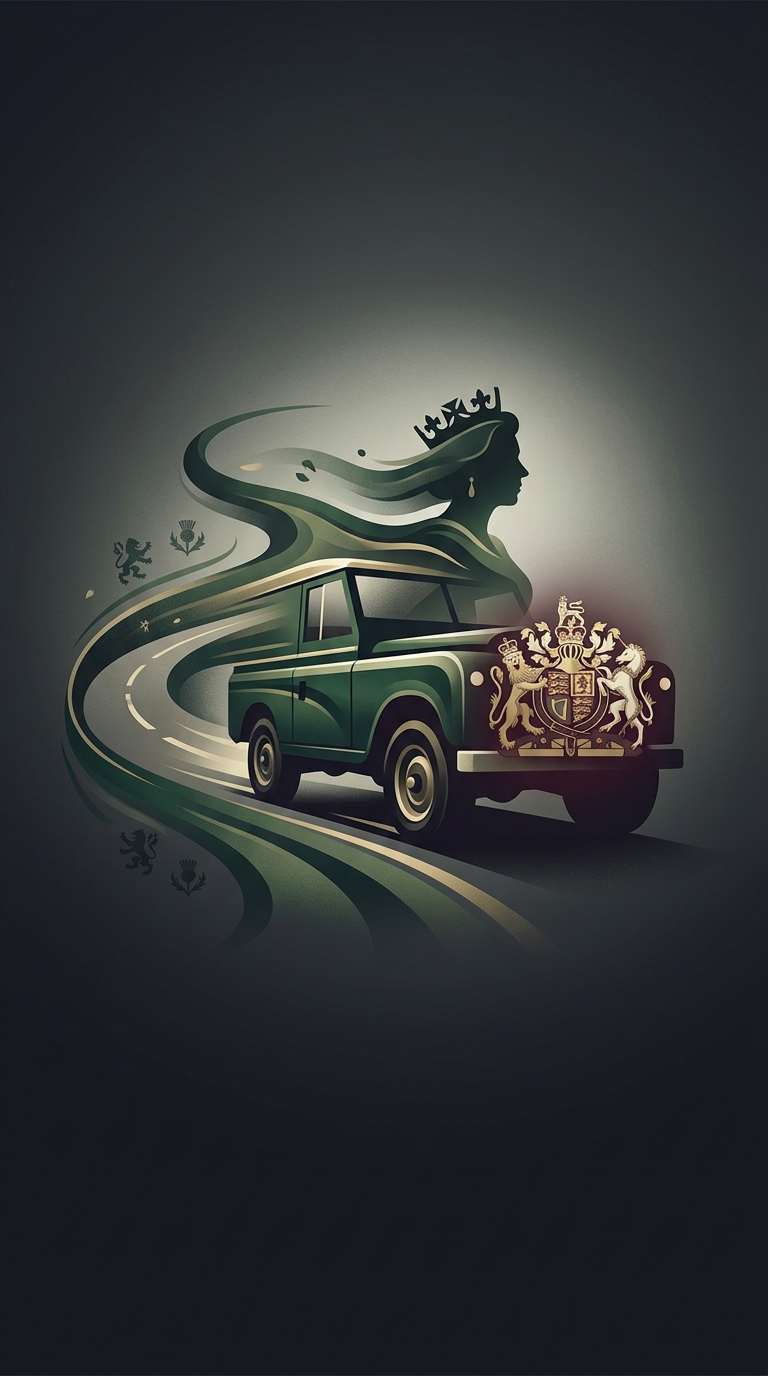
Why the sovereign could drive without a licence
A British driving licence is issued in the monarch’s name. That creates an unusual constitutional wrinkle: the sovereign is not expected to apply to herself for permission to drive. Queen Elizabeth II therefore drove without holding a driving licence—not because she had passed a special royal test, but because the licensing system did not require the monarch to obtain one.
For ordinary drivers, a licence is personal proof that they are legally entitled to drive. It is separate from a vehicle’s registration: the licence concerns the person at the wheel, while a registration plate identifies the vehicle for official records.
Why royal state cars had no plates
Royal state cars were also exempt from displaying registration plates. On an ordinary car, plates let police and other authorities match the vehicle on the road to its registration record. The royal exemption meant that the Crown’s cars could be used without that visible identifier, rather than being processed exactly like privately owned vehicles.
These were two related but distinct exceptions: one concerned the driver, the other the car. Together they made the arrangement especially striking. The monarch could drive a state vehicle without carrying the document issued in her name or displaying the plates ordinarily required on the vehicle.
A constitutional loop made visible
The oddity was not simply that a famous person received special treatment. It exposed how British law and government operate in the sovereign’s name while the sovereign does not handle ordinary licensing paperwork as an individual applicant. The authority behind the rules and the person exempt from them were joined in the same office.