How a roadside sign reads a moving car
A radar speed sign does not need to photograph a vehicle or track it along the road. It sends out radio waves, which travel at a known speed and reflect from nearby objects. When the waves bounce off a moving car, their frequency shifts slightly—a change called the Doppler effect. The faster the car moves toward or away from the radar, the larger that shift. Electronics in the sign translate it into a speed reading.
Because the radar measures motion, not identity, the display can show a number without recording who was driving. The reading is typically aimed at approaching traffic, where the sign can compare the measured speed with the road’s limit and decide what to display.
Why the number can change behavior
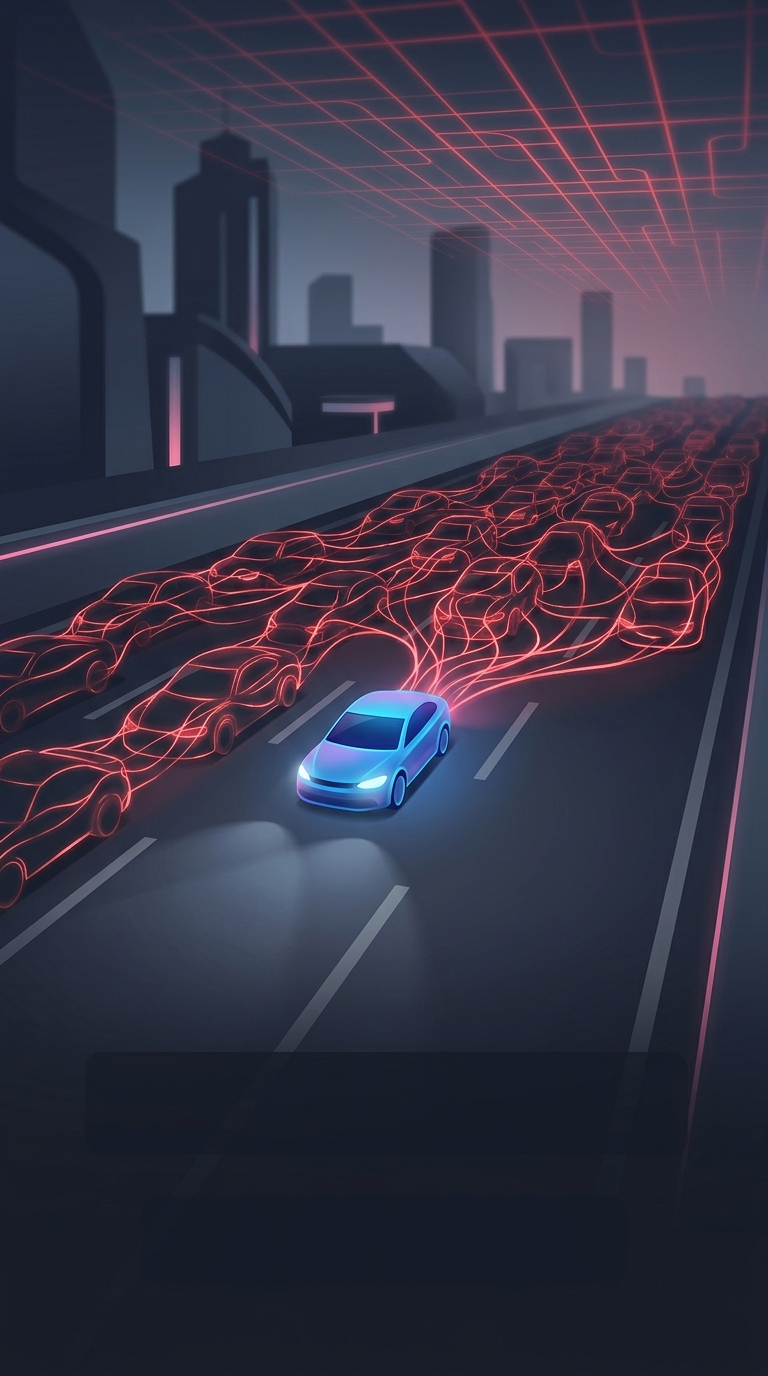
A conventional speed-limit sign tells drivers the rule; a radar sign gives immediate feedback about their own behavior. That difference matters because speed can creep upward without feeling dramatic, especially on a wide or familiar road. Seeing a number higher than expected makes the gap between perceived speed and actual speed visible while there is still time to ease off.
The display is deliberately simple: a passing driver has only a moment to read it. Some signs may stop displaying numbers above a set threshold, so a fast driver cannot treat the screen as a game or use it to gauge a top speed. The point is not to identify or punish a particular car. It is to put a timely, personal cue beside the road—and let the driver decide what to do with it.