Why Many-Worlds Can Make a Bad Choice Feel Less Final
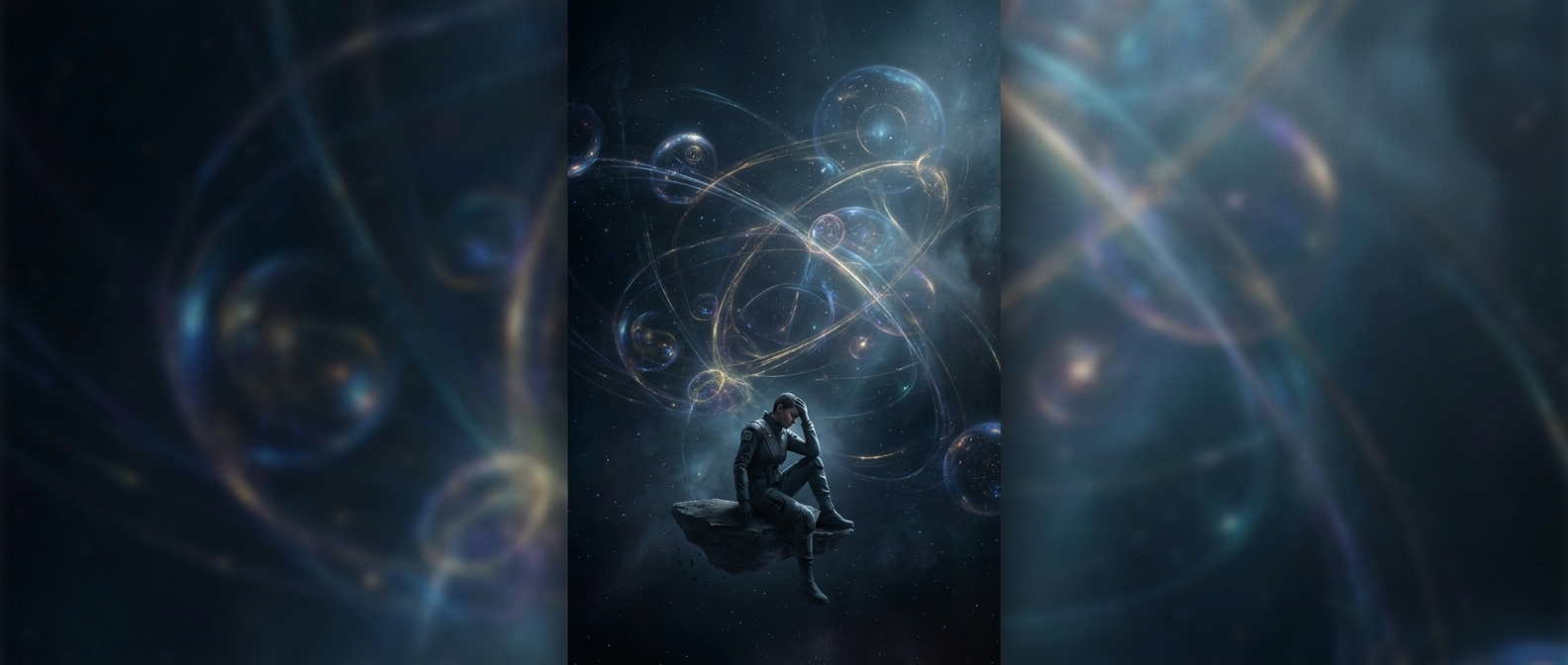
After a painful decision, it is easy to picture a parallel self who chose differently: the job accepted, the call returned, the chance taken. The many-worlds interpretation of quantum mechanics gives that familiar daydream a scientific-sounding frame. It proposes that when quantum events have different possible outcomes, the universe’s quantum state continues evolving into branches associated with those outcomes, rather than one outcome simply replacing the others.
A branch is not a second chance
The branching idea comes from quantum mechanics, where a system can be described by several possible outcomes before a measurement. In the many-worlds picture, those possibilities persist in separate branches. It does not mean a person can deliberately create a branch by choosing, or visit another version of their life. Nor does it provide a simple map in which every ordinary decision—down to every fork in the road—produces a neatly labeled alternate timeline. The interpretation concerns the behavior of quantum states; familiar life choices are not its basic branching units.
Still, the metaphor can feel emotionally useful. Imagining a version of yourself who made the other choice can loosen the sense that one mistake defines every possible future. That comfort is psychological, not a practical consequence of the theory: the alternate self, if such branches describe reality, cannot send advice or undo what happened here.
What the thought experiment can offer
The helpful part is not proof that a better outcome is waiting somewhere. It is the reminder that a decision is one event in a life, not the whole life. The branch you can affect is the one you are living now, where the next conversation, repair, or choice is still yours to make.