The pawn capture that lasts only one turn
The move is called en passant, French for “in passing.” It lets a pawn capture an opposing pawn that has just moved two squares forward from its starting square—provided the moving pawn passed through a square the capturing pawn could have attacked.
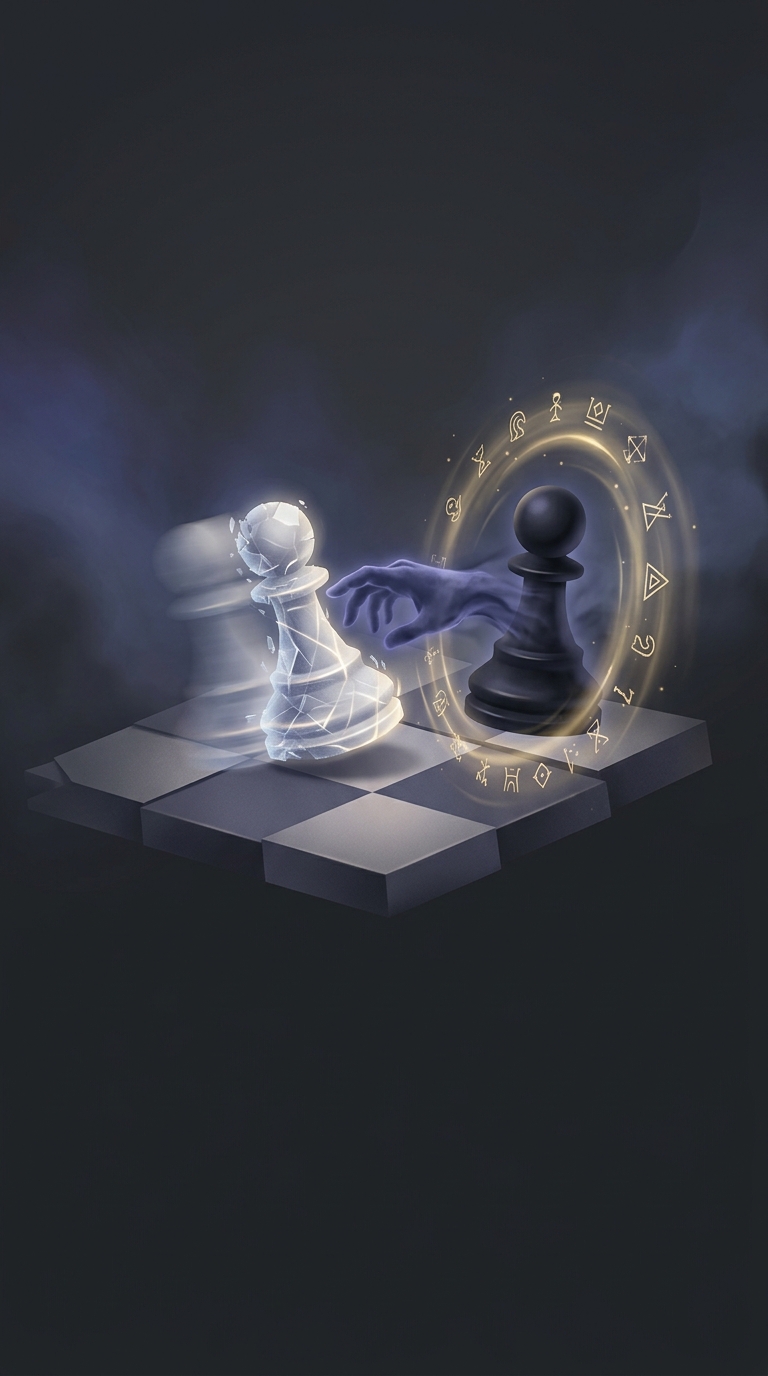
Imagine a white pawn on its fifth rank and a black pawn advancing two squares from its starting position to land beside it. White may move diagonally onto the square the black pawn skipped over. The black pawn is removed, even though it is not on the square where White’s pawn lands.
Why the rule exists
Pawns usually move one square at a time, but each pawn may advance two squares on its first move. Without en passant, that longer opening move could slip past an enemy pawn that would have captured it had it moved only one square. The rule preserves that possible capture: the two-square advance does not let a pawn bypass an opposing pawn’s attack.
The opportunity is fleeting. En passant must be played on the very next move; if the player chooses anything else, the right disappears. That timing is part of the rule, not a special exception a player can invoke later.
Why it can look like cheating
The capture is unusual because the capturing pawn lands on an empty square and takes a pawn from beside it. To someone who has never learned the rule, it can look as if a piece vanished illegally. But the board position has a precise explanation: the captured pawn just made a two-square move, and the opponent used the one-turn chance to catch it “in passing.”