A shortcut created a loophole
For centuries, a pawn’s opening advance was only one square. When chess rules changed to let a pawn move two squares on its first move, the game sped up: players could bring pawns toward the center more quickly. But the change created an unintended escape route. A pawn could leap past a square controlled by an opposing pawn and avoid being captured as it crossed it.
En passant—French for “in passing”—closed that loophole. It preserves the old one-square rule’s practical effect: the two-square move cannot slip past an adjacent enemy pawn without giving it a chance to capture.
The capture lasts one turn
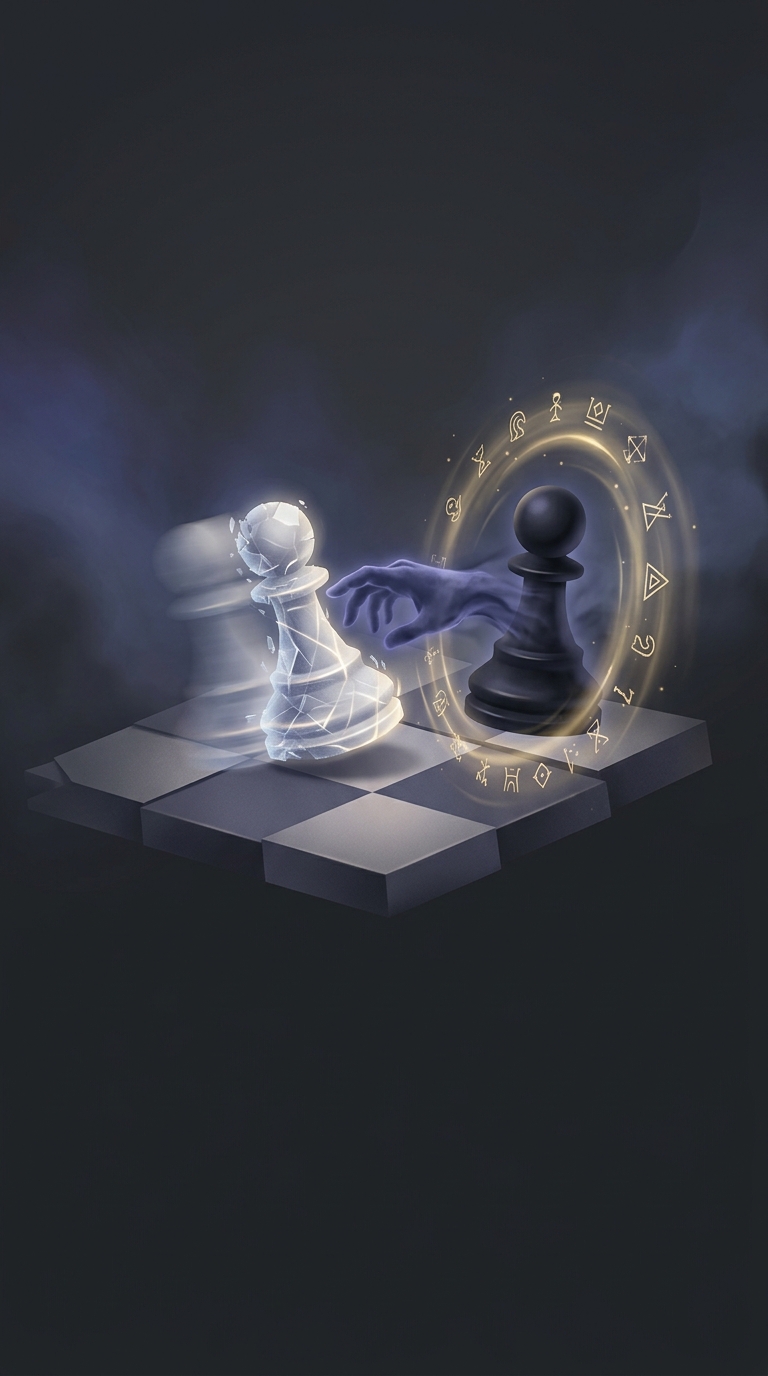
Suppose a white pawn sits on its fifth rank, next to a black pawn still on its starting square. If the black pawn advances two squares and lands beside the white one, White may capture it as though it had advanced only one square. The white pawn moves diagonally to the square the black pawn passed over; the black pawn is removed.
The timing is strict: the capture must be made immediately, on the very next move. If White makes any other move, the opportunity disappears. That limit keeps en passant tied to the specific moment when the two-square advance creates the loophole, rather than granting a lasting special capture.
Why the rule feels unusual
Most pawn captures happen on the square where the captured piece stands. En passant is different: the capturing pawn lands on an empty square, while the pawn being captured is taken off a neighboring square. The rule is a small piece of historical engineering, preserving the faster opening move without letting it erase the danger that a pawn would have faced under the older rule.