Why a game needed another disc
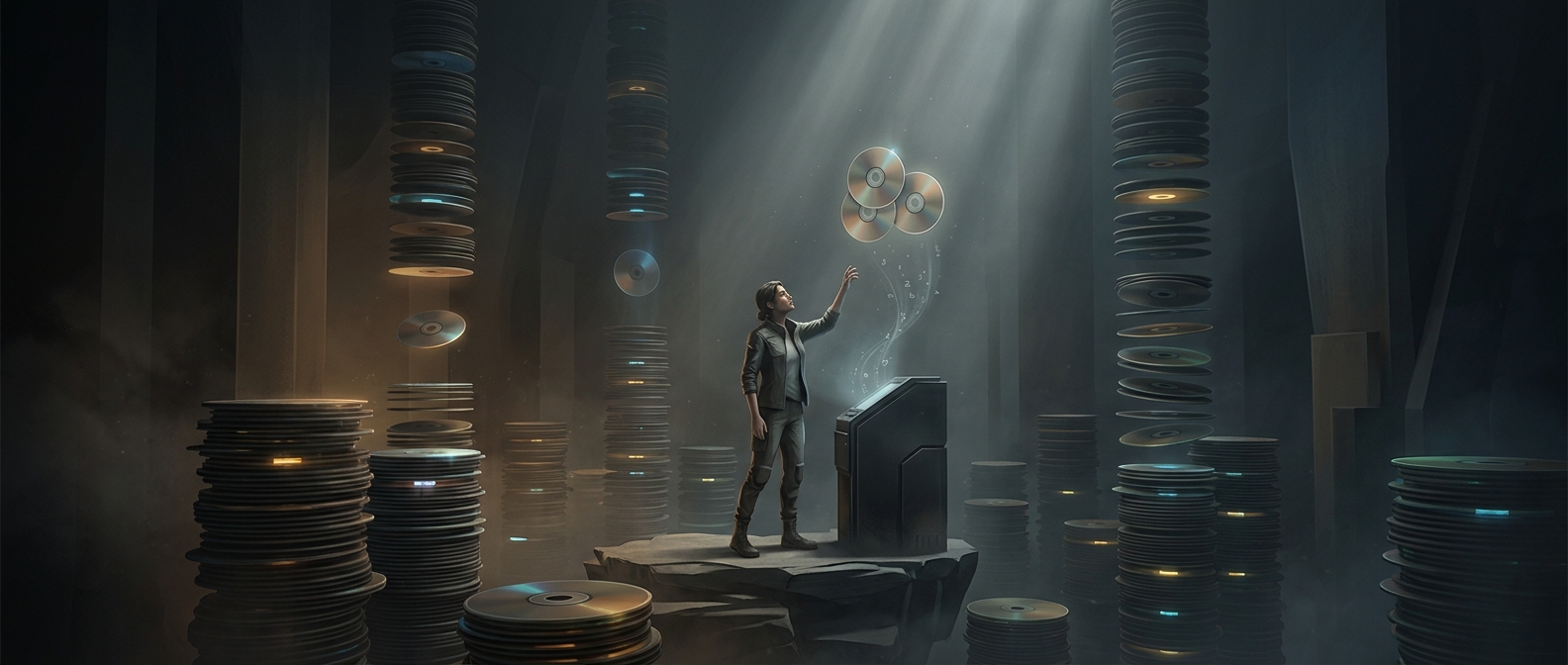
A console game on CD or DVD had to fit its programmed instructions, music, speech, video, and other data onto the discs supplied in the box. When a game’s files outgrew one disc, developers split them across several. The console could read only the disc currently in its drive, so it could not quietly fetch the next portion while the player kept going.
That made disc changes part of the game’s structure. Developers grouped content so the player could reach a point where the machine no longer needed the current disc, then displayed a prompt to replace it. A chapter break, journey, or other transition could provide a natural pause; the swap was a practical boundary imposed by storage, not necessarily a dramatic choice.
A small interruption with real stakes
After the swap, the game had to find the expected data on the new disc and continue from the right point. If the disc was badly scratched or unreadable, the console might fail to load what came next. That is why a prompt could feel more consequential than an ordinary pause: progress depended on both the game’s saved state and a readable physical copy.
The discs also shaped how players experienced long adventures. A story could continue across several volumes, but moving between them meant getting up, handling the media, and waiting for the console to resume. The memorable part was not just owning a large game; it was reaching a moment when the journey literally stopped until the next piece of plastic went in.