A catalog built like a ritual manual
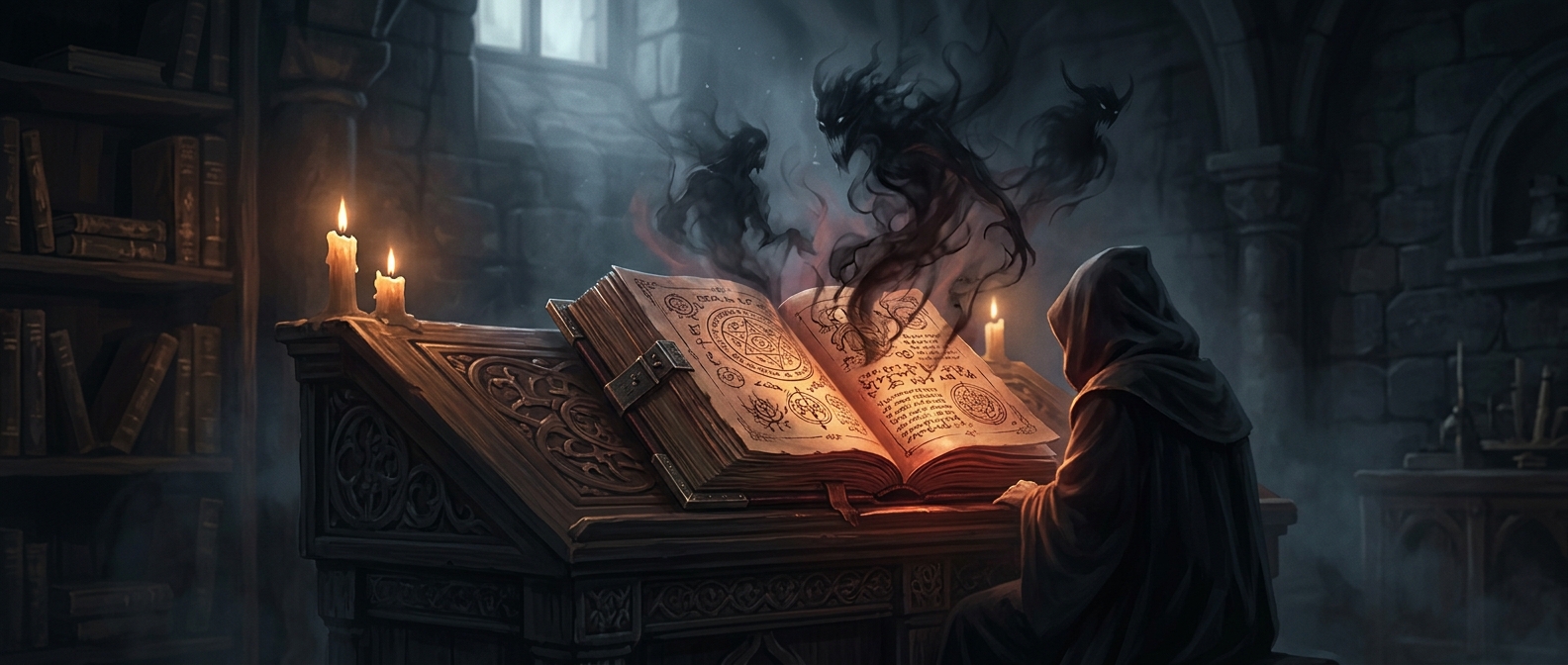
The book behind this description is commonly known as the Lesser Key of Solomon; its opening section is called the Ars Goetia. It presents the spirits not as an undifferentiated force, but as a ranked court. Each entry assigns a spirit a title and particular abilities, then supplies a seal—a drawn emblem used to identify that spirit within the ritual system.
That structure makes the catalog practical as well as imaginative. A reader could look up a named spirit, prepare its seal, and follow the instructions associated with it. The text’s astrological correspondences also connect the ritual to a larger system in which timing and celestial associations matter.
How the ritual claims to control the encounter
The goal is not simply to call a spirit into the room. The instructions frame the operator as someone who must establish authority and protection, then issue commands. In this ritual vocabulary, binding means compelling a spirit to answer or carry out a task, rather than making an agreement between equals. Protective boundaries and sacred names help express that hierarchy: the operator claims power through a higher spiritual authority.
These are the book’s own ritual claims, not evidence that the ceremonies produce supernatural effects. Their importance lies in how carefully the text turns a frightening encounter into a procedure, with symbols, ranks, and prescribed actions.
A composite text, not Solomon’s own handbook
Despite its title’s appeal to King Solomon, the work was compiled anonymously centuries after his lifetime. It belongs to a wider tradition of European ceremonial magic that attached manuals to revered ancient figures, lending them authority. The result is less a single author’s account than an organized collection of inherited ritual ideas.
Its enduringly striking feature is the blend of bureaucracy and the uncanny: even a demon, in this imagined world, has a rank, a seal, and instructions for dealing with it.