When a small world can reshape itself
Most asteroids keep the irregular outlines left by collisions. Ceres had enough mass for its own gravity to press its interior inward and smooth out large-scale bumps. This balance is called hydrostatic equilibrium: gravity pulls material toward a nearly spherical shape, while the material’s strength resists being compressed.
That does not make Ceres a miniature Earth. Its rounded shape tells us that gravity has reorganized it on a planetary scale, not that it has an atmosphere, oceans, or Earth-like surface conditions. Beneath its crust, denser rock and lighter, ice-rich material separated to some degree, giving the body internal layers rather than the mixed structure of a typical small asteroid.
Why it has not cleared its neighborhood
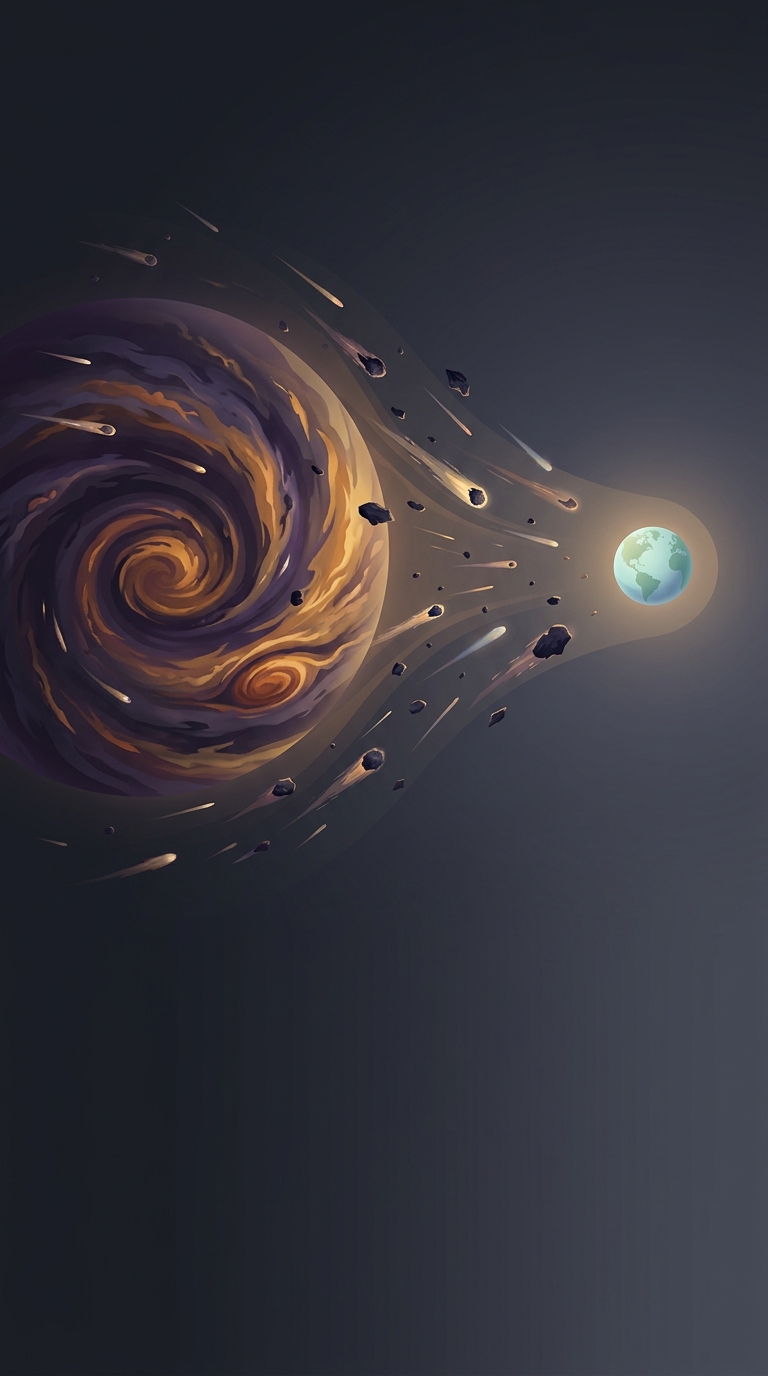
A planet’s gravity dominates the region around its orbit, sweeping up or scattering most nearby debris over time. Ceres never achieved that kind of control: it travels among many other bodies in the asteroid belt. That distinction is why it is classified as a dwarf planet—a body rounded by its own gravity that orbits the Sun, but has not cleared its orbital neighborhood.
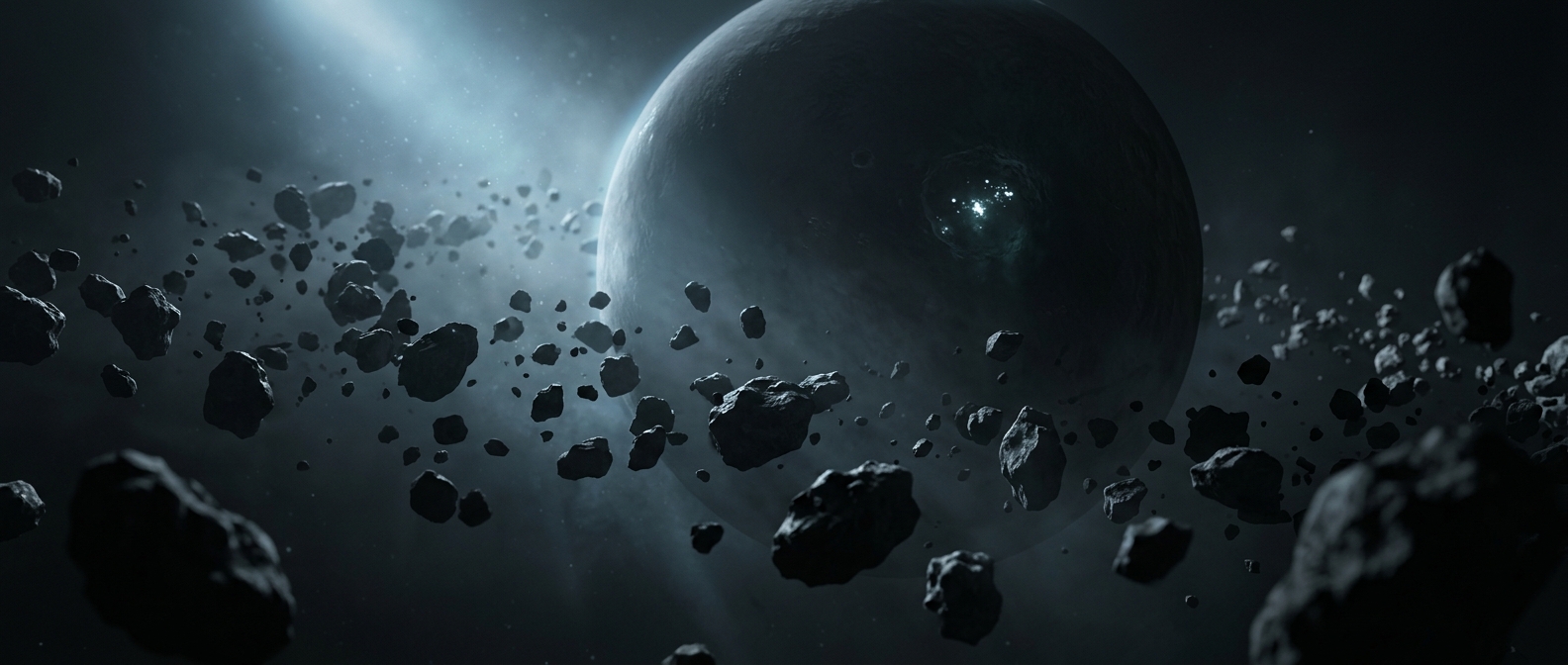
The contrast is visible in Ceres’s address. It is not an isolated world beyond the major planets, but a rounded, internally organized body embedded in a crowded zone of leftover solar-system material. Its shape marks where gravity began to win over the strength of rock; its neighbors show where that victory stopped.