What a Syrup’s Color Can Tell You
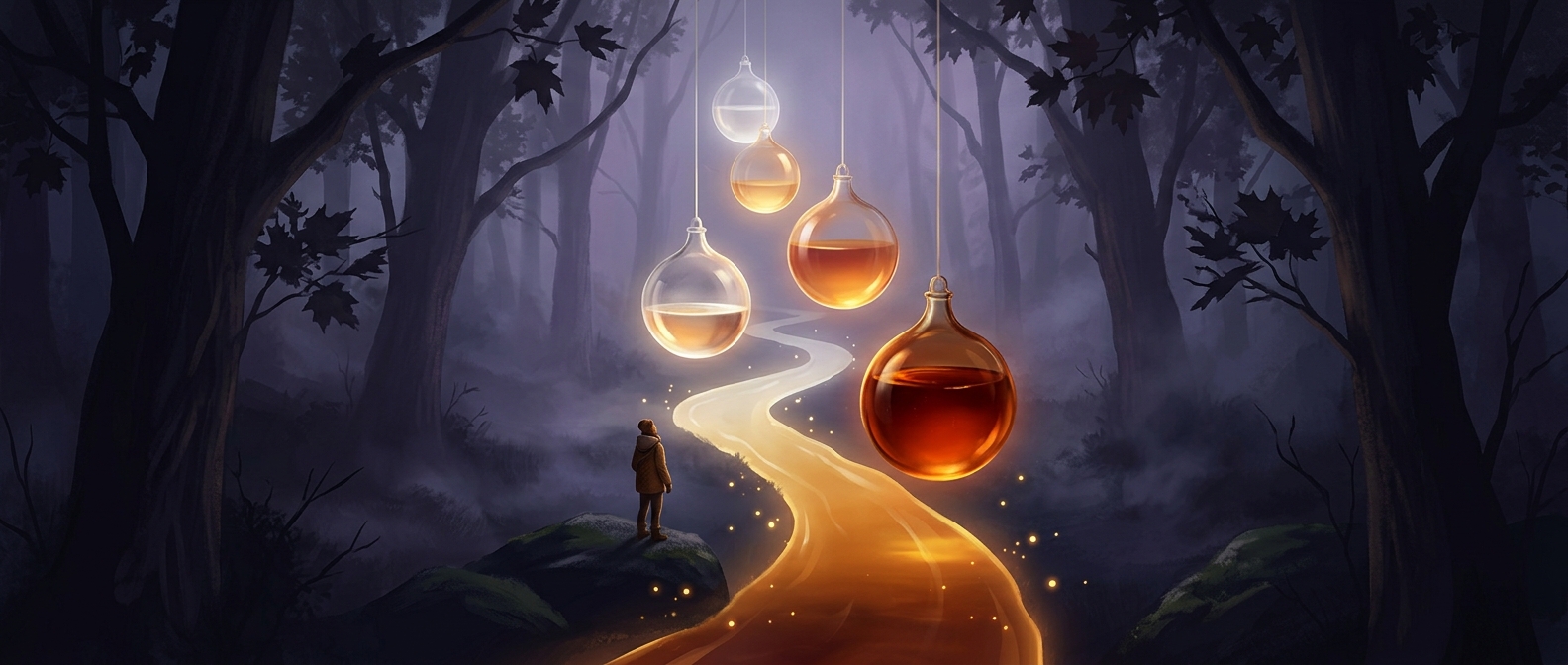
Maple syrup grading turns appearance into a standardized label. Inspectors assess both its color and whether it is clear rather than cloudy or full of sediment. In the United States, color is measured by how much light passes through a sample at a specified wavelength; the result places it in a color class, from Golden to Very Dark.
That clarity check matters because suspended particles can make syrup look hazy and signal a processing issue. It is separate from color: a syrup can be dark yet clear.
Why the Color Changes
Maple syrup is made by concentrating sap, but sap’s composition changes as the sugaring season advances. Later-season sap often produces darker syrup with a more pronounced flavor. The color is therefore a useful clue, not a flavor measurement by itself: graders also taste syrup to confirm its characteristic flavor and check for off-flavors.
The grade names describe different styles, not a ladder from inferior to superior. Golden syrup is lighter and more delicate; darker classes tend toward a stronger maple taste. Which one suits a dish depends on whether the syrup should remain subtle or stand out—for example, over a mild breakfast or in a strongly flavored glaze.