When a perpetual-motion idea became a game
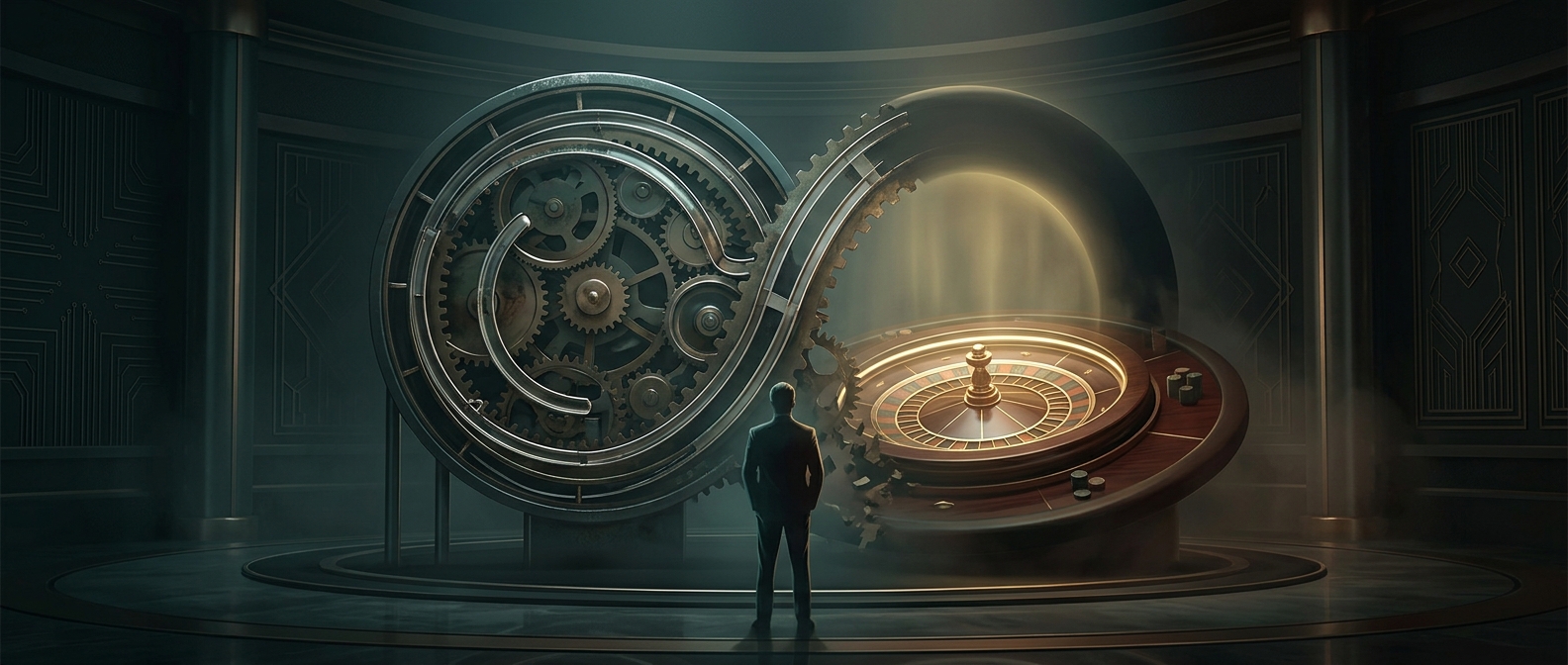
The story linking roulette to an attempt at perpetual motion captures a useful engineering irony: a wheel that cannot keep itself moving can still make a compelling game. A freely spinning wheel gradually loses energy to friction in its axle and surrounding air. Without a continuing power source, it slows and stops—a practical obstacle for anyone hoping to build a machine that runs forever.
Roulette needs no such machine. The operator gives the wheel a push, sends a small ball around the rim in the opposite direction, and lets friction and collisions bring the ball to rest in one of the numbered pockets. The movement looks intricate, but the mechanism depends on ordinary motion and a predictable end: the ball eventually stops.
The wheel’s lasting design advantage
Turning the wheel into a gambling device made its stopping point the event. Players could wager on a number, a color, or a broader group of numbers before the ball settled. The wheel and betting layout made the outcome visible to everyone at the table, while allowing many different bets on the same spin.
The numbered pockets also shape the odds. In common versions, the green zero is an additional outcome that does not belong to the red or black groups. That pocket helps give the casino an advantage over time, even though any single spin remains uncertain.
The enduring appeal lies in that contrast: the wheel’s motion is easy to watch and understand, but no player can reliably steer the ball to a chosen pocket. The failed dream of endless motion gives way to a machine whose entire purpose is to stop—once, decisively, on a number.