Why the brain uses internal states as memory cues
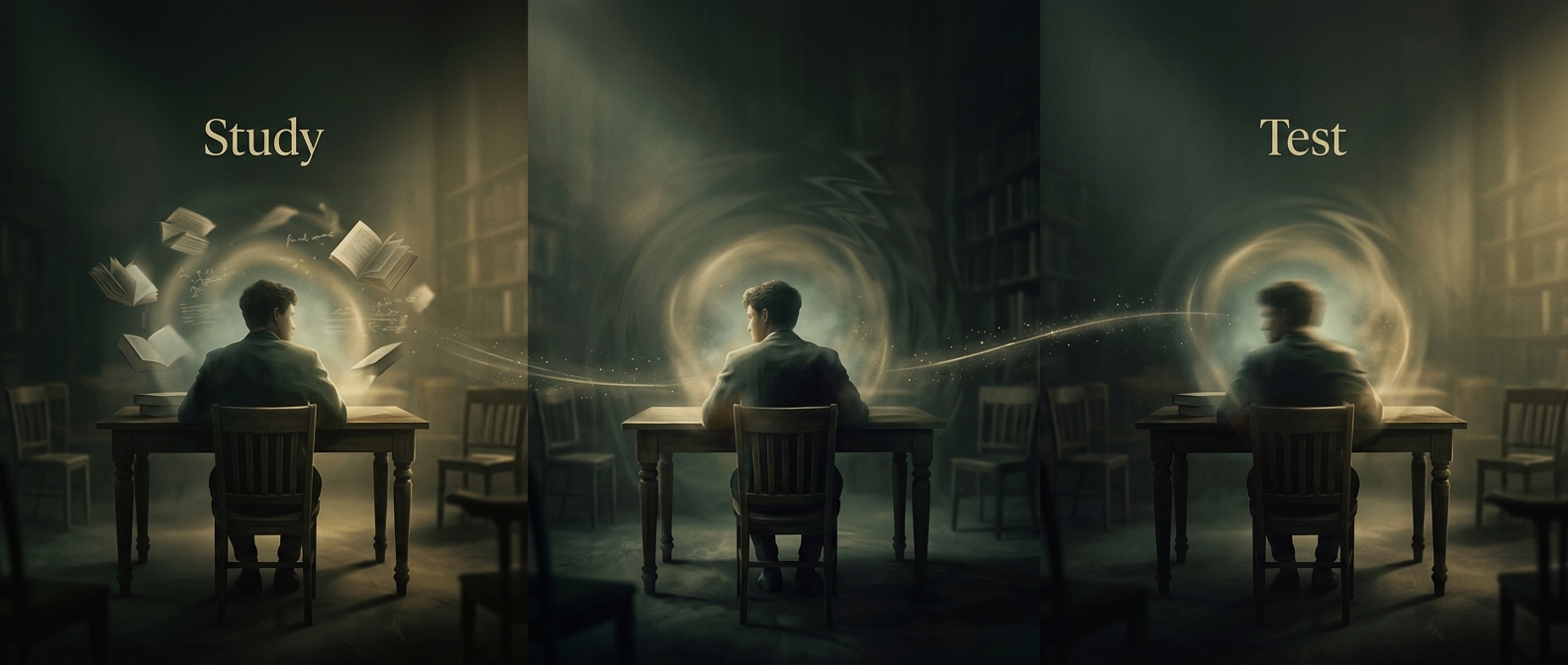
Memory is not stored like a file that opens identically in every situation. When you learn something, details of the moment—including your surroundings and how you feel—can become linked to it. Later, cues that resemble those details may help you find the memory. Psychologists call this state-dependent memory when the cue is an internal state, such as intoxication.
The state does not make the information clearer or more deeply learned. It can simply make a particular memory easier to retrieve under matching conditions. If someone learned material while intoxicated, being intoxicated again may provide a cue that is absent when they try to recall it sober.
A retrieval cue is not a learning advantage
This distinction matters because alcohol affects two parts of memory differently. It can disrupt encoding—the process of taking in and forming new memories—while a matching state may sometimes help retrieve what was encoded. A cue can help locate a memory; it cannot supply information that was never properly learned or undo impaired attention and judgment.
So the apparent benefit is conditional: a state match may help recall in that state, but it does not make studying intoxicated an effective strategy. It also offers no practical guarantee that someone will remember accurately. The useful takeaway is that memory depends partly on the conditions under which it was formed—and that a retrieval cue is not a substitute for learning the material well.