What an inkblot leaves unfinished
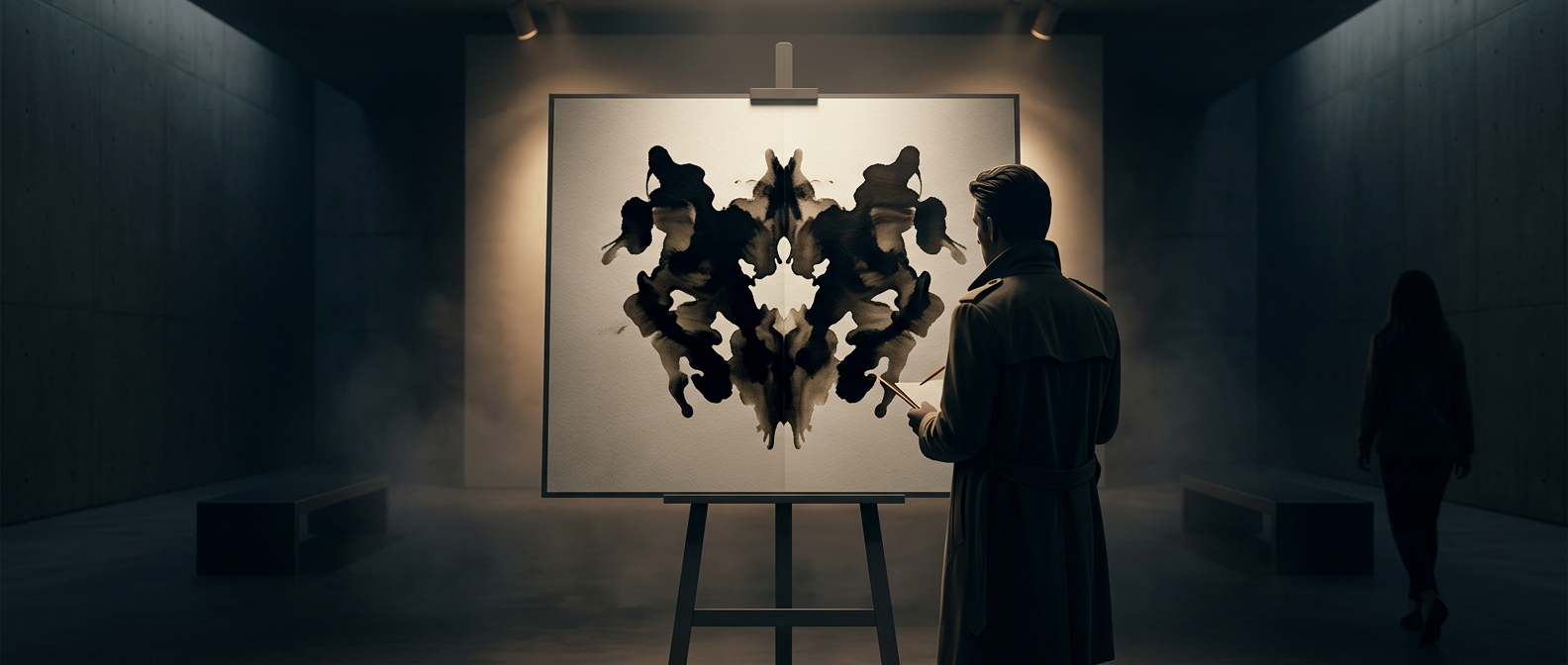
A Rorschach card is deliberately ambiguous: its mirrored ink shapes suggest forms without clearly depicting one. Because there is no single obvious object to identify, the viewer must organize the image—choosing where to look, what parts belong together, and what the whole might represent. That makes the response more than a label. Two people can see different things because they notice different features and bring different expectations to the same pattern.
The answer is only the beginning
An interpreter may consider not just what someone reports seeing, but where in the blot they saw it and what features seemed to support it. A response based on the outline, for example, differs from one that depends on imagining movement or color. The surrounding interview and the person’s broader circumstances can also affect how an answer is understood.
That creates room for judgment: an interpreter has to decide which details matter and how much meaning to attach to them. A vivid or unusual answer does not, by itself, establish a particular trait or condition. The same response can be read differently if different features—or different assumptions—guide the interpretation.
Why structure matters
To make interpretations more consistent, formal scoring approaches define categories for responses and rules for applying them. Structure can narrow the scope for personal impression, but it cannot make an ambiguous image speak for itself; the quality of the interpretation still depends on careful, consistent use of the method and the evidence around the test.
That is the central tension of the inkblot: its openness can invite a revealing account of how someone makes sense of uncertainty, but the account is not a direct measurement with one self-evident meaning.