How a Beaver Lodge Turns Sticks Into Shelter
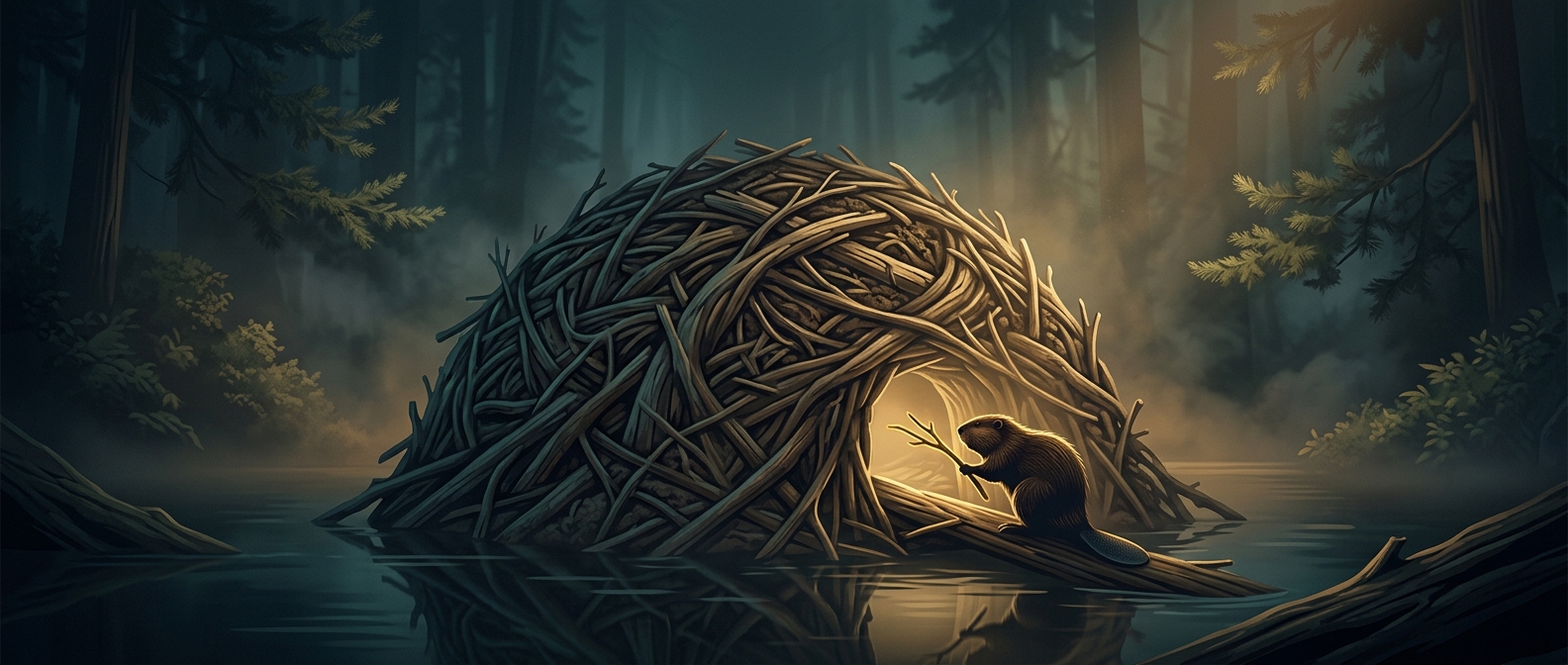
A lodge is not simply a pile of branches. Beavers weave sticks into a rough dome and pack gaps with mud and vegetation, making a thick shell that helps block wind and discourage predators. Inside, they keep a small living space above the waterline, where the family can rest and groom its fur.
The lodge’s entrance depends on the pond around it. Beavers often build dams downstream, slowing a stream and raising the water enough to cover the lodge’s approach. That means the dam and lodge work as one system: the dam helps create the protected water, while the lodge provides a refuge beside it. If water levels change or the structure is damaged, beavers can add material and reshape their surroundings.
A Home That Changes the Habitat
The engineering begins with available materials. Branches become the framework; mud binds and seals it. Because the structure is assembled in water and exposed to weather, it is more like a maintained building site than a finished object. Beavers keep repairing it as sticks shift, ice or currents take their toll, or the pond changes.
That labor also alters the landscape. By holding water back, a dam can flood low ground and create a pond, changing which plants grow there and where other animals can find water or cover. The lodge is therefore both a private shelter and part of a larger construction project: the beavers’ home helps explain why a stretch of stream can become a wetland.