How a missed animation became a fighting-game system
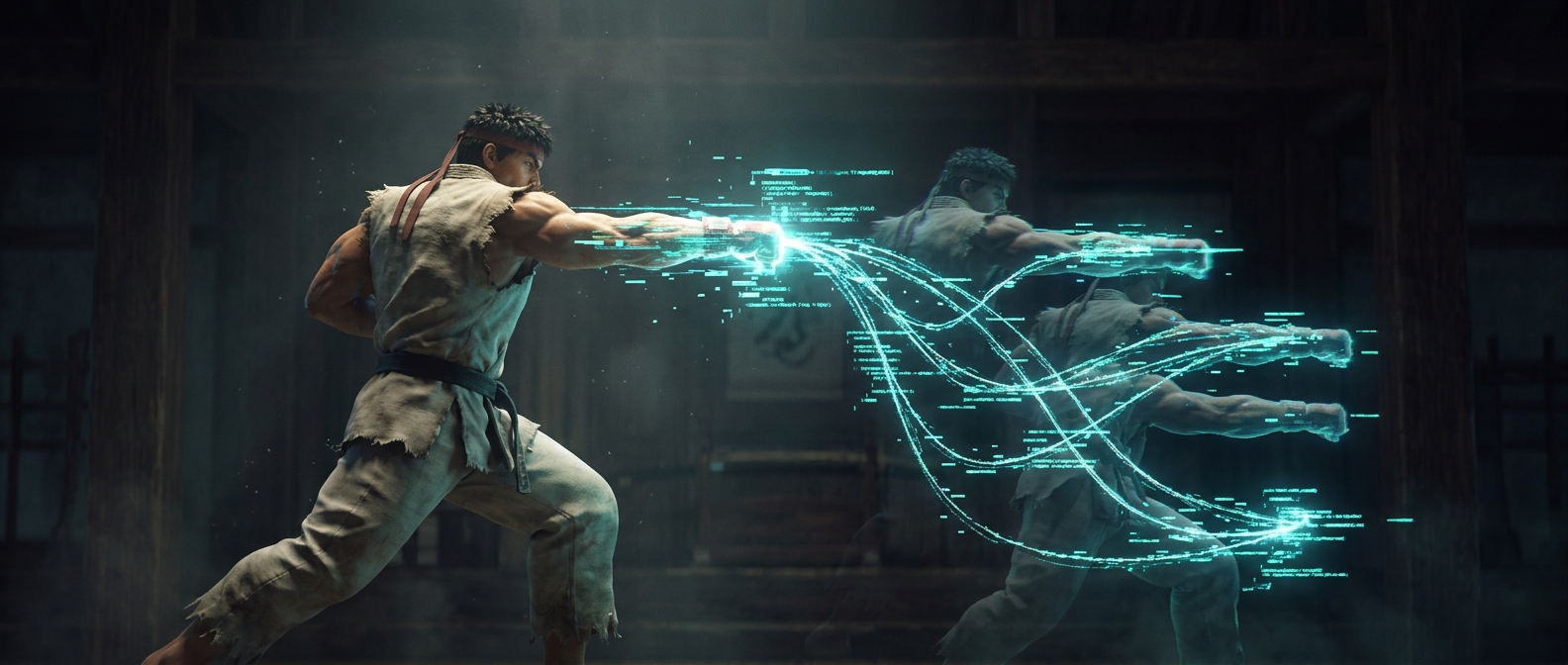
In a fighting game, an attack usually has a sequence: the character winds up, lands the hit, then recovers before acting again. That recovery is a built-in opening for the opponent. The glitch broke that rhythm: under the right timing, a player could start a special move before the first attack’s animation had run its course.
The important consequence was not simply that one move happened sooner. The first hit could leave the opponent unable to respond while the next attack began. If the follow-up connected, the player had a combo: a sequence of hits the defender could not interrupt once it started.
Why players found what the developer overlooked
The timing was difficult enough that the developer expected players would rarely manage it. But a narrow window is not the same as an impossible one. Players could practice the input, learn the rhythm, and repeat it reliably—turning a stray behavior into a usable technique.
That discovery changed what players looked for in the game. Instead of treating each attack as a separate action, they began testing whether one move could flow into another. A successful sequence rewarded both execution and experimentation, and players could develop routes that made a single opening more dangerous.
From bug to design language
Leaving the behavior in place meant accepting that the game had an unexpected layer of depth. Combos became more than a shortcut around recovery: they gave skilled players a way to convert a well-timed hit into sustained pressure, while making the timing and choice of follow-up part of the contest.
The lasting twist is that the developer’s estimate of difficulty described the move, not the players. What seemed too demanding to exploit became learnable through repetition—and a glitch became a defining way to play.