Durability Turns a Sword Into a Decision
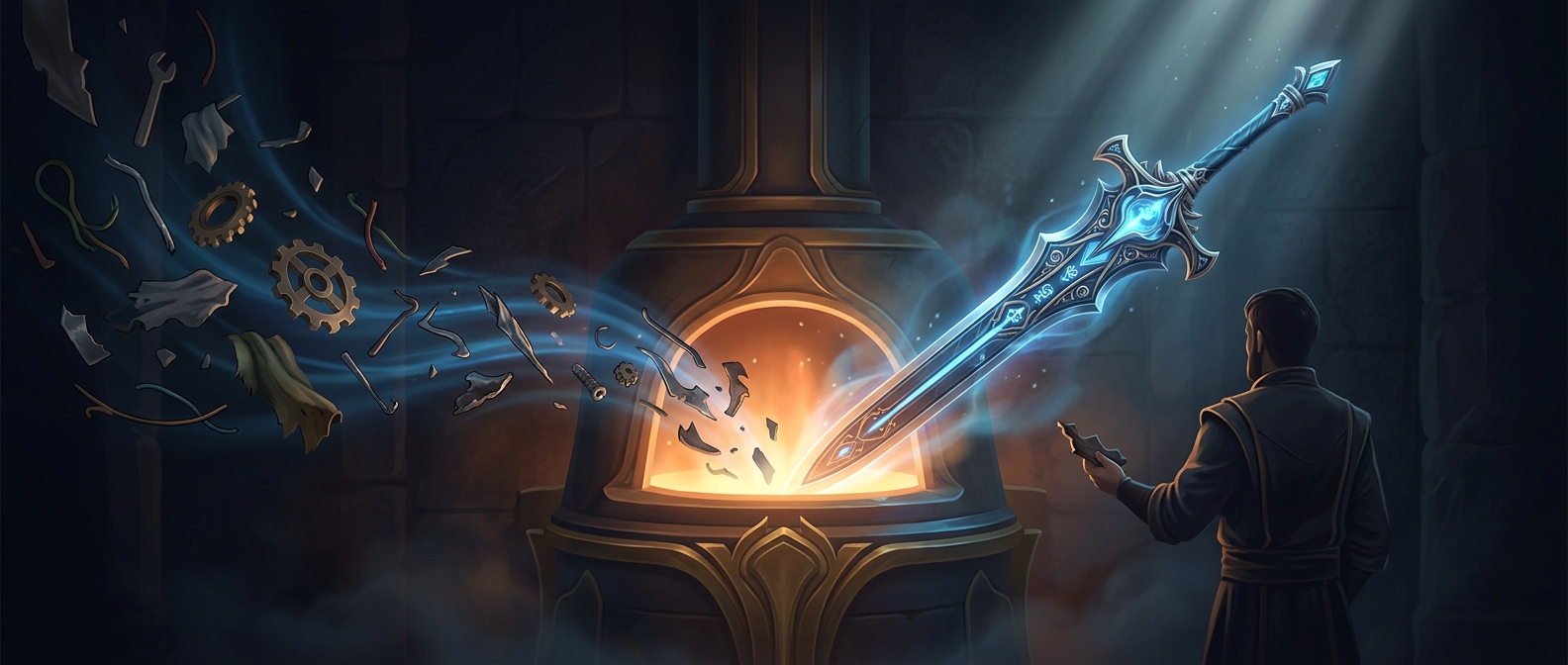
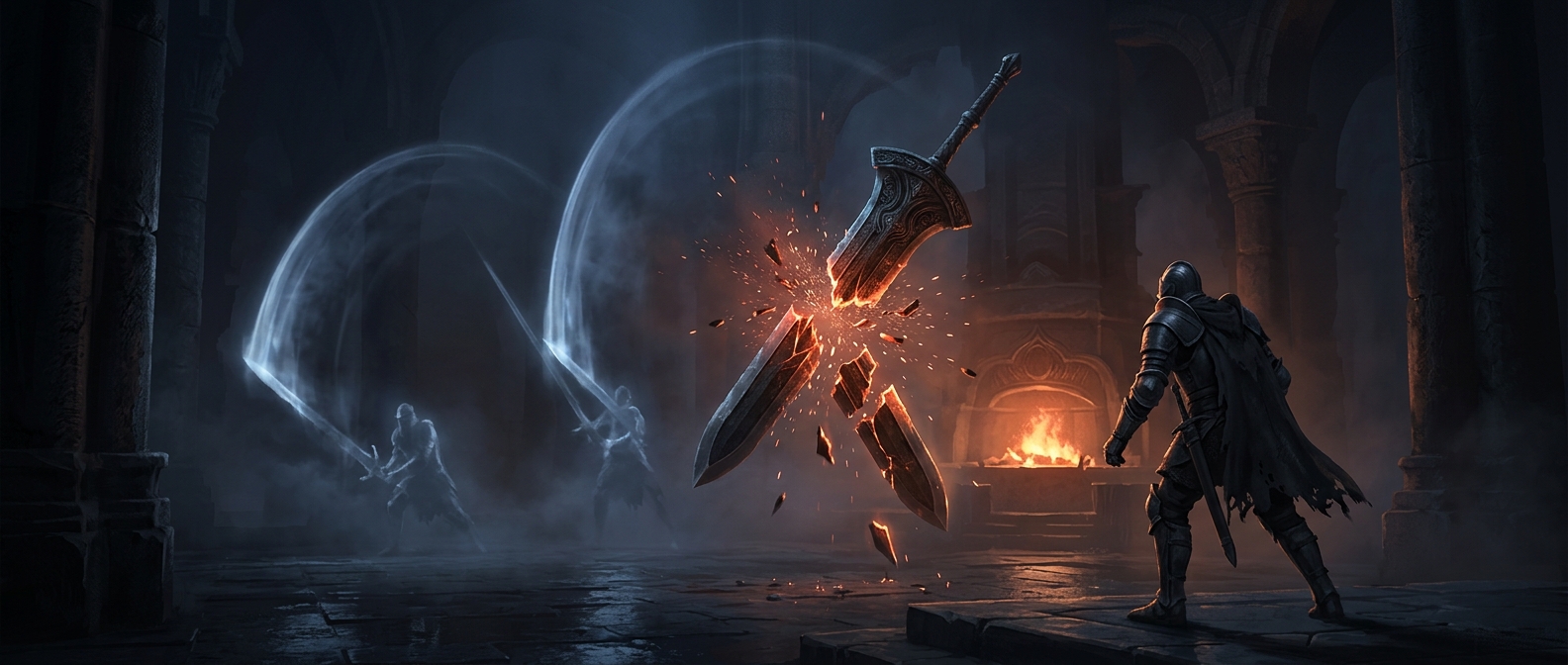
A weapon that breaks after only a few swings is usually doing more than pretending to model metal. In a game, durability is a rule that makes every use carry a cost. If a powerful sword could be used indefinitely, players might simply rely on it for every fight. A short lifespan pushes them to decide when its strength is worth spending—and when a weaker weapon will do.
That can make an encounter feel like resource management as well as combat. A player may save the sword for a dangerous enemy, switch weapons mid-fight, or search for replacements afterward. The break is a forced change of plan, not a realistic account of what a blacksmith’s work could withstand.
The Tradeoff Has to Feel Fair
Durability only creates interesting choices if players can understand and respond to it. Games may signal wear, offer ways to repair or replace equipment, or make fragile weapons powerful enough to justify their limited use. Without warning or alternatives, a sudden break can feel less like strategy and more like a punishment—especially if the player has no practical way to prepare.
The tension comes from the gap between a weapon’s apparent value and its game-defined cost. A massive sword looks like something to depend on; a brief lifespan makes it something to budget. That can turn even an ordinary swing into a small calculation: is this the fight worth spending the weapon on?