Why a note can sound as if it’s going somewhere
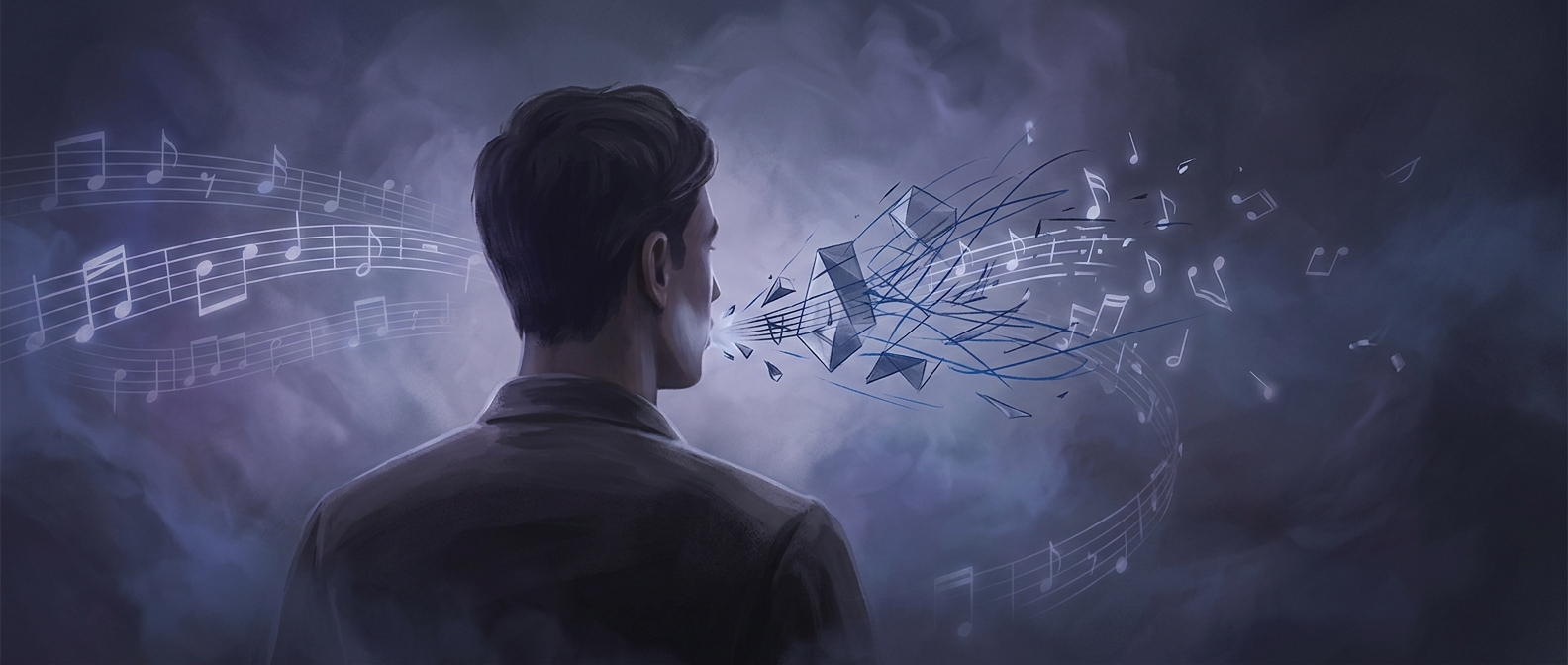
A keyboard divides an octave into fixed steps, but many instruments—and the human voice—can move continuously between pitches. A singer can begin below a target note and slide up to it; a guitarist can push a string to raise its pitch. The note briefly falls outside the tidy keyboard grid, then settles, or keeps hovering there. That movement makes the pitch feel less like a point and more like a gesture.
The ear hears tension in the gap
When two pitches are close but not quite aligned, their sound waves interfere in a way that can produce a rough, wavering quality called beating. The ear registers that instability as tension. If the bent note moves toward a more settled pitch, the listener can hear the approach as yearning or release—much as a question feels unfinished until its answer arrives.
The effect depends on context. In blues, for example, singers and instrumentalists may bend or shade notes around the pitches of a scale to give a phrase its characteristic ache. The expressive note is not simply “wrong”: its distance from the expected pitch, and how it moves, are part of the sound. A fixed-pitch keyboard may suggest that distance, but a voice or string instrument can shape it moment by moment.
Why the same note can sound wrong elsewhere
Listeners learn what to expect from a musical style. In a setting built around clean, stable pitches, a slight mismatch can sound like a slip. In a style that uses pitch bends and in-between notes, the same mismatch can signal feeling or intention. The listener is responding not only to the pitch itself, but to whether it fits the phrase’s expected path.
That is why a musician may deliberately stop short of a note, then ease into it: the small interval of unsettled sound lets the arrival carry more weight.